
Scientific taxonomy article
Taxonomy record for Ariocarpus.
Ariocarpus
Taxonomy record for Ariocarpus.
Taxonomy record for Ariocarpus.

Ariocarpus agavioides
Ariocarpus agavioides is a slow growing Ariocarpus capable of holding its body close to the soil and developing a thickened root. Long narrow agave like tubercles, a small body and flowers emerging from the centre create a distinctive morphology. This does not indicate a need for continuous moisture; its native context combines intense light, mineral ground, airflow and rapid surface drying.
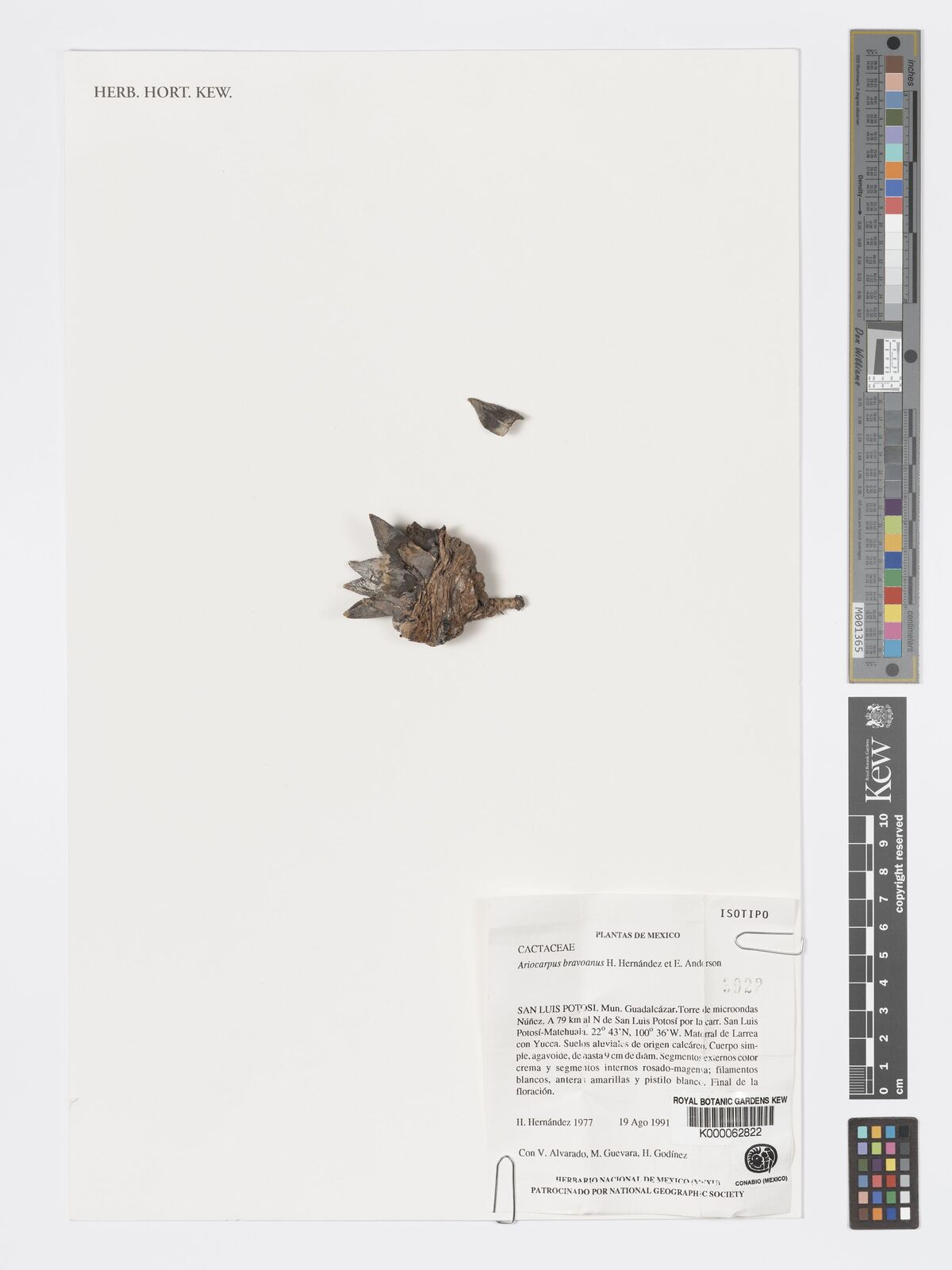
Ariocarpus bravoanus
Overview\n Ariocarpus bravoanus is an extremely slow growing, highly prized geophytic cactus known for its unique rosette shape. In habitat, it grows flush with the ground, making it difficult to spot .\n\n Taxonomy and naming\nBelonging to the genus Ariocarpus , this species was described in 1992 and named in honor of the prominent Mexican botanist Helia Bravo Hollis .\n\n Distribution and habitat\nEndemic to a very restricted area in San Luis Potosí, Mexico, it grows on limestone gravel slopes and plains within dry desert scrub ecosystems .\n\n Appearance\nThe plant has a flattened, greyish green subglobose stem with triangular, fissured tubercles. Central areoles are woolly, and vivid pink to magenta flowers emerge from the crown in autumn .\n\n Cultivation and care\nThis species is highly sensitive to excess moisture due to its large taproot. Cultivation requires a highly porous, purely mineral substrate and careful watering restricted to the active growing season.\n\n Common care mistakes$\nOverwatering during the winter rest period or using standard peat based potting soils will invariably lead to root rot and loss of the plant .\n\n References\n Anderson, E. F. (2001). The Cactus Family. Timber Press.\n Fitz Maurice, B & Fitz Maurice, W.A. (2013). Ariocarpus bravoanus. IUCN Red List.
Ariocarpus fissuratus
Ariocarpus fissuratus is a slow growing Ariocarpus capable of holding its body close to the soil and developing a thickened root. A broad flattened body, fissured looking triangular tubercles and woolly grooves create a cryptic, soil level habit. This does not indicate a need for continuous moisture; its native context combines intense light, mineral ground, airflow and rapid surface drying.

Ariocarpus kotschoubeyanus
Ariocarpus kotschoubeyanus is a slow growing Ariocarpus capable of holding its body close to the soil and developing a thickened root. A low body capable of remaining partly embedded, triangular tubercles and a woolly central groove or areole zone are characteristic; flowers emerge from the crown. This does not indicate a need for continuous moisture; its native context combines intense light, mineral ground, airflow and rapid surface drying.

Ariocarpus retusus
Ariocarpus retusus is a captivating species with a unique position among succulent cacti. Also known as the "Living Rock Cactus," this plant is remarkable for its flat, deeply fissured body that typically hides among rocks, close to the soil surface in its natural habitat. Belonging to the genus Ariocarpus within the Cactaceae family, this species is native to arid and semi arid regions stretching from southern Texas to central Mexico, particularly in the states of Coahuila, Nuevo León, and San Luis Potosí . Its slow growth rate and distinctive structure have made it highly popular among collectors.
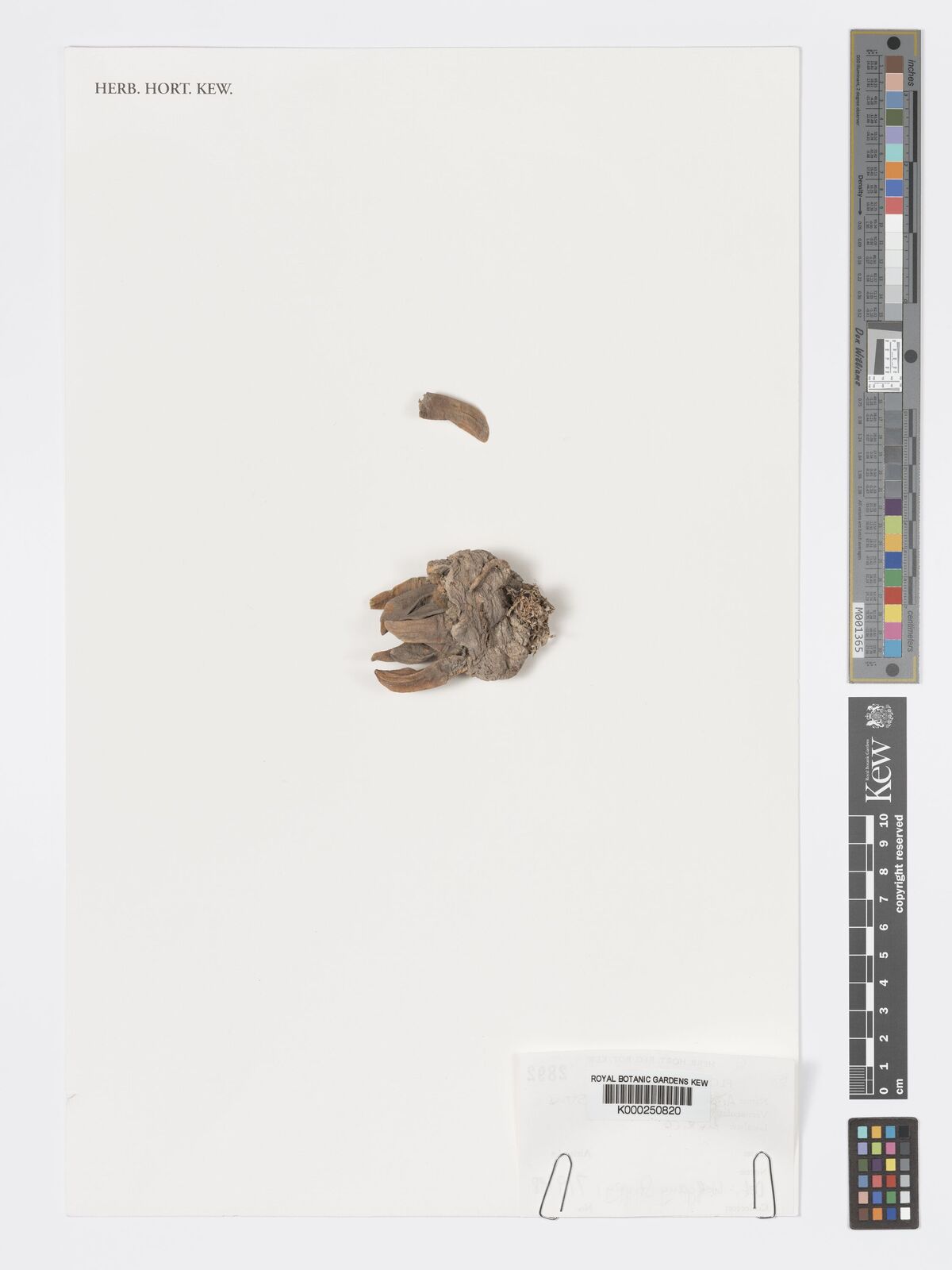
Ariocarpus scaphirostrus
Ariocarpus scaphirostrus (often spelled scapharostrus) is one of the rarest and most sought after species within the family Cactaceae. Highly prized by specialists, this slow growing geophytic cactus is severely threatened in its natural habitat due to illegal collection and environmental pressures .
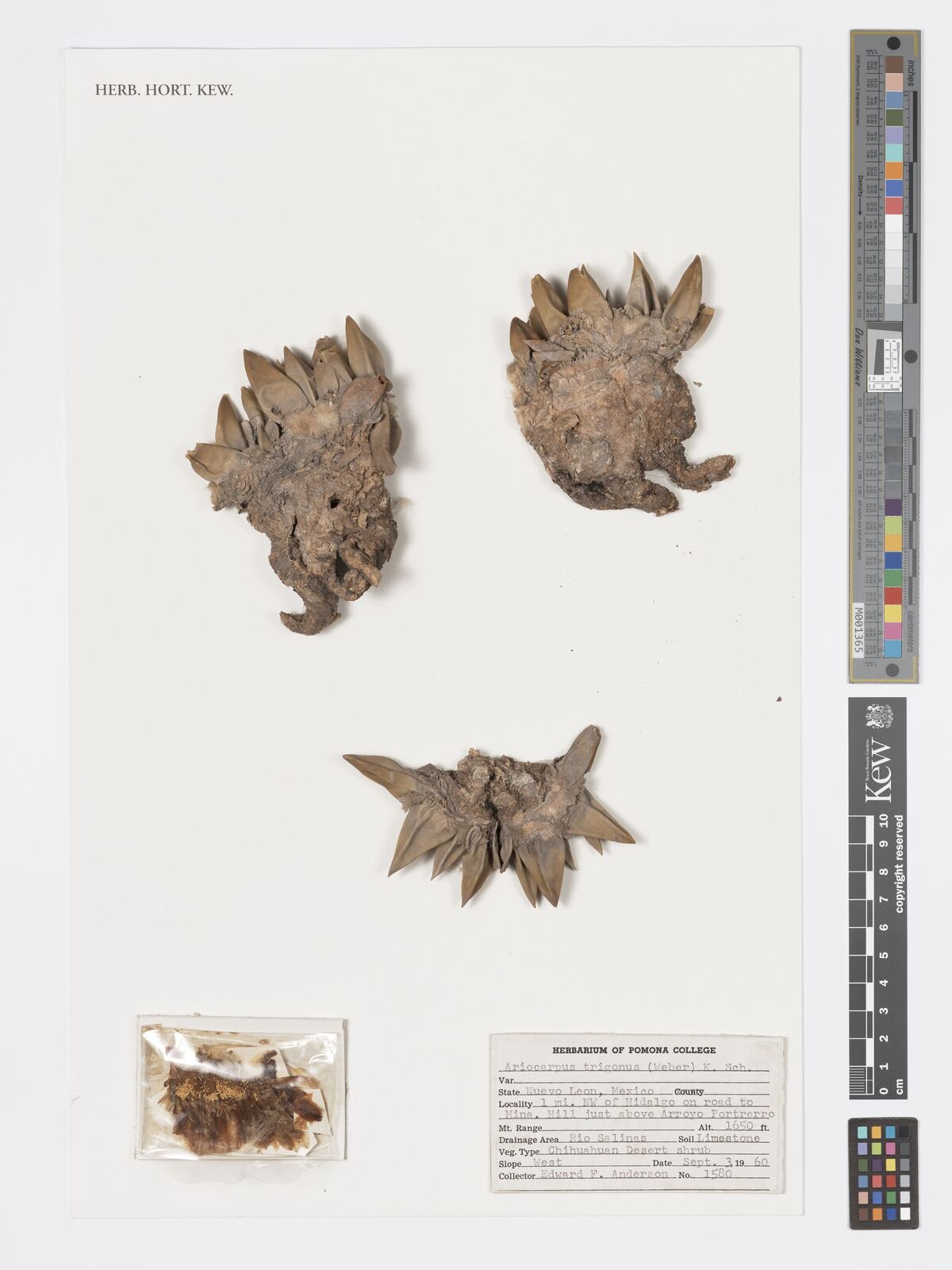
Ariocarpus trigonus
Ariocarpus trigonus is a highly sought after, extremely slow growing succulent subshrub in the family Cactaceae. Known for its rock like appearance in the wild, this geophytic cactus is a prized specimen among advanced collectors .
Ariocarpus × drabi
Ariocarpus × drabi is an exceptionally rare natural or artificial hybrid cactus within the Cactaceae family, generally understood to represent a cross between Ariocarpus kotschoubeyanus and Ariocarpus retusus . Highly prized by succulent connoisseurs, it is celebrated for its unique geometric aesthetics and extremely slow growth rate.
Ariocarpus × dubeniorum
Ariocarpus × dubeniorum is an extraordinary and highly prized geophytic cactus taxon within the family Cactaceae . Renowned for its exceptionally slow growth rate and unique rosette like morphology, this hybrid commands immense value among succulent and cactus enthusiasts globally. It requires expert level cultivation skills due to its delicate, moisture sensitive root system.
Ariocarpus × nelissae
Ariocarpus × nelissae is an extremely rare and highly prized natural hybrid within the iconic Ariocarpus genus of the family Cactaceae . Characterized by its geophytic habit and absence of traditional spines, this cactus mimics limestone rock formations.
