
Light
bright_direct_acclimated
Very bright light with gradual direct-sun acclimation and strong airflow.
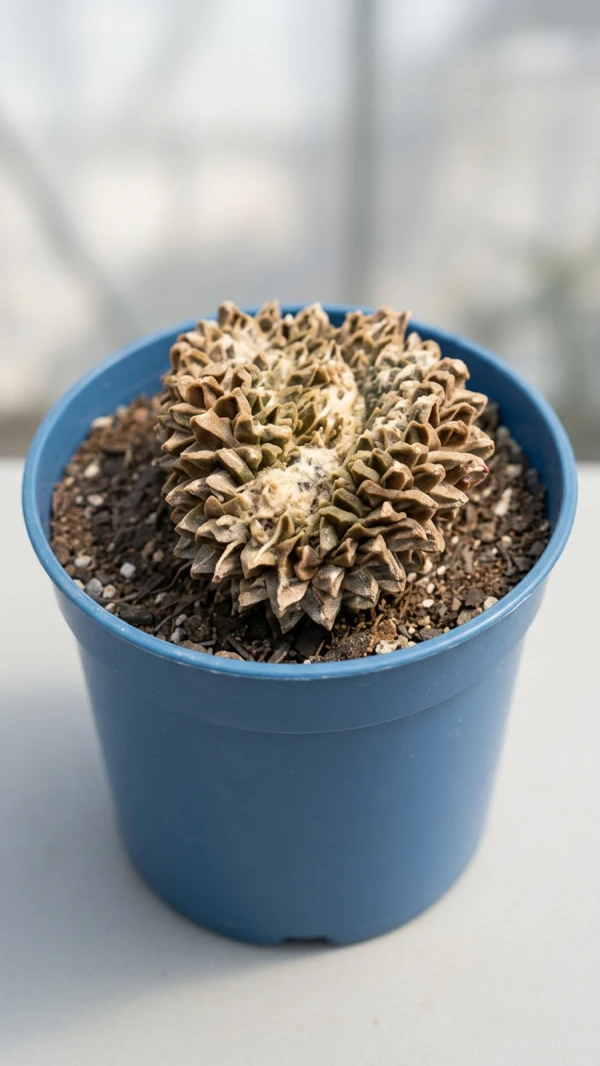
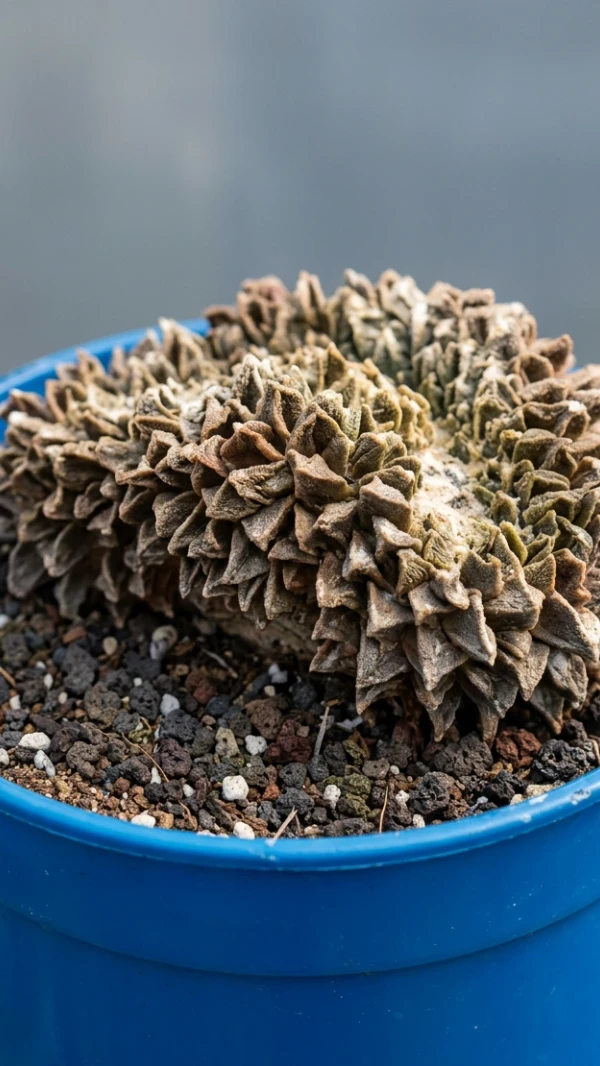
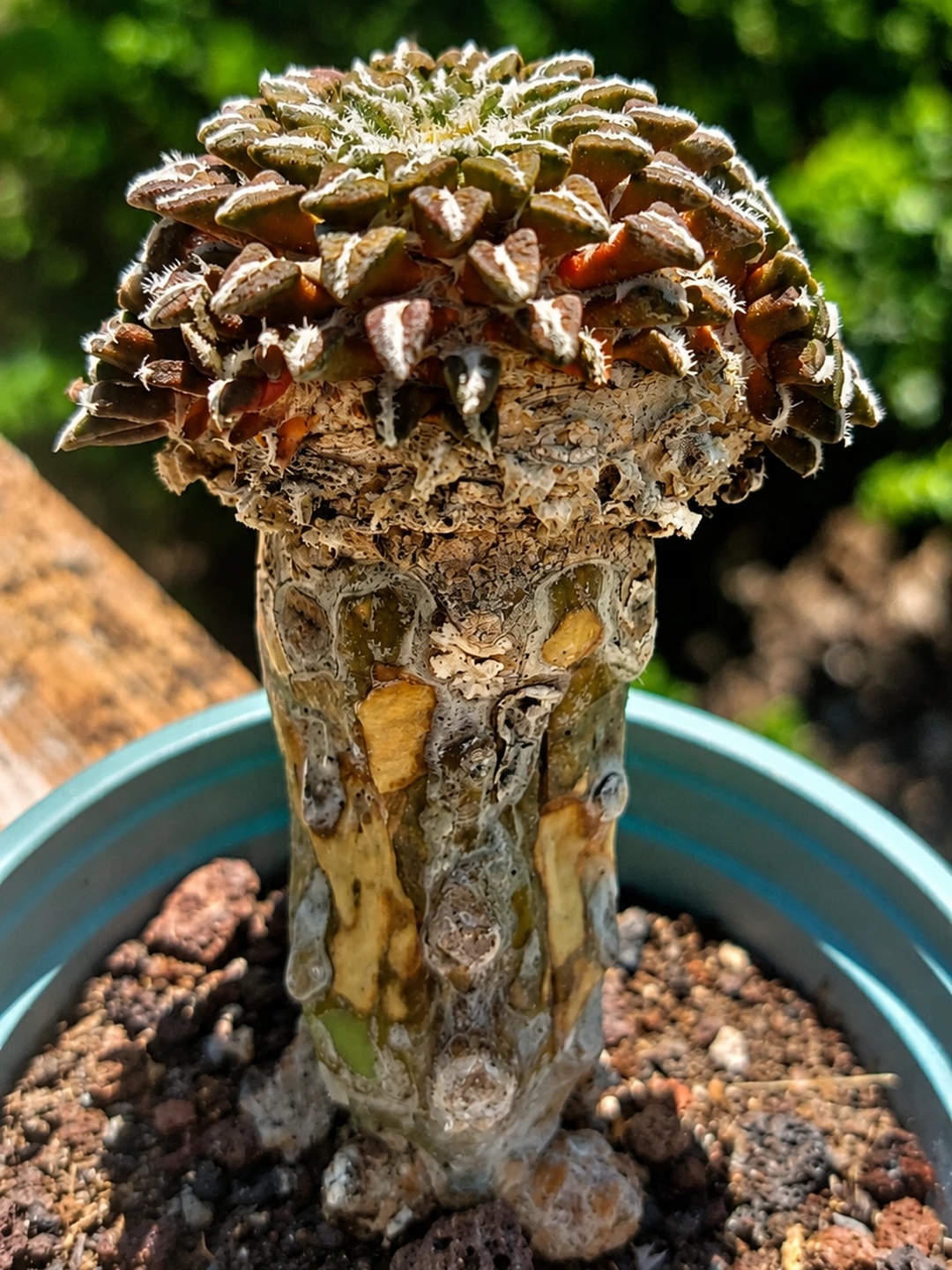
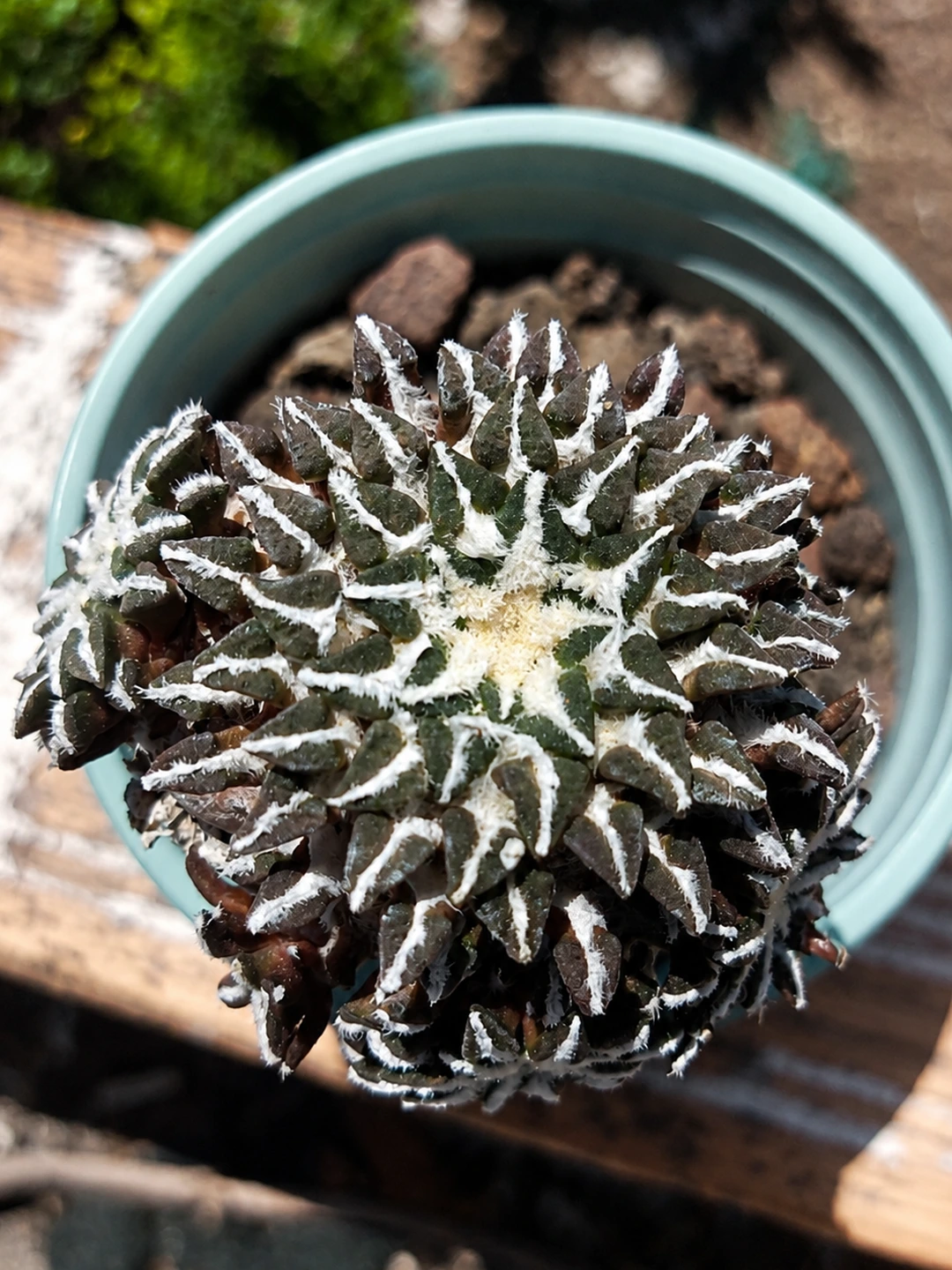
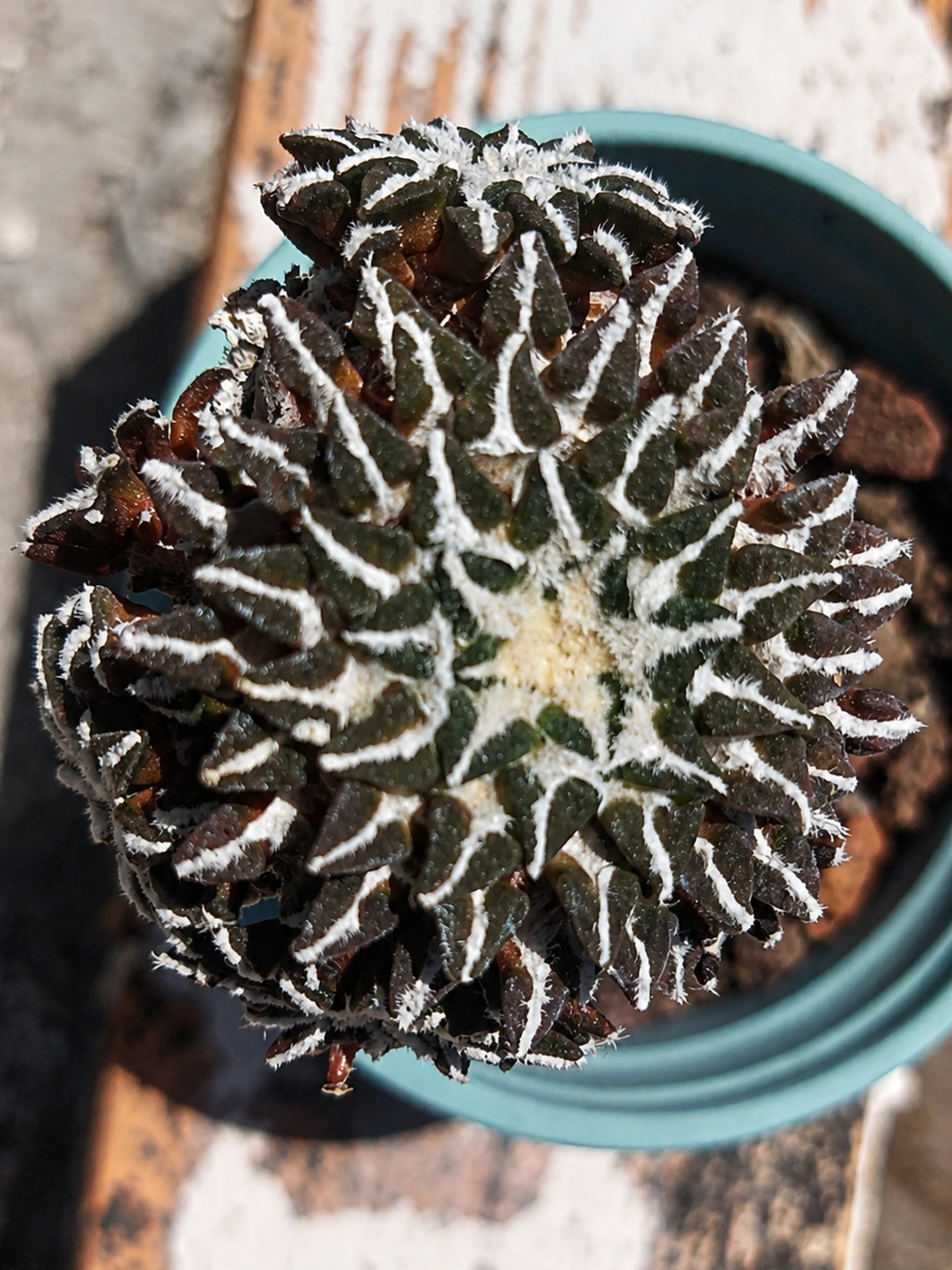
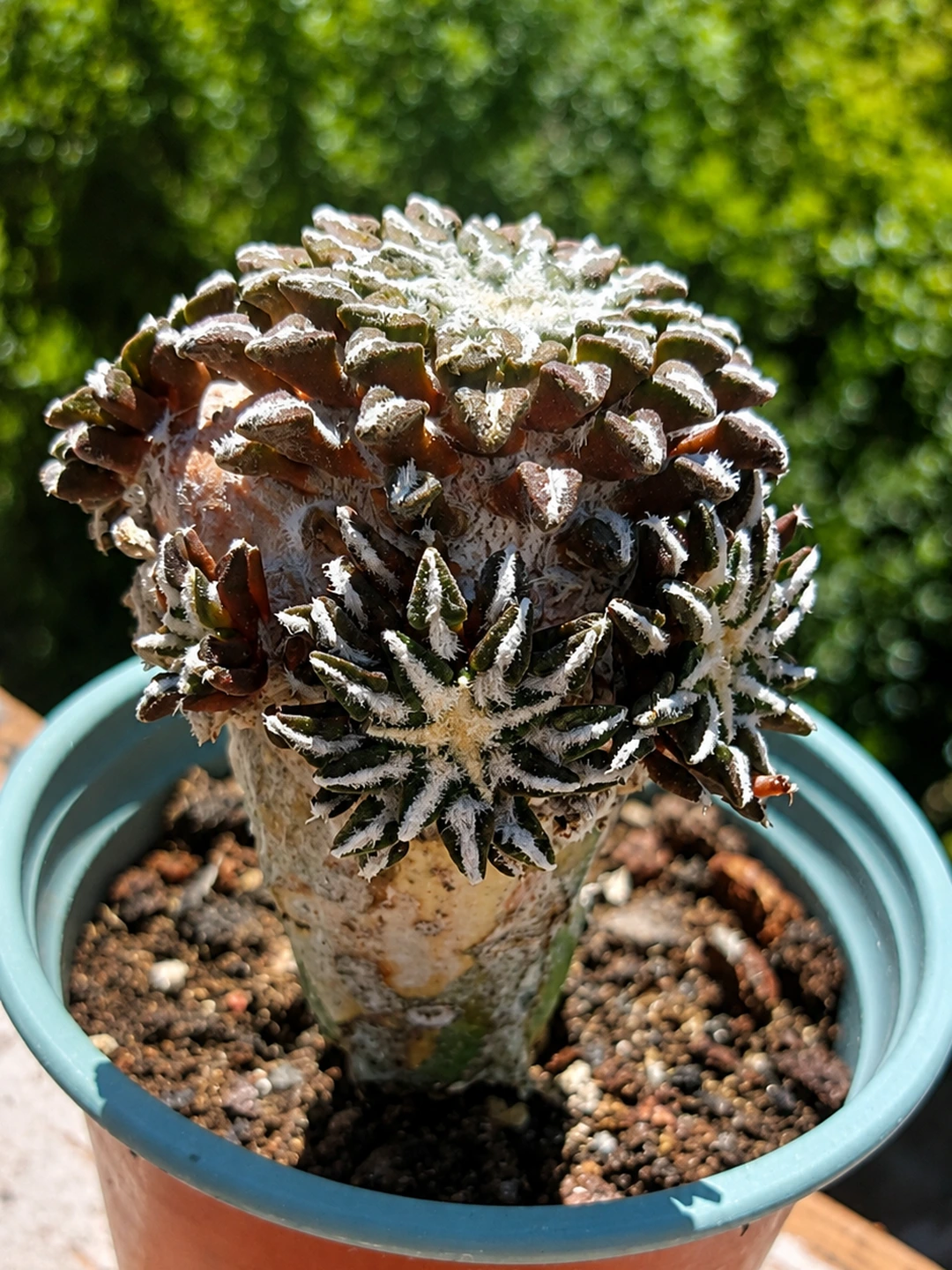
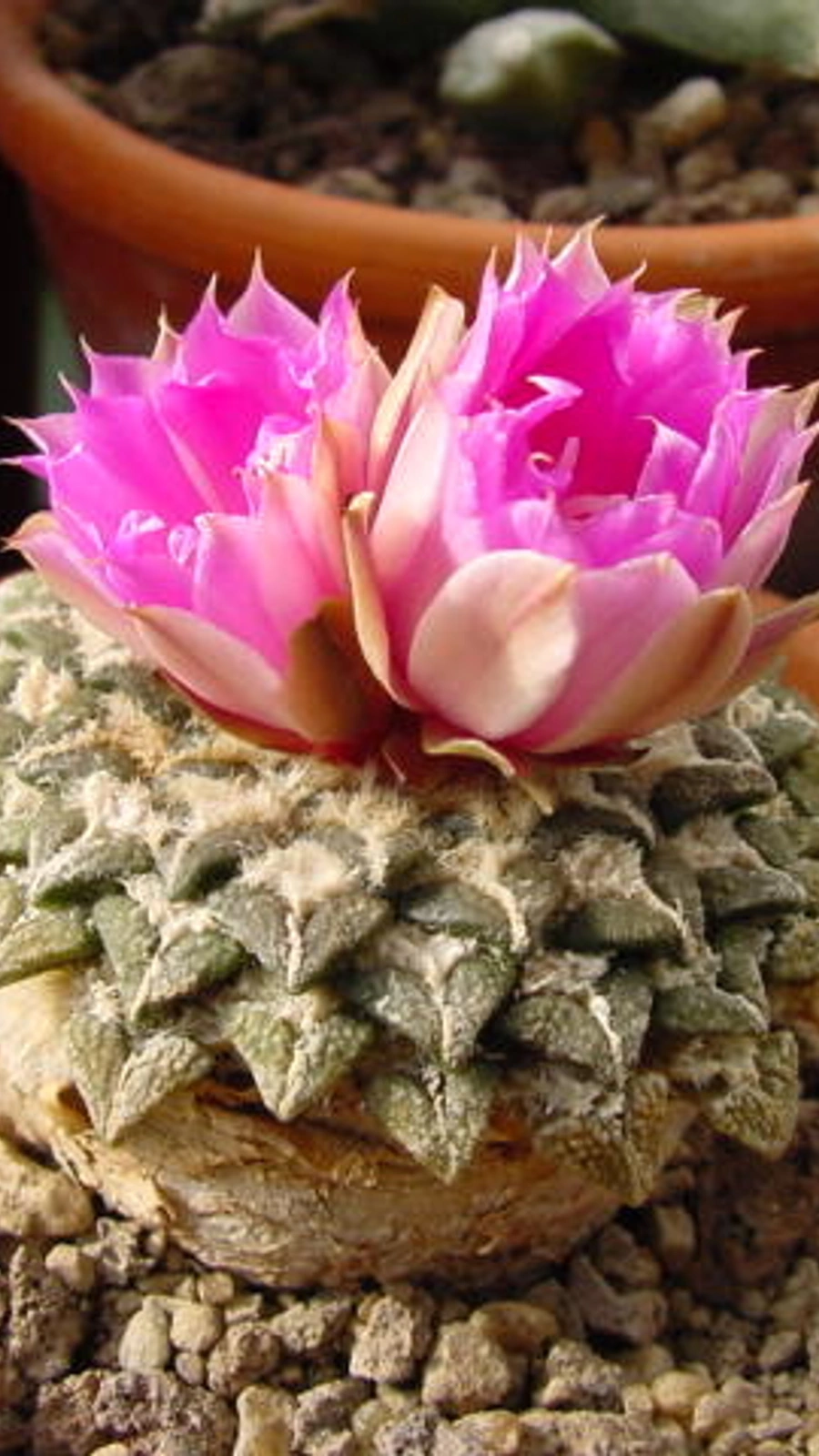 Reference image
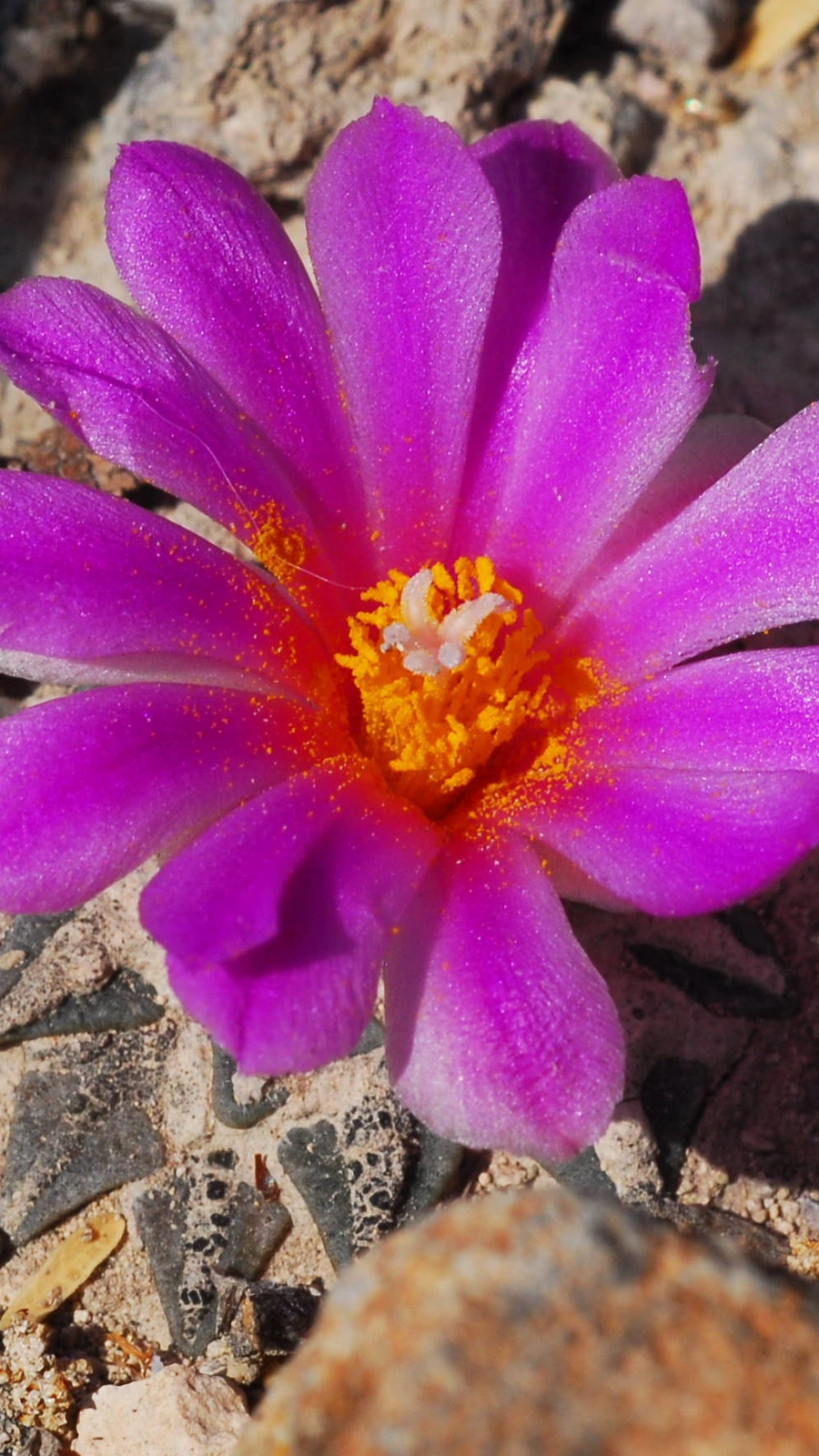 Reference image
Ariocarpus kotschoubeyanus is a slow-growing Ariocarpus capable of holding its body close to the soil and developing a thickened root. A low body capable of remaining partly embedded, triangular tubercles and a woolly central groove or areole zone are characteristic; flowers emerge from the crown. This does not indicate a need for continuous moisture; its native context combines intense light, mineral ground, airflow and rapid surface drying.1
Use a draining pot deep enough for the root. Use a mineral-forward mix with coarse pumice, lava or comparable particles that resists compaction and prolonged moisture at the root collar. A dry-looking surface is not sufficient; inspect the centre of the root ball. After repotting, allow injured roots time to dry and callus.
Do not use a fixed-day calendar. During active growth, soak only after the mix has dried throughout and remove every excess. Drying takes longer in cool, low-light or resting conditions, so watering becomes less frequent. Never test cold tolerance with wet roots.
A very bright position is suitable; introduce direct sun gradually over several weeks. Hot stagnant glass can be riskier than a cooler, ventilated site. Historical Anhalonium, Roseocactus, Stromatocactus and Strombocactus combinations occur in this synonym surface.
A. agavioides, A. fissuratus and other accepted Ariocarpus species are not synonyms. A former combination or product label does not create a new taxonomy route. Product-image matching belongs to a separate media workflow.
Prevent pot instability, root rot and unknown chemical exposure; restrict access for children and pets. The IUCN-linked category is NT, and documented legal nursery provenance should be preferred.2
Very bright light with gradual direct-sun acclimation and strong airflow.
No fixed calendar; soak after complete drying and reduce in cool periods.
A coarse, low-organic, airy, very fast-draining mix that does not retain water around the root collar.
Protect pot and root safety. IUCN-linked category: NT.
Slow growth, a thickened root and a rot-sensitive root collar require advanced observation; fixed watering schedules are unsuitable.
northeastern Mexico.[^1] [^1]: Plants of the World Online. Accessed: 2026-08-05. https://powo.science.kew.org/taxon/urn%3Alsid%3Aipni.org%3Anames%3A19060-2
