
Light
Filtered Sun
Very bright light with gradual acclimation to strong sun.
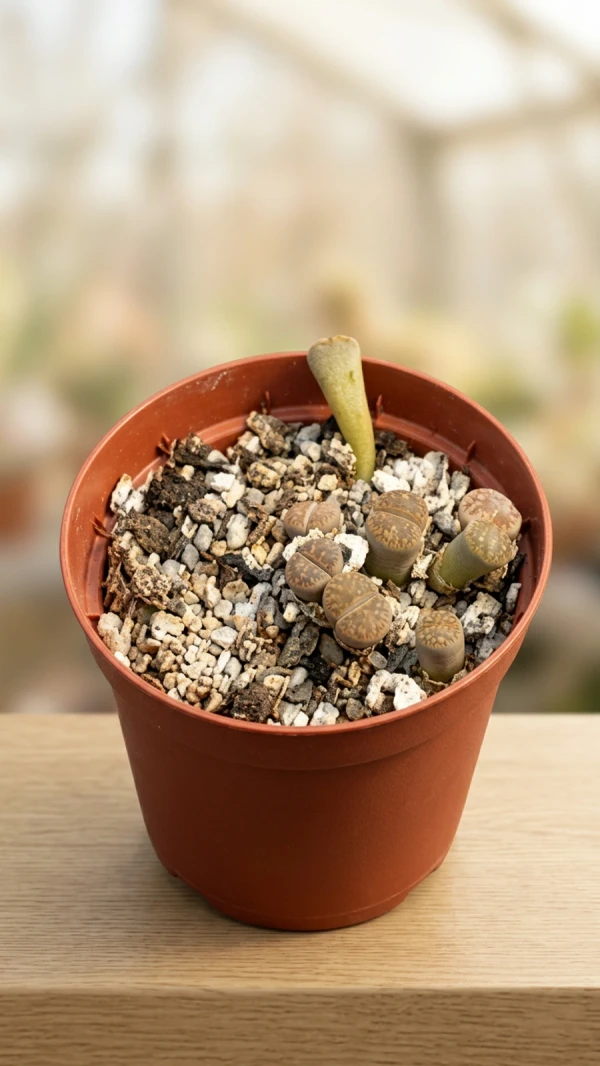
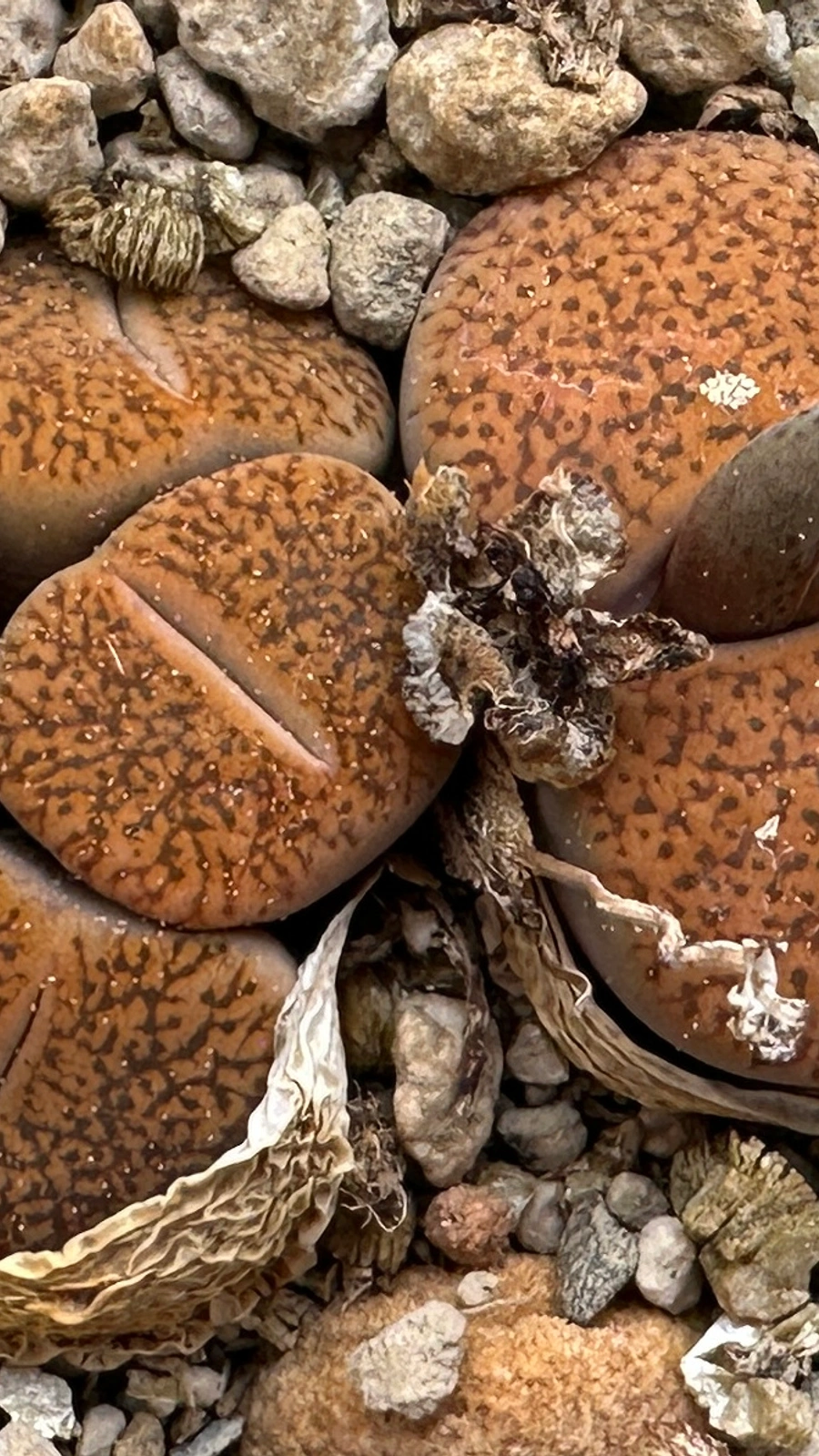 Reference image
Leslie's Living Stone
Lithops lesliei is a small Aizoaceae species whose patterned fused leaf pair gives it a stone-like appearance.1 Its yearly cycle is read through formation of a new leaf pair, absorption of the old pair, flowering and dormancy.
The central care rule is to follow the plant’s body cycle rather than a frequent calendar. When the old leaf pair is still full and is being absorbed by the new pair, added water can increase the risk of rot.
Use a freely draining container and a highly mineral, fast-drying medium. Fine organic material and persistent moisture around the neck increase rot risk. Drainage must remain unobstructed.
During active growth, water modestly only after the root zone has dried thoroughly. Withhold water while the new pair absorbs the old pair unless there is compelling evidence of dangerous dehydration. Hot stagnant conditions can trigger rest; a wet substrate is especially hazardous then.
Provide very bright light, but acclimate plants from shade or greenhouse conditions gradually. Sudden intense midday sun can scar the windowed surface. Air movement supports compact growth and a dry surface.
Wrinkling is not an automatic instruction to water. Read the season, old-leaf absorption, root-zone dryness and watering history together. Cold wet roots and hot airless wet media are both unsafe.
A healthy annual cycle normally produces one new leaf pair inside the old pair. The older leaves progressively soften, wrinkle and transfer stored water to the new body. Splitting, stacking several active pairs, or keeping the old pair permanently swollen often indicates that water was supplied at the wrong stage. Do not peel away attached leaves or force the fissure open; allow the transfer to finish naturally.
Flowers usually emerge from the central fissure when light, maturity and seasonal conditions are suitable. Pollinated flowers may form dry capsules whose seeds are released by moisture. Flowering failure alone is not evidence of disease, and seed production should not be used to justify extra irrigation. When diagnosing decline, separate normal old-leaf collapse from translucent tissue, spreading softness, sour root odour or a neck that remains wet, which are stronger rot warnings.
The plant has no spines; the production toxicity field is the precautionary value caution. It must not be treated as edible and should be kept from being chewed by children or pets.
The global field is NE.2 That label represents absence of a supported official assessment, not proof that wild populations are secure. Prefer legally propagated, traceable plants and do not support wild collection.
Very bright light with gradual acclimation to strong sun.
Modest water after full drying in active growth; mostly dry during leaf replacement.
Highly mineral, airy and rapidly draining mix.
Do not treat as edible and do not support wild collection.
Moderate because the seasonal leaf cycle must be read correctly.
