
Light
bright_direct
A very bright position with gradually introduced direct sun supports compact rib development; abrupt harsh exposure can scorch the epidermis.
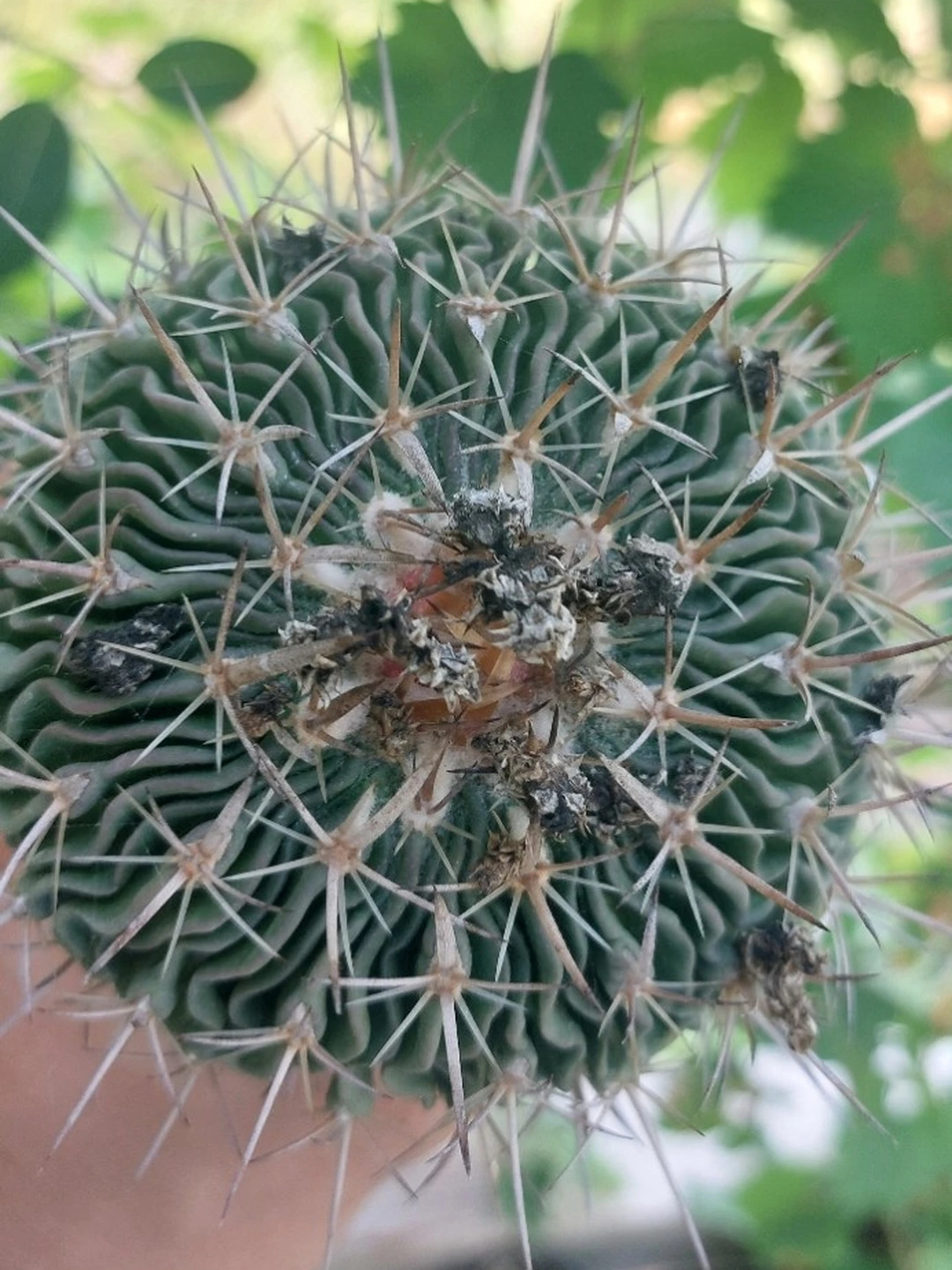
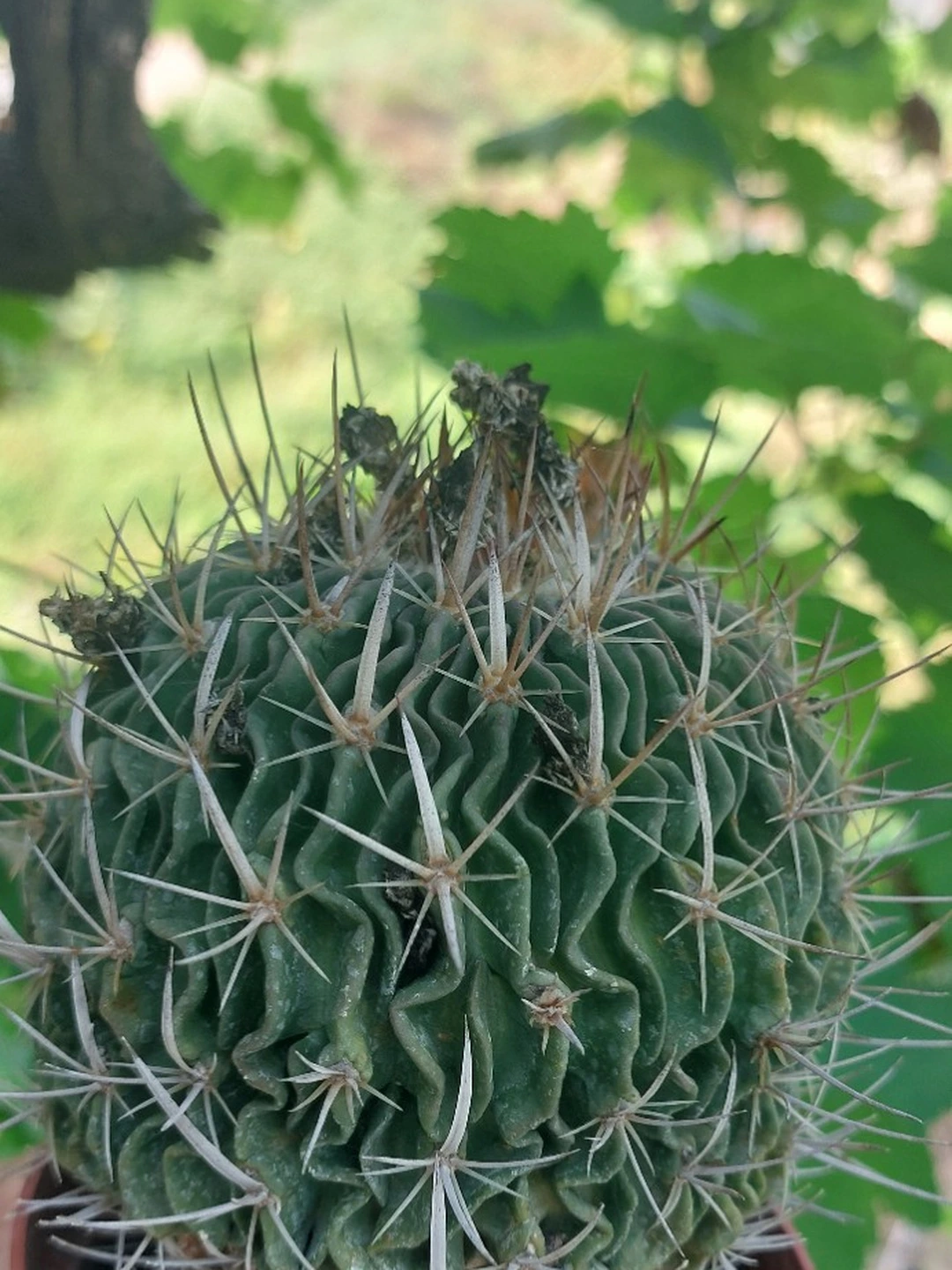
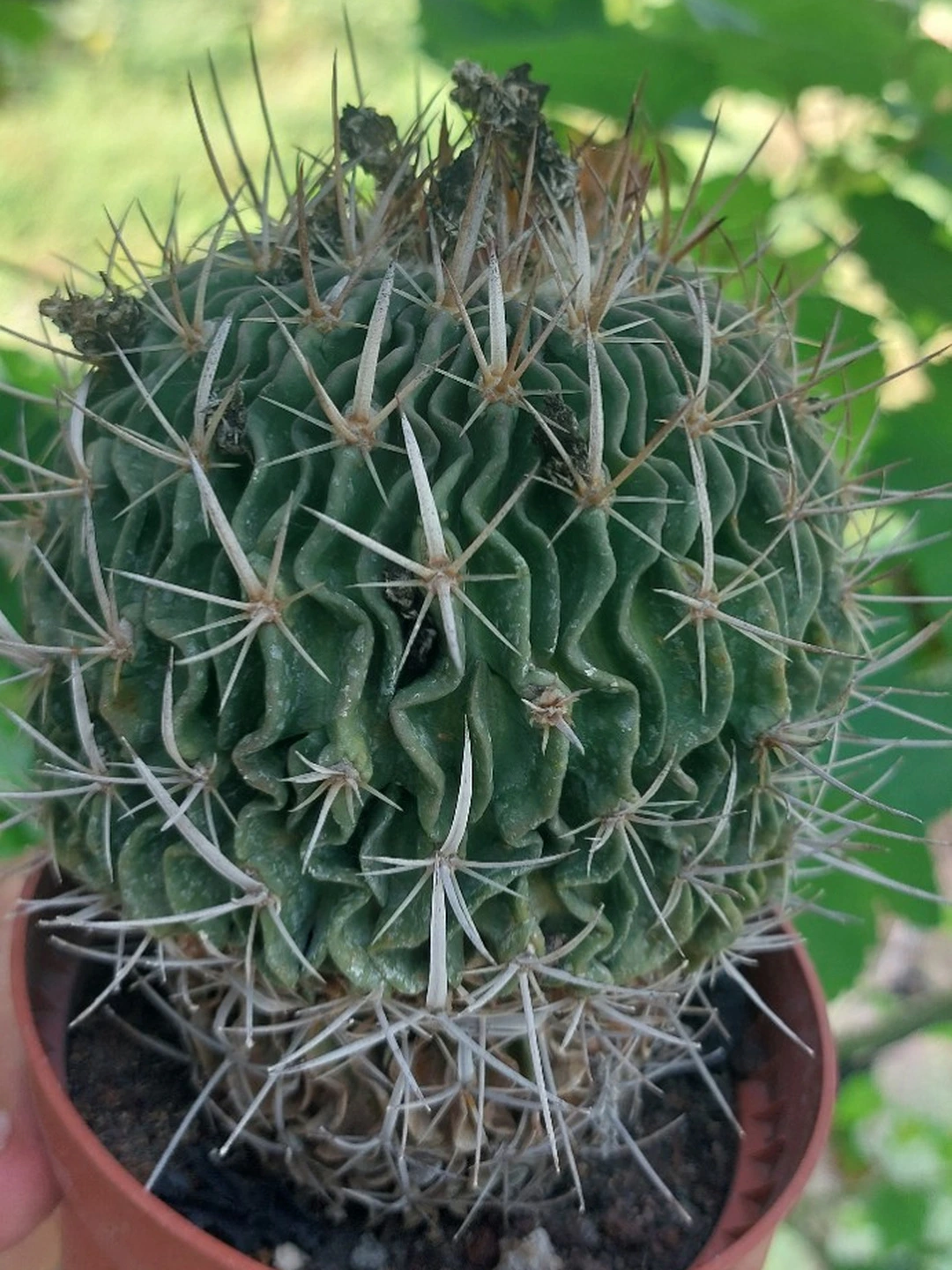
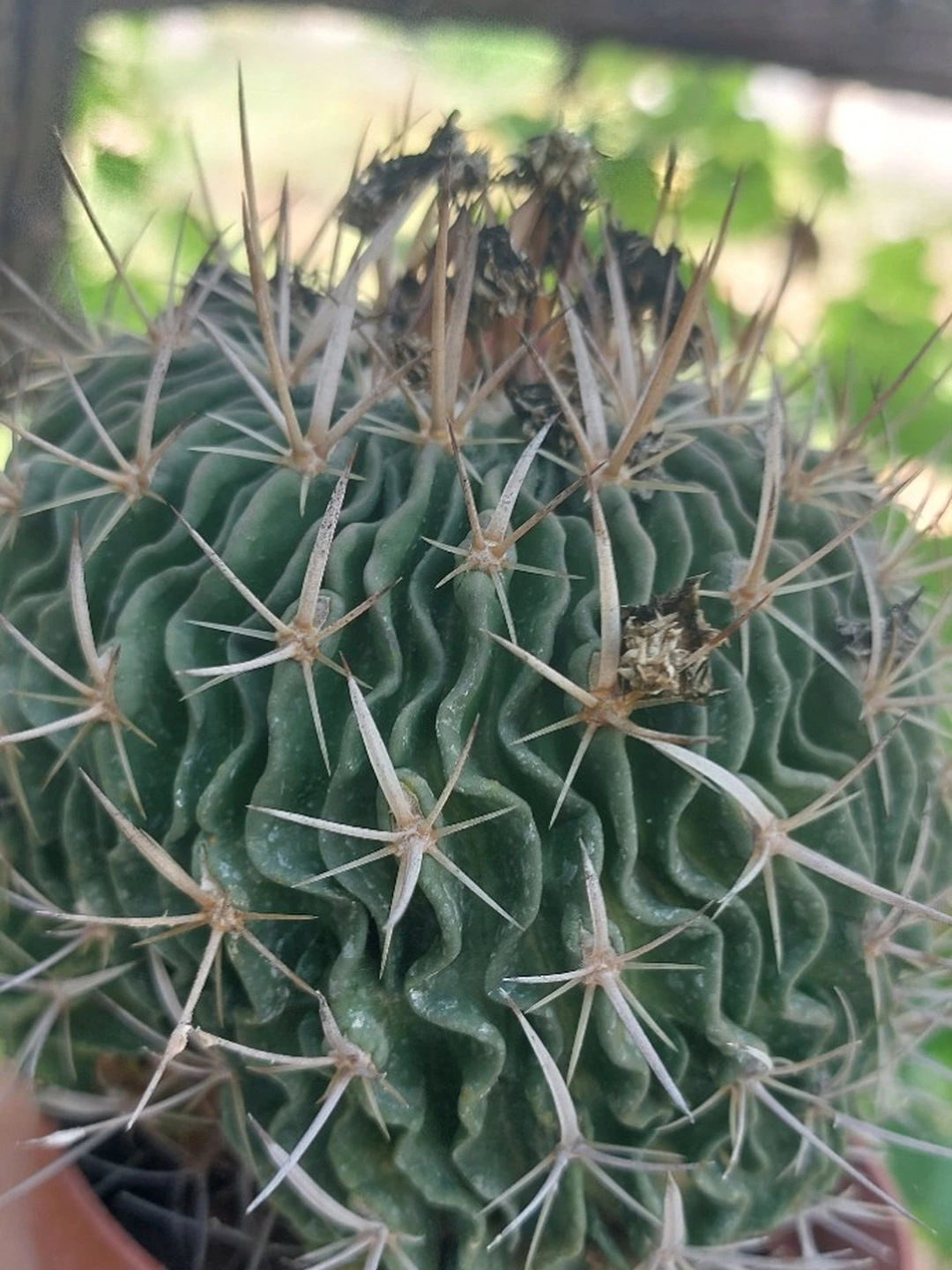
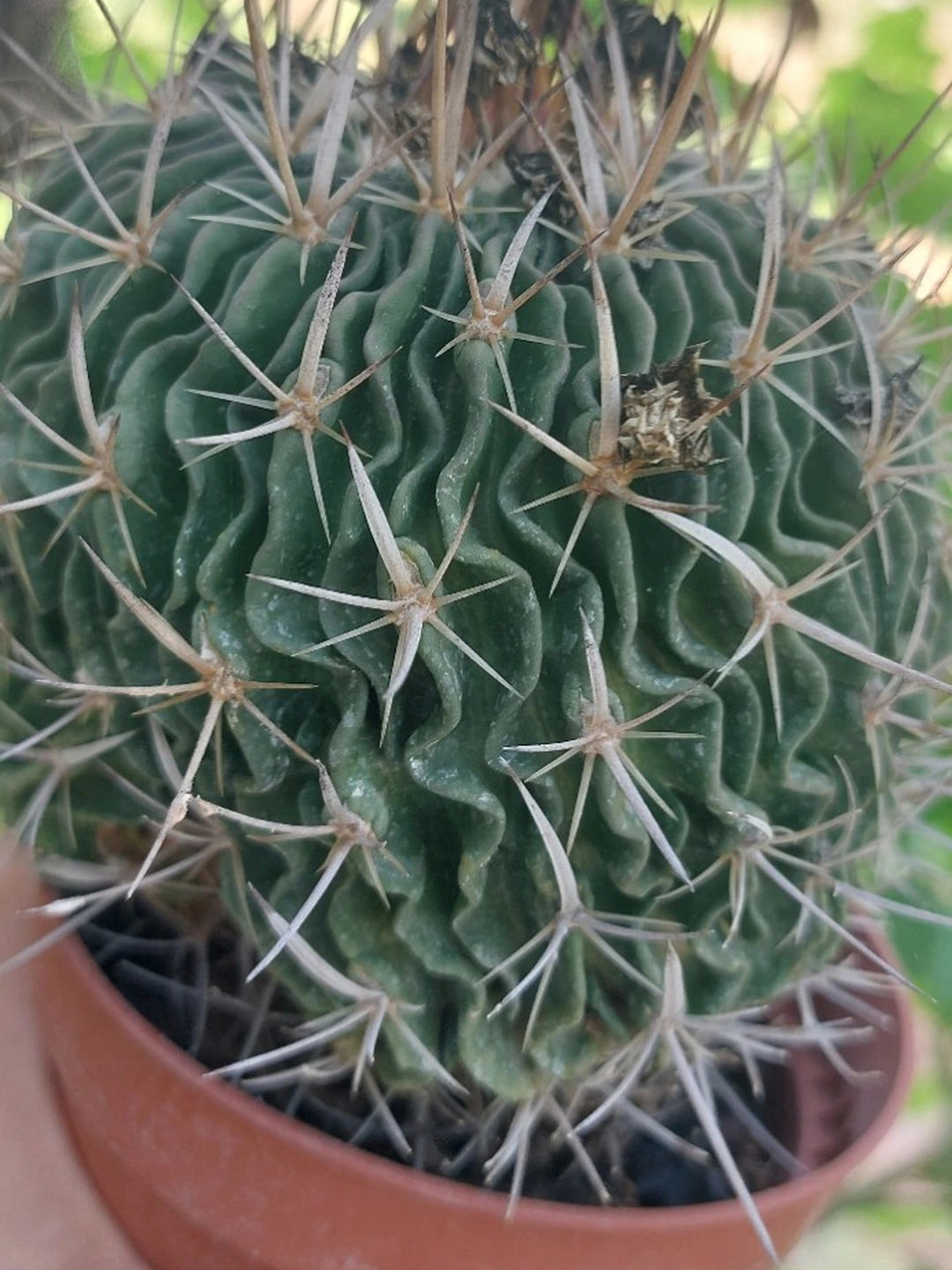
Stenocactus crispatus is a Mexican natural cactus associated with numerous narrow ribs and a conspicuously folded stem surface. Numerous narrow, undulating ribs, closely spaced areoles, and variable spination are strong clues, but the broad synonymy means that no single surface character should define the species. The botanical-dictionary layer explains the living plant, while accepted identity and the 99-name nomenclatural surface remain explicit in the taxonomy article.
Native records point to desert or dry shrubland biomes.1 Cultivation should provide fast oxygen return to the root zone, a controlled wet-dry cycle, and sufficient light rather than copying the habitat as decoration.
A very bright position with gradually introduced direct sun supports compact rib development; abrupt harsh exposure can scorch the epidermis. Do not use a fixed-day calendar. Water deeply after the mix has dried throughout, remove all excess, and reduce watering markedly during cool or low-light periods. Use a coarse, mineral-forward, airy, fast-draining mix and avoid persistent moisture around the root zone.
“Brain cactus” and historical Echinofossulocactus labels may describe appearance or older literature but do not independently prove the current accepted identity. A commercial photograph is not an herbarium voucher. Historical Echinofossulocactus and other generic combinations do not replace the accepted species identity.
Spines present a mechanical risk to eyes, mouth, and skin. Global DD records an information gap; cultivated availability does not represent the condition of wild populations.2
A very bright position with gradually introduced direct sun supports compact rib development; abrupt harsh exposure can scorch the epidermis.
Do not use a fixed calendar. Water after complete drying and reduce frequency during cool or low-light periods.
A coarse, mineral-forward, airy, fast-draining cactus mix.
Spines present a mechanical injury risk. Global DD does not describe commercial stock.
It is manageable with fast drainage; hidden cool-season moisture, abrupt sun, and treating an old trade label as accepted identity are the main risks.
central, Gulf, north-eastern, and south-western Mexico.[^1] [^1]: Plants of the World Online. “Stenocactus crispatus.” Accessed: 2026-08-07. https://powo.science.kew.org/taxon/urn:lsid:ipni.org:names:244563-2
