
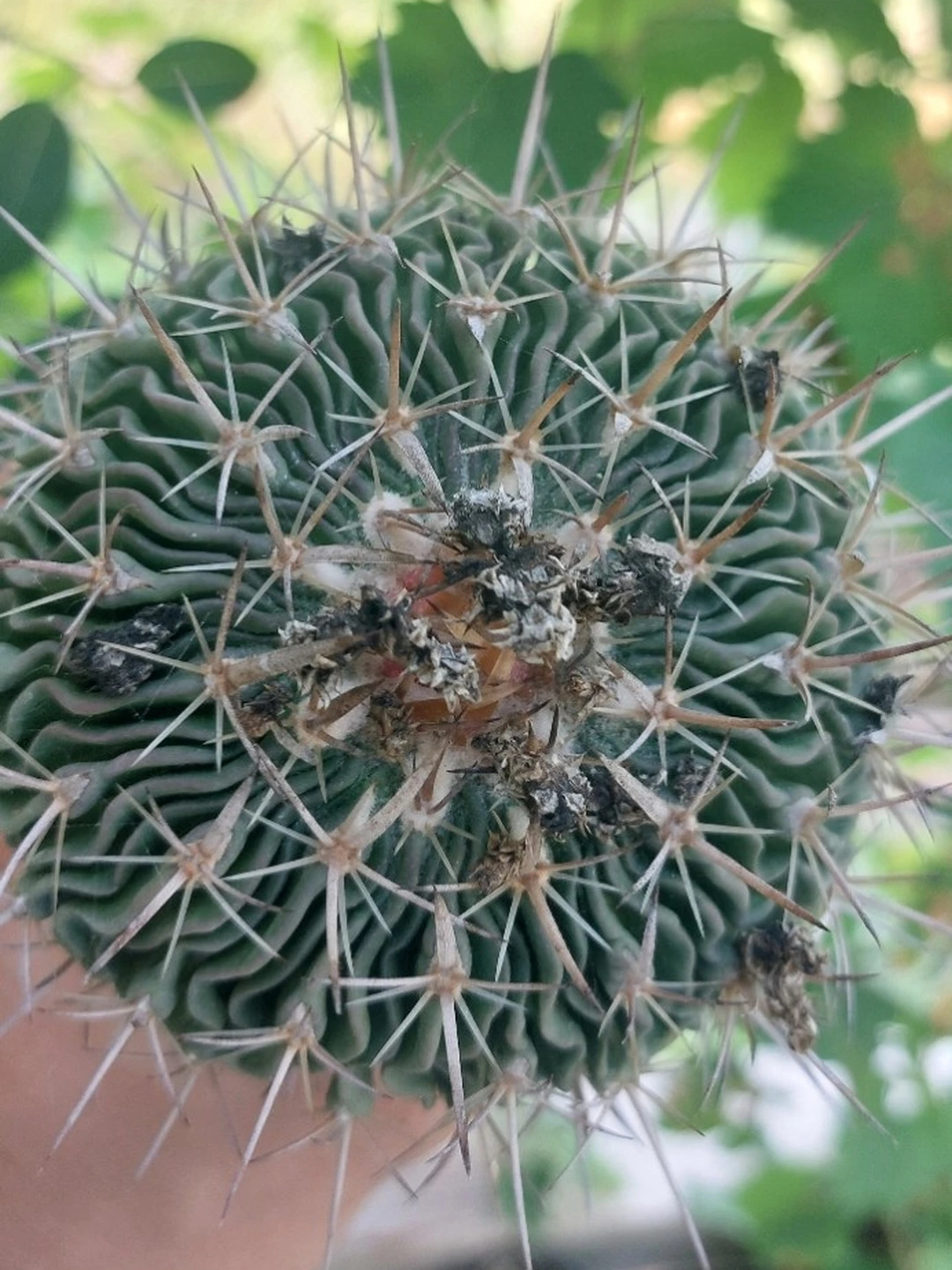
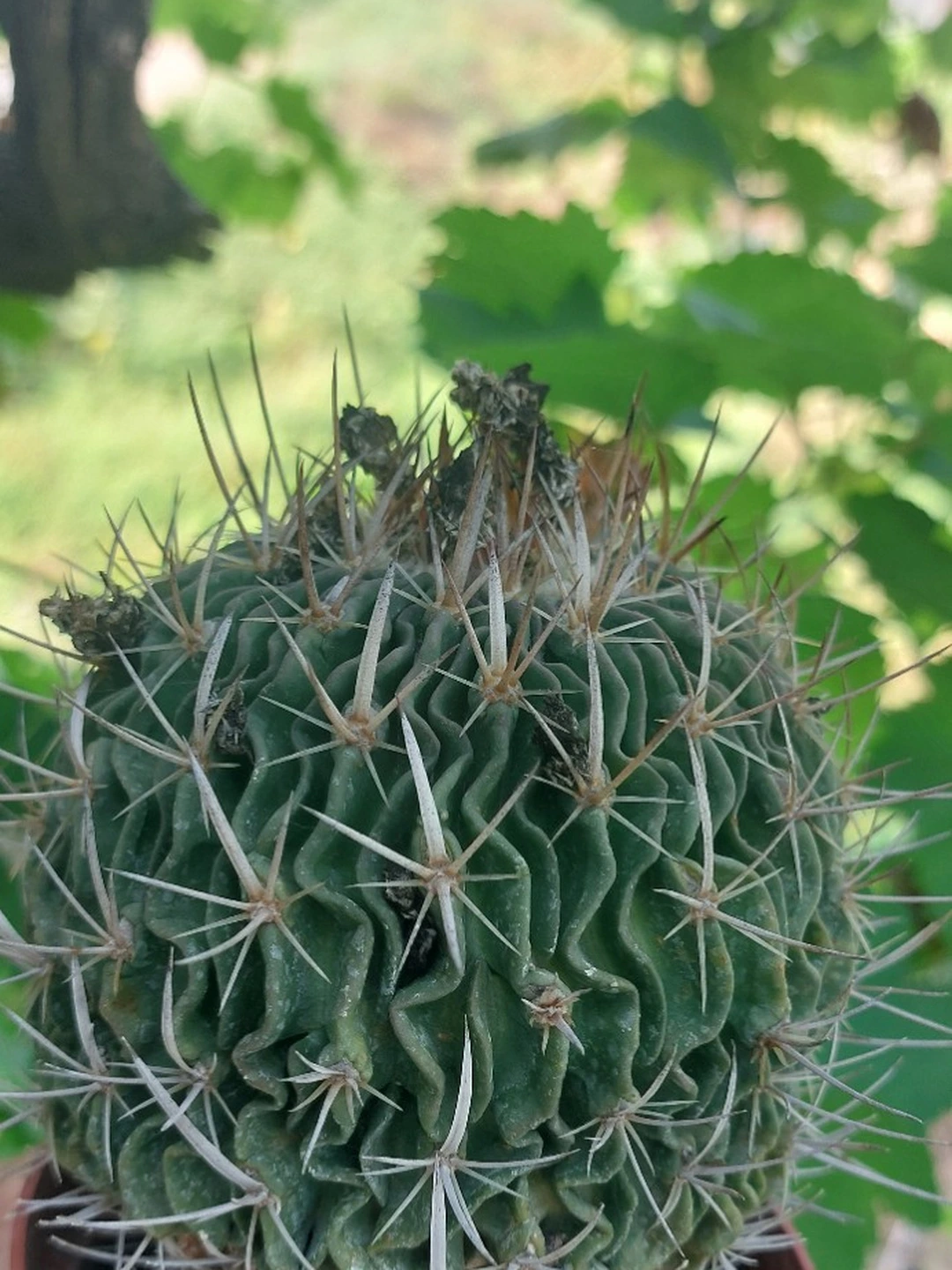
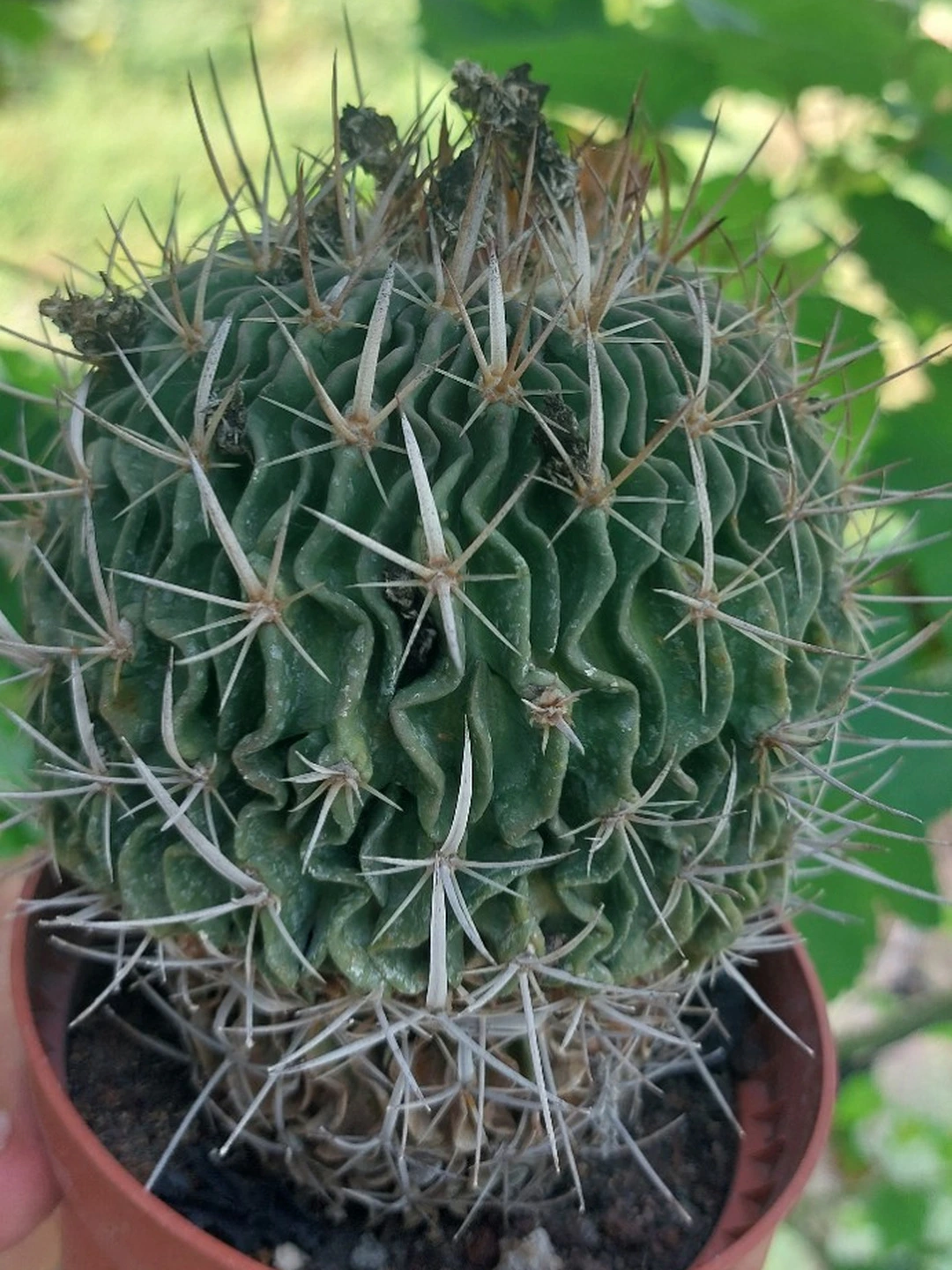
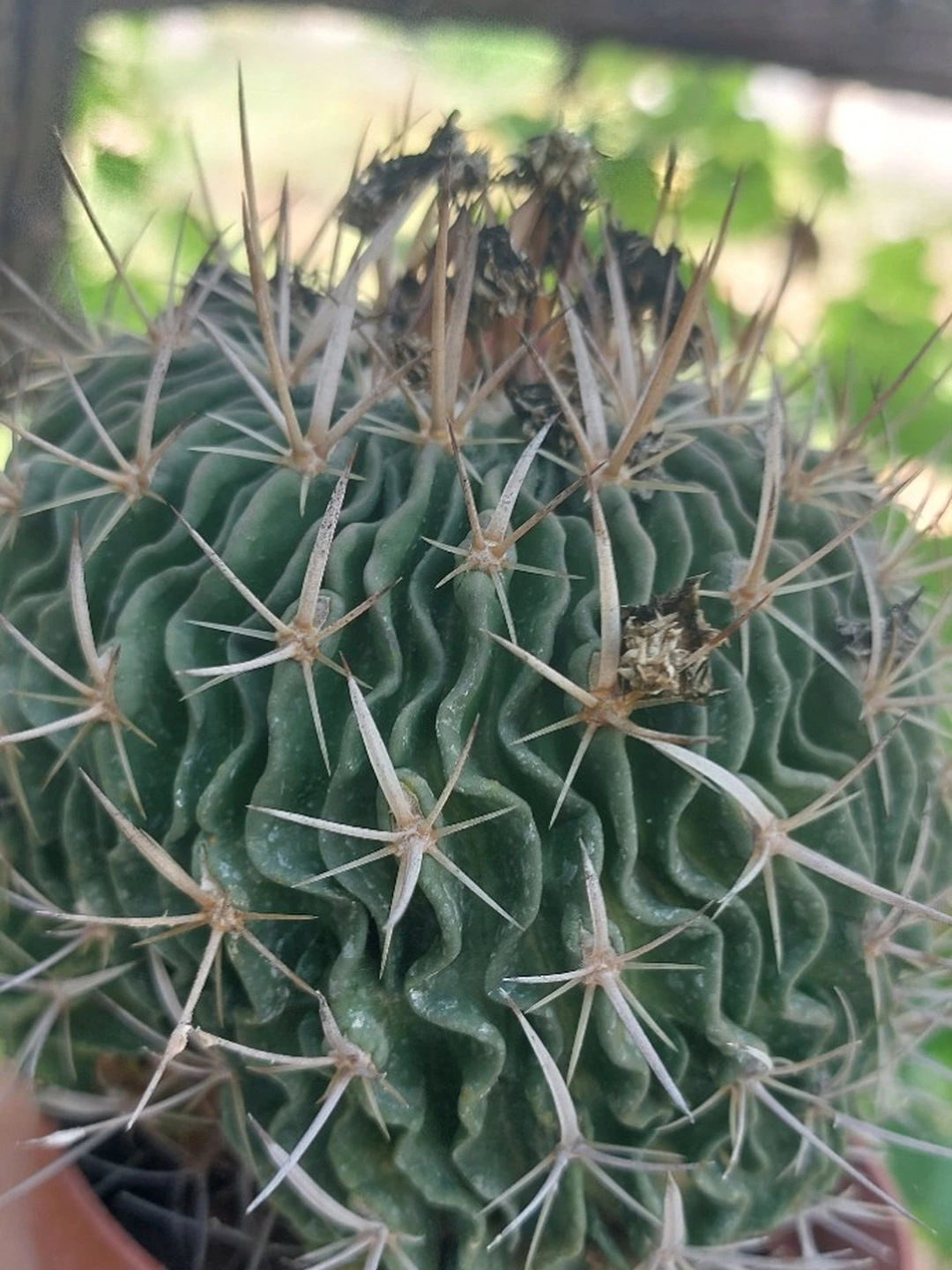
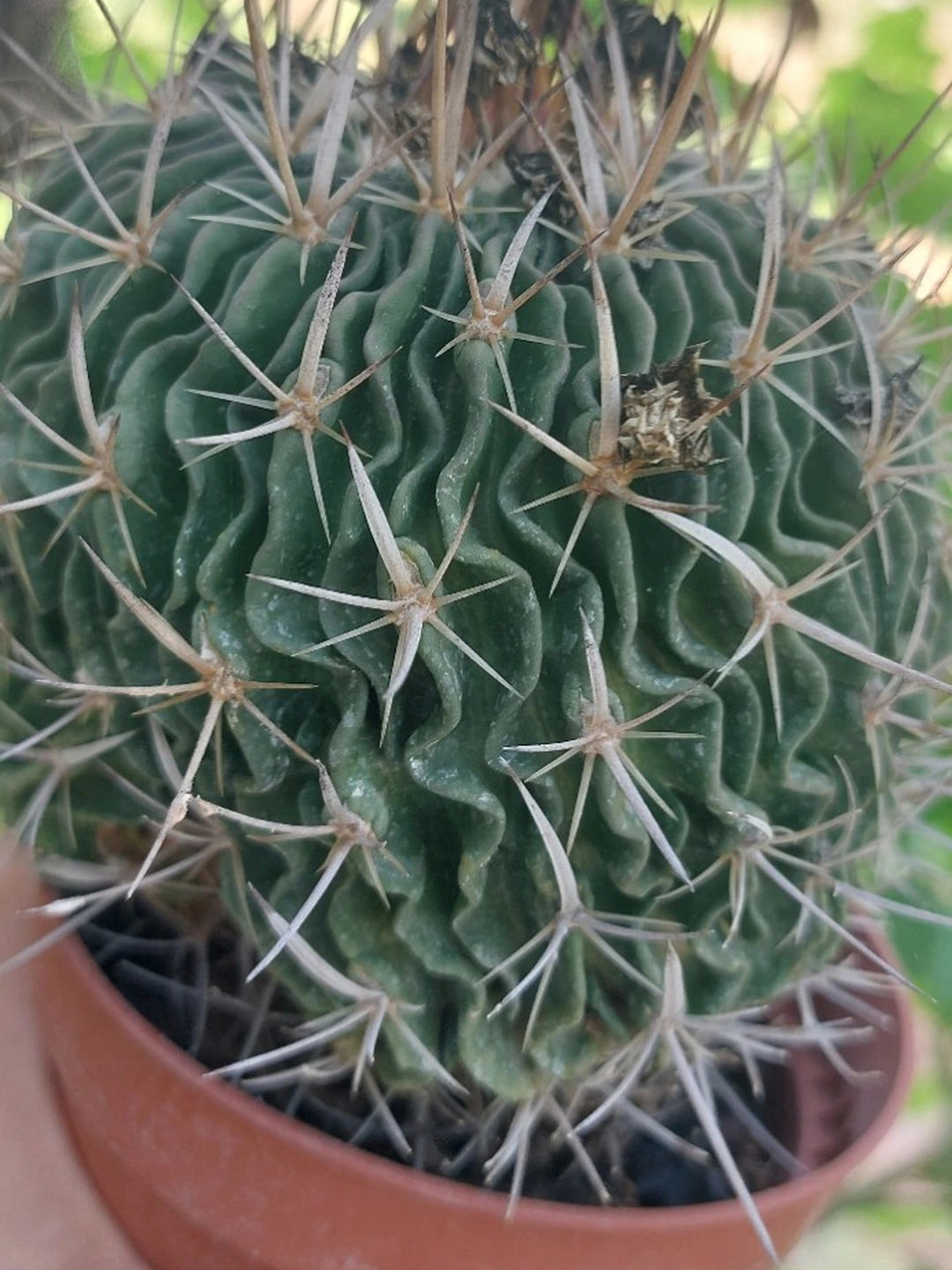
Stenocactus crispatus

Stenocactus crispatus: Accordion-Ribbed Wavy Brain Cactus
Native to the rocky, limestone landscapes of Mexico, Stenocactus crispatus (formerly Echinofossulocactus crispatus) displays one of nature's most unusual geometric designs. Its many narrow, densely folded, accordion-like ribs have earned it the common name "Brain Cactus."
Why Stenocactus crispatus?
- Surreal Accordion Form: Dozens of narrow, folded ribs can expand as the stem stores water, giving the plant the appearance of a living accordion.
- Elegant Purple-striped Flowers: In early spring, cream-pink petals emerge from the crown with striking dark purple midstripes.
- Distinctive Collection Species: Its geometric body and characterful long upper spines make it a standout cactus for collectors.
- Compact and Long-lived: It grows slowly, remains compact, and can be enjoyed for many years.
For anyone looking for a plant far removed from the ordinary, this distinctive species is an exceptional Kaktüs Doktoru selection.
A very bright position with gradually introduced direct sun supports compact rib development; abrupt harsh exposure can scorch the epidermis.
A coarse, mineral-forward, airy, fast-draining cactus mix.
Do not use a fixed calendar. Water after complete drying and reduce frequency during cool or low-light periods.
It is manageable with fast drainage; hidden cool-season moisture, abrupt sun, and treating an old trade label as accepted identity are the main risks.
Frequently Asked Questions
Where is it native?
What is its conservation status?
How often should it be watered?
Can it take direct sun?
What growing medium is suitable?
Do 99 synonyms represent 99 separate species?
Is an old Echinofossulocactus label wrong?
Is it safe around pets?
Reviews
There are no reviews for this product yet.
Recently Viewed
Care reminder list
Get seasonal care reminders for this product at your preferred frequency. You can change the email address below and unsubscribe from any reminder email.
