
Light
Full Sun
Strong light supports compact growth. Do not move a low-light plant abruptly into harsh sun.
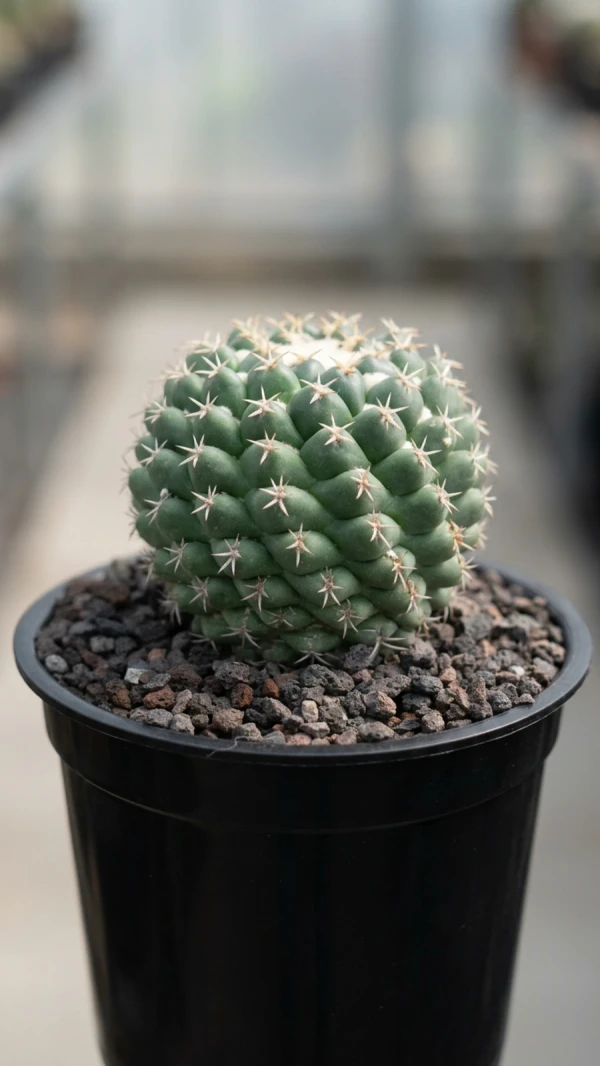
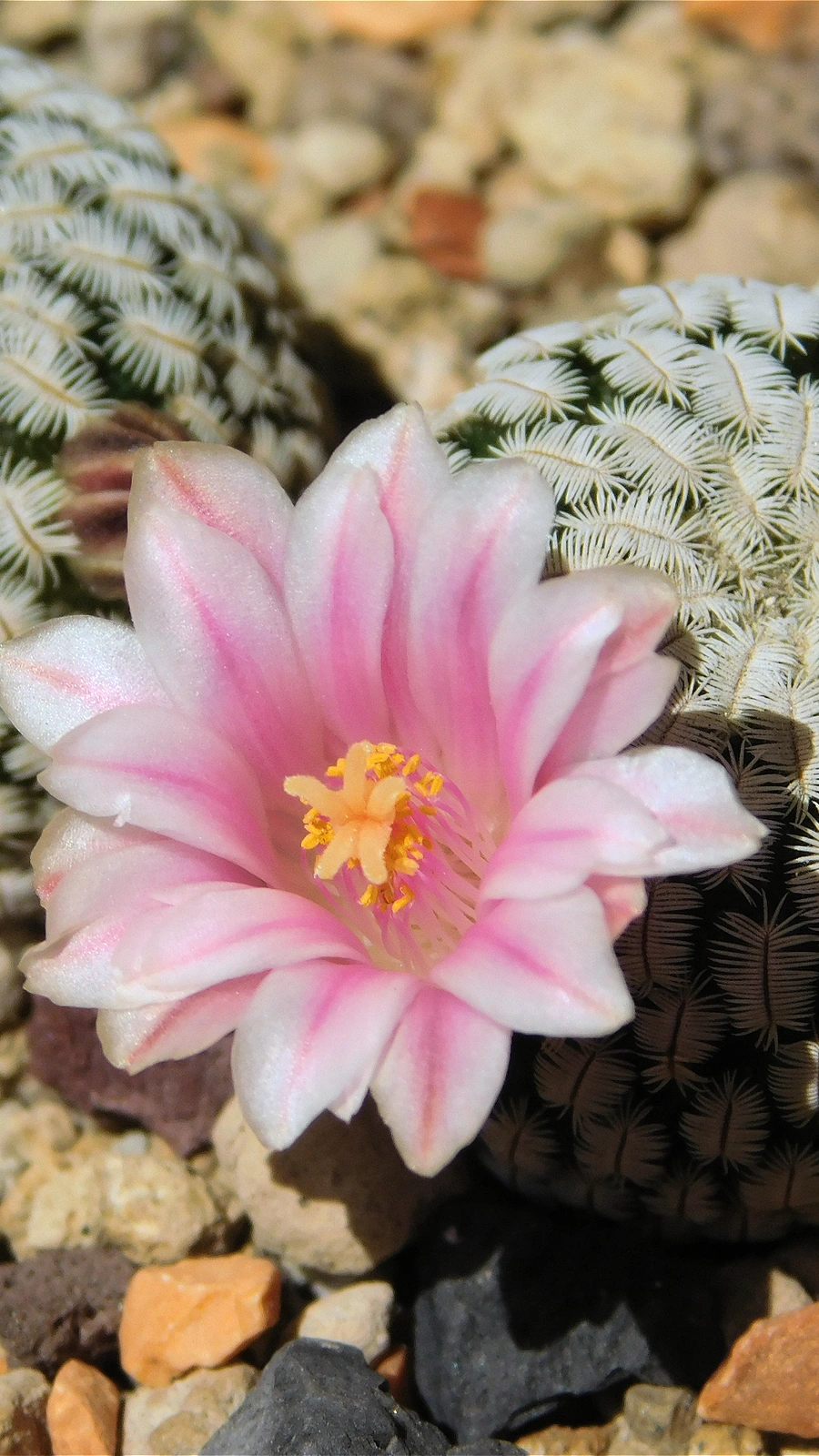 Reference image
Comb Mammillaria
Mammillaria pectinifera is a small, depressed-globose cactus endemic to the Tehuacán–Cuicatlán region of Puebla and Oaxaca.12 Short white radial spines form a flattened comb-like ring around each areole; the epithet “pectinifera” reflects this arrangement. Its low stem and dense spine cover can make plants difficult to see in rocky limestone habitat.
The verified native range is restricted to Puebla and Oaxaca.1 Small populations face habitat fragmentation, land-use change, and collection pressure. Genetic research found recent bottlenecks and heterozygote deficiency in some populations and recommends habitat connectivity, seed banking, and artificial propagation as long-term conservation tools.3
The global IUCN category is EN, the Mexican national category is Amenazada, and international trade is controlled by CITES Appendix I. These systems operate at different scales, but together they make one practical rule clear: never source plants removed from wild populations.
Strong light supports compact growth. The plant can receive sun in a greenhouse or outdoors, but a specimen raised under lower light should not be moved abruptly into harsh midday sun. Acclimation over several weeks reduces scorch risk. No universal minimum temperature is promised; wet, cold roots in a pot are generally more dangerous than dry cool conditions.
Water according to complete drying of the mix, not a fixed calendar. During active growth, soak the root ball and then let every excess drain away. Drying slows during cool or low-light periods, so watering naturally becomes less frequent. A narrow desert range does not mean the roots never receive water; the key is a wet-dry cycle with oxygen returning rapidly to the root zone.
Use a mineral-rich, airy, fast-draining mix that may include coarse limestone-derived particles. Dense organic mixes increase rot risk. An oversized pot can also create a large volume that remains wet long after the small root system has used available moisture.
The best-supported household concern is mechanical injury from the spines rather than a claim of chemical toxicity. Restrict access for children and pets. Because the species is in CITES Appendix I, provenance matters: choose documented, artificially propagated material only.
Strong light supports compact growth. Do not move a low-light plant abruptly into harsh sun.
Do not use a calendar. Water after complete drying and reduce frequency during cool or low-light periods.
Use a mineral-rich, coarse, airy, fast-draining mix in a modest drainage-holed pot.
Spines present a mechanical injury risk. The species is in CITES Appendix I; choose documented artificially propagated material only.
Slow growth and sensitivity to excess moisture require care; it is manageable with strong light and strict drainage.
The species is endemic to Puebla and Oaxaca in the Tehuacán–Cuicatlán region. Other Mexican states in the old live text are not verified native range.[^1] [^1]: Plants of the World Online. “Mammillaria pectinifera F.A.C.Weber.” Accessed: 2026-08-04. https://powo.science.kew.org/taxon/urn:lsid:ipni.org:names:134947-1
