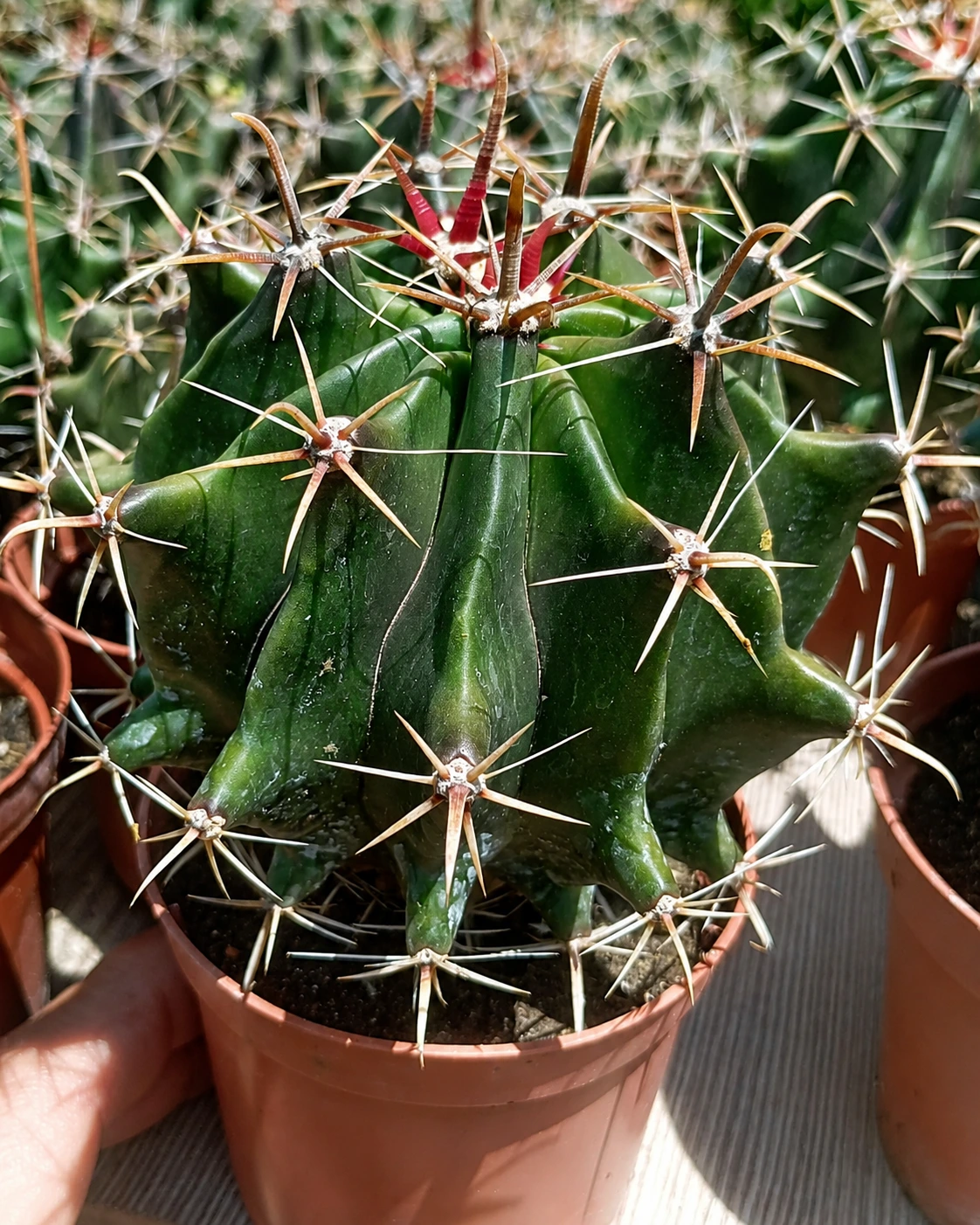
Ferocactus latispinus

Ferocactus latispinus

Description

Ferocactus latispinus is a strongly spined barrel cactus known for its flattened, often reddish central spines and compact architectural body. On the commercial product page it is presented with the buyer-friendly name “Devil’s Tongue Cactus”; in the botanical dictionary, the record keeps the scientific name. Current botanical references treat Ferocactus latispinus (Haw.) Britton & Rose as an accepted species in Cactaceae.1 GBIF places it at species rank in the genus Ferocactus and lists a range of older names and synonyms around the same taxon.2

The visual identity of the plant comes from the contrast between its rounded, ribbed body and its assertive hooked spines. Young plants remain compact, while older individuals may become more barrel-shaped. The common name is not a scientific character; it is a memorable trade name inspired by the flattened, curved spine profile. For identification, the rib structure, areoles and spine arrangement are more reliable than the common name.

Native range and habitat

POWO/Kew links the native range of the species to Mexico, from Durango to Puebla, and records it as a plant of desert or dry shrubland biomes.1 This should not be confused with the production origin of a commercial plant. Native range describes wild distribution; production origin describes where the plant offered for sale was grown or sourced. Kaktüs Doktoru keeps those two concepts separate.

Habitat notes from specialist cactus references connect the species with rocky slopes, dry shrublands and mineral soils with rapid drainage.3 This does not mean a home grower must recreate the habitat perfectly. It does mean that the root zone should never remain wet for long. Dense, peat-heavy mixes and decorative pots without drainage are common causes of decline. The Arizona-Sonora Desert Museum also presents the plant as a strong potted or patio specimen with a distinctive winter-flowering character in cultivation notes.4

Cultivation

Give Ferocactus latispinus strong light, a gritty cactus mix and a patient watering rhythm. After delivery, allow the plant to settle for about a week before watering. When the mix is fully dry, water thoroughly and let excess water drain away. In winter or in cool low-light conditions, keep the plant much drier. This is not a cactus that “needs no water”; it is a cactus that needs water at the right time in a fast-draining medium.

Light should be bright. If the plant was grown under filtered nursery light, introduce direct sun gradually rather than placing it immediately under harsh midday exposure. Strong light helps the plant keep its compact shape and spine character, while weak light increases the risk of soft growth and watering mistakes.

Conservation and trade note

IUCN-linked references generally treat Ferocactus latispinus as a species of lower conservation concern than many rare collector cacti, but ethical sourcing still matters.5 Commercial plants should not be implied to be wild-collected. For a responsible collection, choose nursery-produced plants with clear sourcing and avoid material that could add pressure to wild populations.

Cultivation note

Devil’s Tongue Cactus is a strong-looking, rewarding cactus, but the spines are serious. Keep it away from places where children or pets may brush against it. The safe routine is simple: stable bright position, no watering during the first settling week, then water only after the potting mix has dried through.

Common confusion points

Ferocactus latispinus is often grouped under the broad idea of “barrel cactus,” but the flattened, curved central spines give it a more specific identity. When choosing a plant, look beyond size. Healthy spine development, a firm matte body and a clean root neck are better quality signs than a wet shiny surface or a decorative pot with standing water.

Cultivation and placement note

In a batch product, each plant may show slightly different spine angles and body proportions. That is normal. Place it where it receives strong light and some airflow. Avoid leaving it on a dark shelf for long periods. If you use a decorative outer pot, always check that water is not trapped inside after watering.

References

  1. Plants of the World Online, Royal Botanic Gardens, Kew. “Ferocactus latispinus (Haw.) Britton & Rose.” Accessed 2026-05-18. https://powo.science.kew.org/taxon/urn:lsid:ipni.org:names:103646-2
  2. GBIF Backbone Taxonomy. “Ferocactus latispinus (Haw.) Britton & Rose.” Accessed 2026-05-18. https://www.gbif.org/species/7284444
  3. LLIFLE Encyclopedia of Cacti. “Ferocactus latispinus.” Accessed 2026-05-18. https://www.llifle.com/Encyclopedia/CACTI/Family/Cactaceae/4259/Ferocactus_latispinus
  4. Arizona-Sonora Desert Museum. “Devil's Tongue Barrel or Biznaga.” Accessed 2026-05-18. https://www.desertmuseum.org/visit/sheets/Ferlat.pdf
  5. IUCN Red List reference via LLIFLE/iNaturalist. “Ferocactus latispinus.” Accessed 2026-05-18. https://www.iucnredlist.org/species/151750/557418
Light

Filtered Sun

Strong light improves spine color and compact growth.

Watering

Measured

Water after full dry-down in active growth; reduce in winter.

Soil

Mineral ağırlıklı, hızlı drene olan kaktüs karışımı.

A mineral-heavy mix keeps roots airy.

Safety

Contact/Ingestion Risk

Spines are prominent; handle carefully.

Difficulty

Moderate

Hardy overall; controlled watering is the key.

Native Habitat

Mexico

Ferocactus latispinus is a Mexican barrel cactus species.

Frequently Asked Questions

Can Ferocactus latispinus be grown indoors?
Yes, it can be grown in a pot if it gets very bright light, excellent drainage, and careful watering. Its broad spines and increasing size mean placement and handling matter.
Why is Ferocactus latispinus called Devil’s Tongue cactus?
The common name refers to the wide, flattened central spines that can look like a protruding tongue, often with reddish tones on new growth.
How much sun does Ferocactus latispinus need?
It likes strong light and acclimated direct sun. Indoors, choose the brightest window available; outdoors, introduce full sun gradually to avoid scorch.
How should I water Ferocactus latispinus?
In the growing season, water thoroughly after the mix dries completely. Reduce watering in autumn and winter because cold wet soil can damage the roots.
Does Ferocactus latispinus flower?
Yes. Under good conditions it can produce purple-pink to yellowish flowers. It is known in cultivation for flowering at a smaller size than some barrel cacti.
Are Ferocactus latispinus spines dangerous?
The spines are stiff and can be broad or hooked, so they can hurt and irritate skin. Use thick gloves, tongs, or folded cardboard when handling the pot.
Why is my Ferocactus latispinus leaning?
A one-sided light source can make the body lean toward the window. Rotate the pot occasionally and provide stronger, more even light for balanced growth.
What soil should I use for Ferocactus latispinus?
Use a mineral-rich cactus mix with strong drainage. Heavy peat-based mixes that hold water for too long increase rot risk in barrel cacti.
How large does Ferocactus latispinus get?
It can become a substantial barrel cactus in habitat or suitable outdoor conditions. In pots, growth is slower and more controlled, with gradual diameter and spine development.
Is Ferocactus latispinus beginner friendly?
It is a good choice for growers with strong light. The two big rules are to avoid overwatering and handle the spines with respect.