
Light
Filtered Sun
Bright filtered light supports color and form.
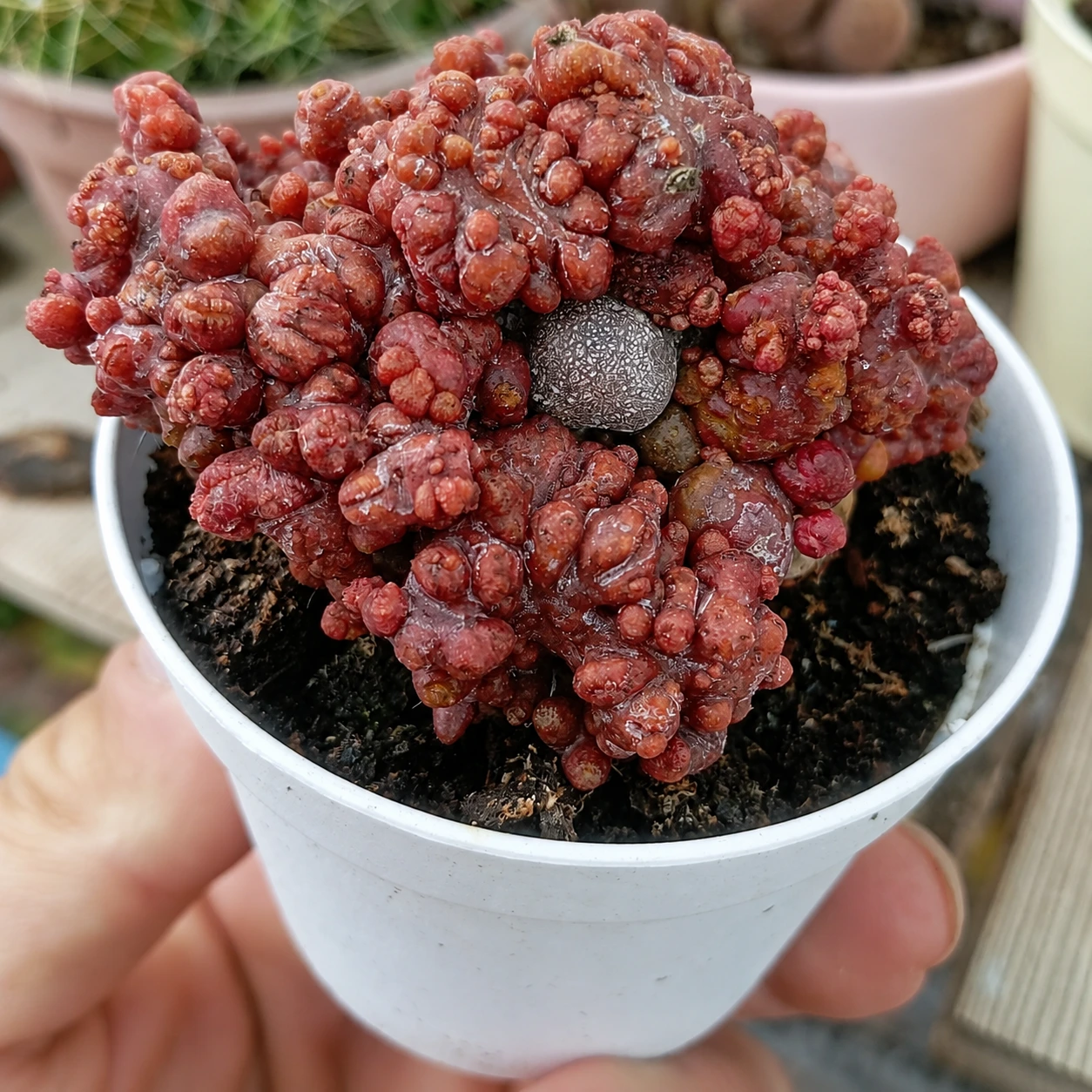
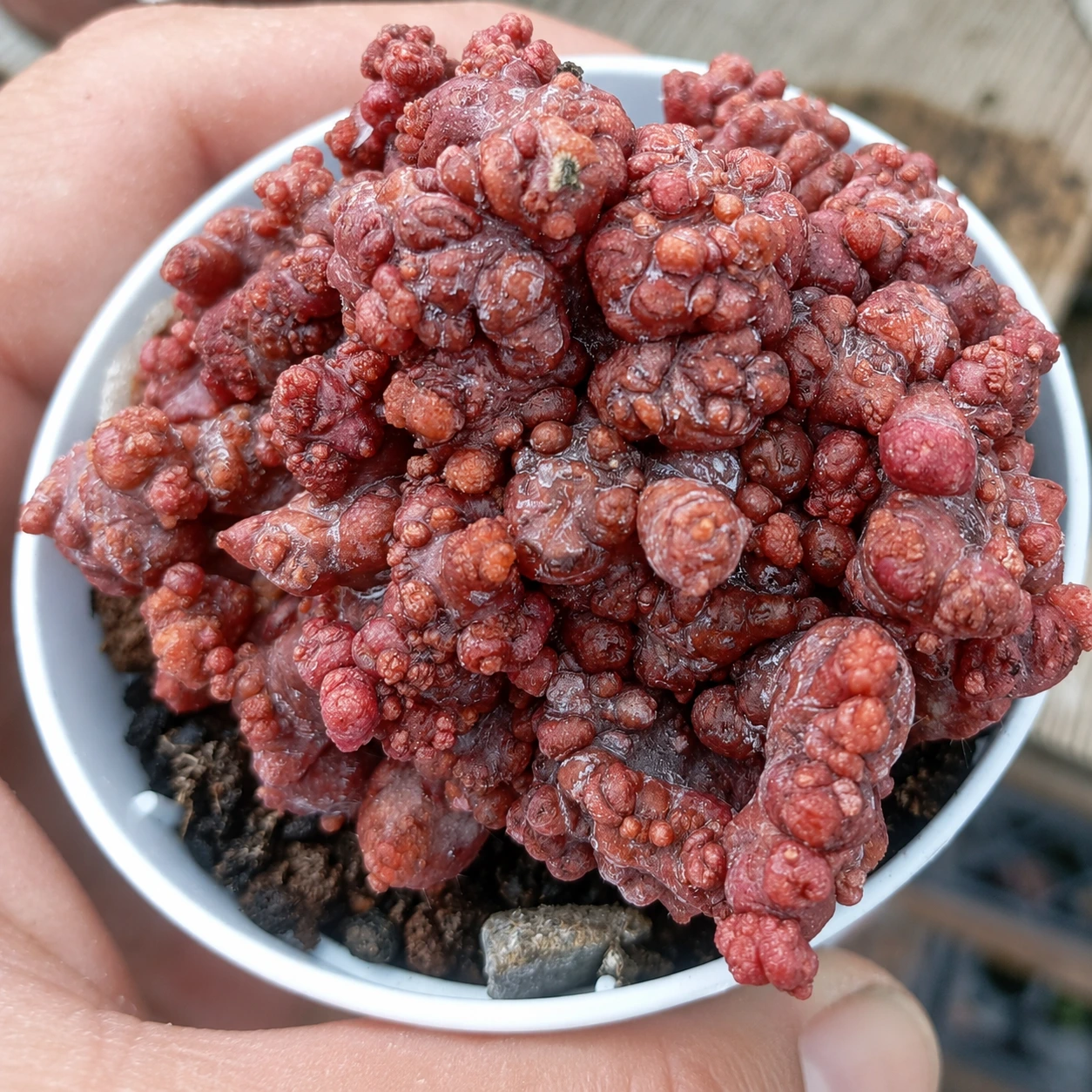
Echinopsis 'Chocolate' should be treated as a horticultural cultivar or trade form, not as a formally accepted wild species name. On the product page, “Chocolate Cactus” is a clear buyer-facing name. In the botanical dictionary, the display name can be Echinopsis 'Chocolate', with an explicit note that it is a collector/cultivar name used around Echinopsis material rather than a settled species-level taxon.
LLIFLE describes Echinopsis cv. Chocolate as a plant often found grafted but capable of growing on its own roots, requiring good drainage, a very porous mix, controlled watering from spring to autumn, and a dry winter rest.1 Cactus-Art presents a similar horticultural name, “Echinopsis sp. cv. Chocolate f. monstruosa cristata,” and warns against overwatering and poor ventilation because of rot risk.2 Trade and collector sources describe the form as chocolate-red, crested or monstrose, with soft irregular clusters and highly variable growth.34
The appeal of this plant is its departure from the standard green ribbed cactus body. It may form small lumps, crests, folds and asymmetric monstrose growth. Color can shift from burgundy to reddish brown depending on light and culture. Some plants show very few spines, while others may show occasional hairs or spine traces. This variability is part of the charm, but it is also why the plant should not be over-identified from a photograph.
A quality flag is appropriate in content data: the form can be described confidently as Echinopsis 'Chocolate' in the horticultural sense, but not as a verified wild species identity.
Use a gritty, airy cactus mix and a pot with drainage. Do not water during the first settling week after delivery. After that, water only when the mix has dried fully. Because crested and monstrose surfaces can hold moisture in folds, avoid overhead wetting in cool or poorly ventilated conditions. Keep the plant drier in winter and protect it from frost.
Light should be bright but not brutally hot. Good light helps preserve color, while extreme midday exposure can stress the surface. The safest placement is bright, airy and protected from the harshest summer sun.
If this is a single specimen product, the listing should state whether the photos show the exact plant. With variable monstrose forms, no two plants are identical. Avoid guarantees about maintaining a specific shape. Better wording: “monstrose/crested character,” “chocolate-burgundy tones,” and “individual form may vary.”
Chocolate Cactus is for collectors who want an unusual form, not for someone looking for a perfectly predictable cactus. Let it settle for a week before watering. Keep it in bright airflow, use a mineral mix, and avoid wet roots. The value of the plant is its form and health, not fast growth.
Echinopsis 'Chocolate' is a horticultural name, not a clean wild species identity. Plants sold under this name can vary in cresting, color intensity, root status and growth pattern. If the plant is grafted or own-root, record it when known. If it is not known, do not invent certainty.
This is not a symmetrical classic cactus. The buyer is choosing a sculptural, strange form. Exact-specimen photography matters. After watering, keep the plant airy so moisture does not remain trapped in folds. Soft dark spots, wet patches or unpleasant smell should be treated as warning signs.
Bright filtered light supports color and form.
Water as the mix dries; reduce in cool periods.
Use an airy, fast-draining mix.
Not edible; keep away from children and pets.
Color and form depend on balanced light and watering.
Echinopsis Chocolate should be treated as a cultivated collector form rather than a wild species.
