
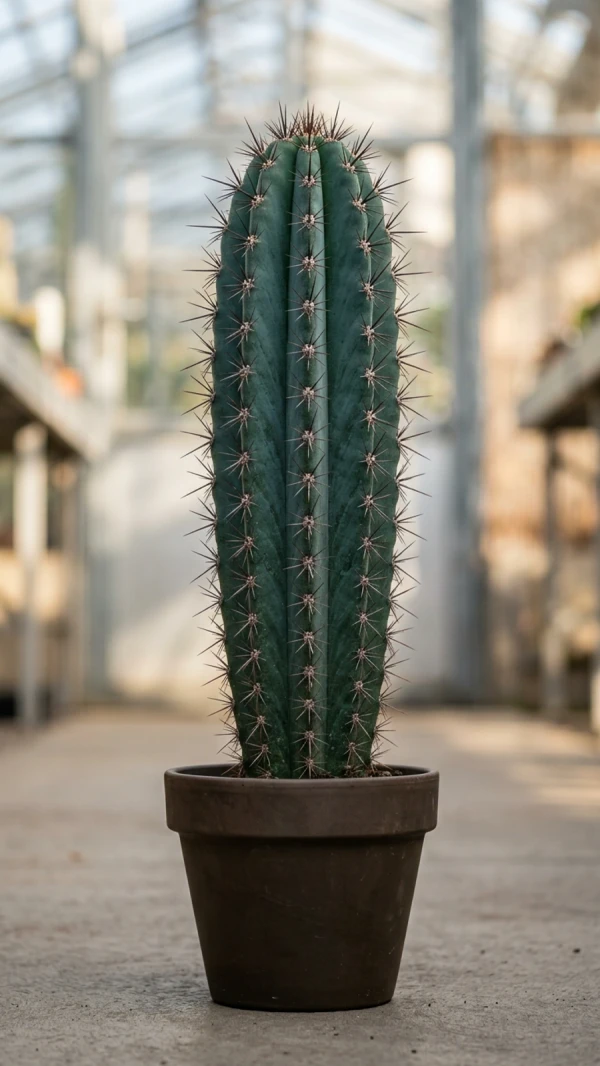
Native OriginUruguay and Argentina
OriginAdana
TypeNatural Species
ProductionNursery Stock
Doctor's Note

Dr. Prescription: Cereus aethiops Care Tips

Dear cactus friend, welcome your Cereus aethiops home! Here are a few key points to ensure this special species stays healthy and happy:

  1. Sun Bathing: Cereus aethiops loves full sun. Place it in your brightest windowsill or an outdoor location that receives plenty of sun throughout the day (protecting it from extreme cold). Sufficient light helps maintain its dark coloration.
  2. Moderate Watering: Cacti love to store water but dislike overwatering. Water thoroughly when the soil is completely dry, and then allow it to dry out completely again before the next watering. Reduce or stop watering during winter months.
  3. Good Drainage is Key: To prevent root rot, use a well-draining soil mix specifically formulated for cacti and succulents. Ensure the pot has drainage holes at the bottom.
  4. Pot Selection: Choose a pot appropriate for the size of your plant, with drainage holes. As Cereus aethiops grows, it may require transitioning to a larger pot.

With these simple tips, you can enjoy the beauty of your Cereus aethiops for years to come. Remember, a happy cactus means a happy home!

KD_CEREUS_AETHIOPS_001

Cereus aethiops

Black Cereus

TRY 1,710
In Stock
Last one
Size
Free ShippingVAT included.

Cereus aethiops: The Elegance of Black in Your Home

Looking for a dramatic and striking addition to your cactus collection? Cereus aethiops, commonly known as Black Cereus, stands out with its unique dark green and purplish-black stem. This columnar cactus possesses a majestic beauty, capable of reaching impressive sizes over time.

Why Choose Cereus aethiops?

  • Visual Spectacle: Its dark-colored stem, especially prominent when young, deepens in hue as it matures, adding a modern aesthetic to any space.
  • Easy Care: Ideal for those new to cactus care or with a busy lifestyle. It offers maximum impact with minimal effort.
  • Resilience: Thriving in full sun and highly drought-tolerant, this species flourishes easily on a bright windowsill indoors or in a protected outdoor area.
  • Collector's Value: A sought-after species among cactus collectors, Cereus aethiops is distinguished by its aesthetic value and rarity.

At Kaktüs Doktoru, we offer you the healthiest and highest quality Cereus aethiops specimens. Create an exotic South American ambiance in your home or office with this stunning cactus.

Light
Full Sun

A very bright position with gradually introduced direct sun supports compact growth; bluish epidermis is not an automatic guarantee against scorch.

Soil
A coarse, mineral-forward, airy cactus mix that dries rapidly during cool periods.

A coarse, mineral-forward, airy cactus mix that dries rapidly during cool periods.

Water
Measured

Do not use a fixed calendar. Water deeply after complete drying and reduce frequency during cool or low-light periods.

Difficulty
Easy

It is manageable with fast drainage; hidden cool-season moisture, abrupt harsh sun, and treating a retail colour label as a species diagnosis are the main risks.

Frequently Asked Questions

Where is Cereus aethiops native?
Its native range is Uruguay and north-eastern, north-western, and southern Argentina.
What is its conservation status?
LC is retained for wild populations; it does not describe commercial pot inventory.
How often should it be watered?
There is no fixed interval. Water deeply only after the mix has dried throughout and remove all excess water.
Can it take direct sun?
A very bright position with gradually introduced direct sun supports compact growth; bluish epidermis is not an automatic guarantee against scorch. Acclimate a lower-light plant over several weeks.
What growing medium is suitable?
A coarse, mineral-forward, airy cactus mix that dries rapidly during cool periods.
Can it be identified by stem colour alone?
No. Stem, ribs, areoles, spines, flowers, fruit, and—when available—provenance should be evaluated together.
Is it safe around pets?
Strong evidence of chemical toxicity is lacking, but the spines present a mechanical risk to eyes, mouth, and skin.
Does the commercial form represent the whole wild species?
No. One dark-coloured commercial specimen does not represent all stem and spine variation across Uruguay and Argentina.

Reviews

There are no reviews for this product yet.

Care reminder list

Get seasonal care reminders for this product at your preferred frequency. You can change the email address below and unsubscribe from any reminder email.