
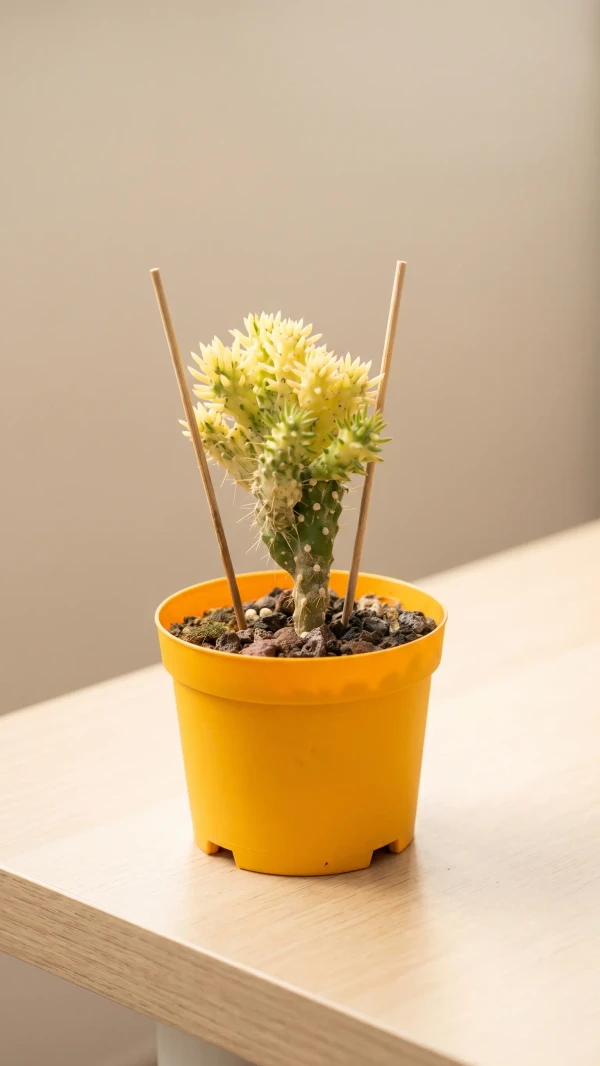
 Representative AI image
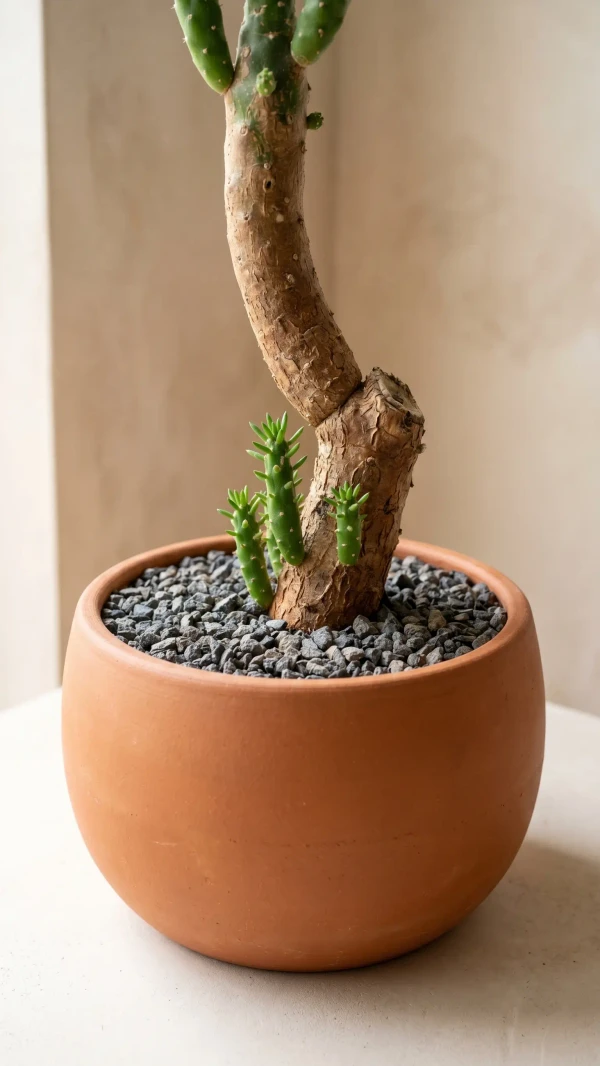 Representative AI image
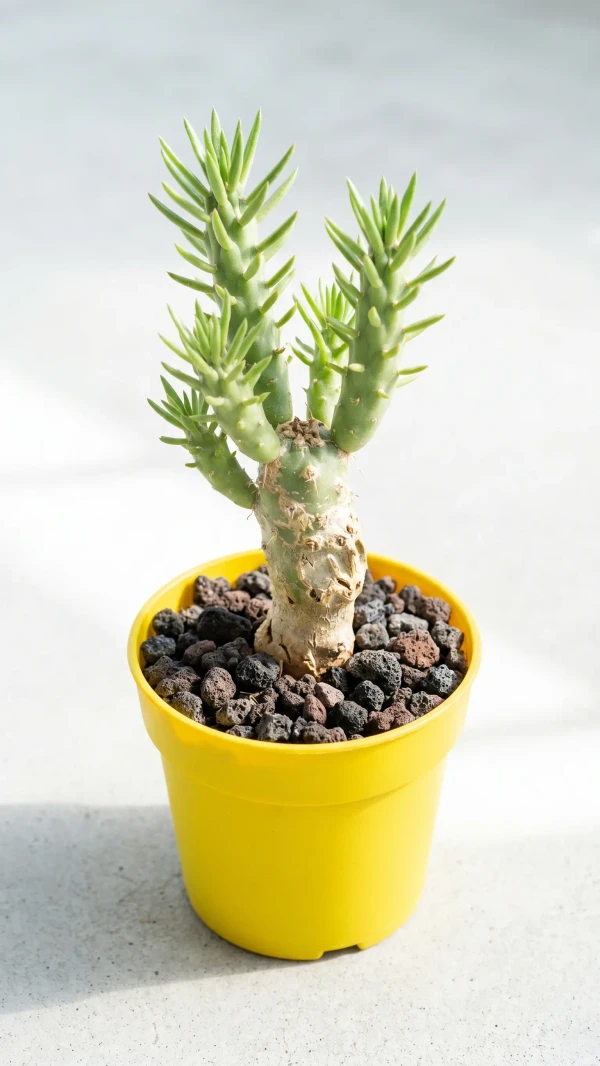 Representative AI image
Austrocylindropuntia subulata
Eve's Needle Cactus

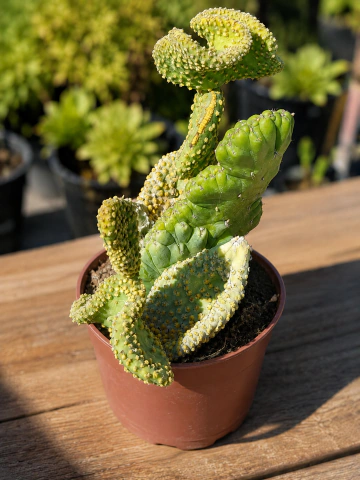
Austrocylindropuntia subulata develops fleshy, awl-shaped true leaves that can persist on its cylindrical, tuberculate stems. Strong spines emerge separately from the areoles and give the plant a pronounced architectural silhouette.
This plant suits growers who can provide strong light and a fast-draining medium. Indoors, use a very bright window position; when moving it outdoors, increase direct-sun exposure gradually. Do not water again until the growing mix has dried throughout, and never leave the pot standing in water.
The spines and hard-to-see glochids can lodge in skin. Position the plant away from children, pets, and busy walkways, and wear thick gloves when handling it. Because this is a living plant, branch count, leaf density, and stem form can vary naturally between specimens.
Strong light is preferred. Indoors use the brightest practical window; outdoors increase direct-sun exposure gradually because an abrupt change can scorch the surface.
Use a drainage-holed pot and an airy, mineral-rich, fast-draining mix. Avoid dense substrates that remain continuously wet.
Do not use a fixed-day interval. Water deeply after the mix has dried throughout; reduce frequency when cool conditions and slow growth extend the drying time.
The plant is resilient when strong light and strict drainage are provided. The main risks are calendar-based overwatering and weak growth caused by insufficient light.
Frequently Asked Questions
Are the long sharp structures leaves or spines?
Where is Austrocylindropuntia subulata native?
Does Eve’s needle cactus need direct sun?
How often should it be watered?
What substrate is suitable?
Can it grow indoors?
Is it safe around children and pets?
How does it differ from Austrocylindropuntia cylindrica?
Why is my plant not flowering?
Can it be propagated from cuttings?
Reviews
There are no reviews for this product yet.
Recently Viewed
Care reminder list
Get seasonal care reminders for this product at your preferred frequency. You can change the email address below and unsubscribe from any reminder email.
