
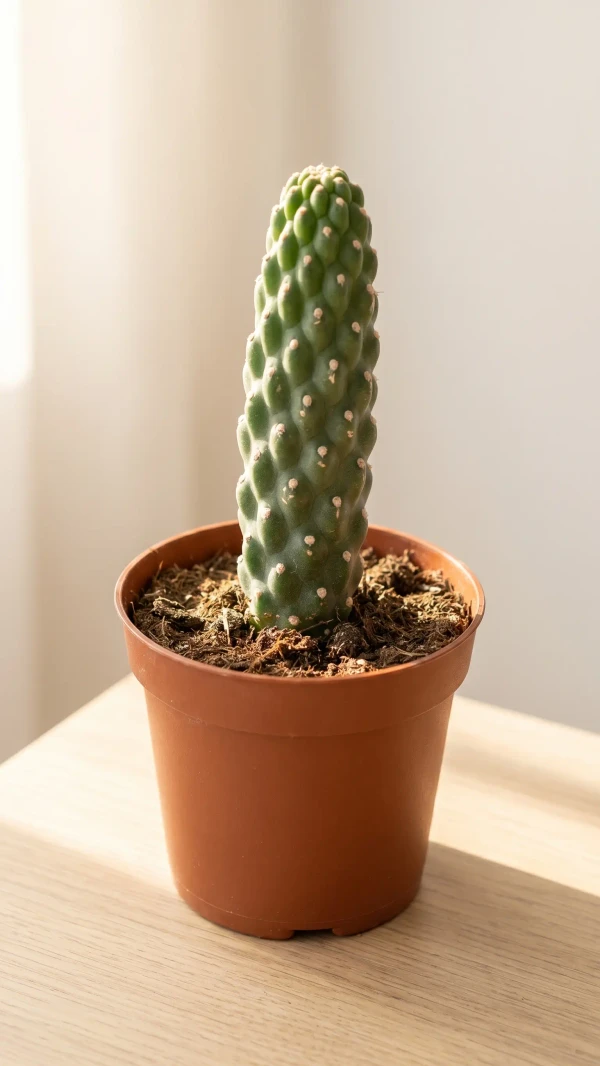
 Representative AI image
Austrocylindropuntia cylindrica
Cylindrical Opuntia
Austrocylindropuntia cylindrica develops cylindrical shoots with conspicuous tubercles and a strong architectural silhouette. Fleshy leaves may be visible on young growth and later fall; the spines from the areoles are different structures.
This plant suits growers who can provide strong light and a fast-draining medium. Indoors, choose a very bright window; outdoors, increase direct-sun exposure in stages. Do not water again until the mix has dried throughout, and never leave the pot standing in water.
Branch count, stem thickness, visible leaves, and spine density vary naturally between living specimens. Wear gloves to avoid spines and glochids. Native range, conservation status, and detailed care context are provided in the Botanical Dictionary entry.
Strong light is preferred. A plant grown in shade should be acclimated to intense sun in stages rather than moved abruptly.
Use a drainage-holed pot and an airy, mineral-rich, fast-draining mix.
Do not use a fixed-day interval. Water after the mix has dried throughout; reduce frequency when cool or low-light conditions extend drying time.
Manageable with strong light and strict drainage; the main risks are overwatering, insufficient light, and abrupt sun exposure.
Frequently Asked Questions
Where is Austrocylindropuntia cylindrica native?
What is its conservation status?
How often should it be watered?
Can it take direct sun?
What growing medium is suitable?
Are its leaves actually spines?
Is it safe around pets?
Why is the stem becoming long and thin?
Reviews
There are no reviews for this product yet.
Recently Viewed
Care reminder list
Get seasonal care reminders for this product at your preferred frequency. You can change the email address below and unsubscribe from any reminder email.
