
Light
Full Sun
Strong light is appropriate. A plant grown in shade should be acclimated to harsh direct sun in stages rather than moved abruptly.
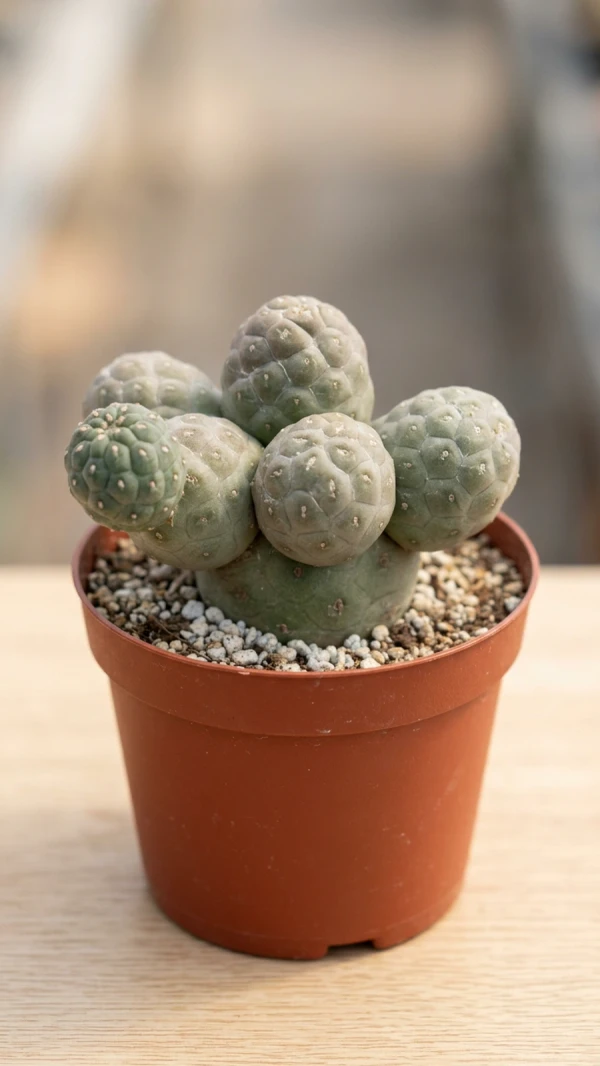
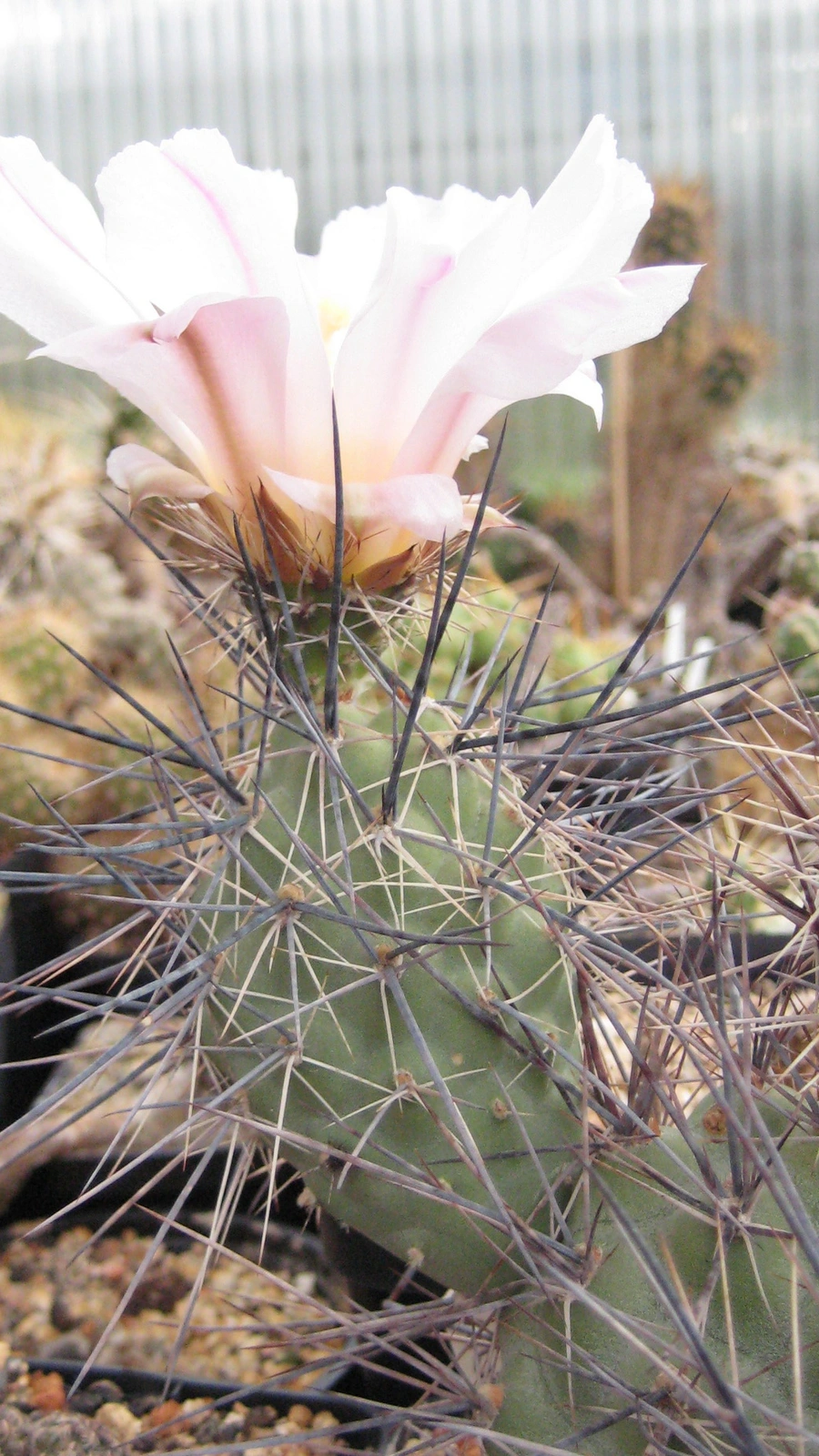 Reference image
Golf Ball Cactus
Tephrocactus geometricus is a succulent subshrub in family Cactaceae, native to Catamarca in Argentina.1 The current Kew backbone treats it as an independently accepted species, and the 2019 Tephrocactus phylogeny supports that distinction using molecular and morphological evidence.2
Systematic work on Tephrocactus evaluates strong articulation, leaf and glochid characters, and floral traits together rather than relying on one visual cue.2 The horticultural “golf ball” nickname can be useful as a trade label, but it is not a diagnostic character by itself. Growth form in a cultivated plant may change with light, water, root space, and previous growing conditions.
Kew associates the species with desert or dry shrubland.1 In container culture, the safe practical translation is a root zone that does not remain wet for long, an airy growing mix, and strong light. Habitat information should not be converted into a fixed number of days between waterings.
Wait until the growing medium has dried throughout before watering again. When watering, wet the root ball evenly and allow all excess water to escape. Drying takes longer under cool, enclosed, or low-light conditions, so watering naturally becomes less frequent. Persistently wet media increase the risk of rot.
Provide strong light, but do not move a plant kept in shade abruptly into harsh direct sun. Acclimate it in stages to reduce surface damage. Always use a drainage-holed pot and keep the medium mineral-rich, airy, and fast draining.
This review did not verify a maintained IUCN category directly tied to the currently accepted T. geometricus species concept. The dictionary therefore does not infer a threat category. Catamarca is part of the native range; Adana is the production origin of the commercial plant.
Spines and glochid-like structures in opuntioid cacti can cause mechanical irritation. Handle the plant with gloves, tongs, or folded card rather than gripping it with bare hands, and keep it away from areas where children or pets may brush against it repeatedly. No unsupported categorical claim of chemical toxicity or non-toxicity is made.
Strong light is appropriate. A plant grown in shade should be acclimated to harsh direct sun in stages rather than moved abruptly.
Do not water again until the mix has dried throughout. Cool or low-light conditions extend drying time, so watering should become less frequent automatically.
Use a drainage-holed pot and an airy, mineral-rich, fast-draining cactus mix.
Spines and glochid-like structures can cause mechanical irritation. Avoid bare-hand contact and use gloves or handling tools.
Manageable with strong light, complete drying, and fast drainage; the main practical risk is a persistently wet root zone.
The current Kew record gives Catamarca, Argentina as the native range and places the species in the Argentina Northwest floristic region.[^1] [^1]: Plants of the World Online. “Tephrocactus geometricus (A.Cast.) Backeb.” Royal Botanic Gardens, Kew. Accessed: 2026-08-09. https://powo.science.kew.org/taxon/urn:lsid:ipni.org:names:250216-2
