Scientific taxonomy article
Thelocactus setispinus
Thelocactus setispinus is treated by Plants of the World Online as an accepted species in Cactaceae. Its native range extends from southern Texas to northeastern Mexico, and it grows as a succulent subshrub in desert or dry-shrubland biomes. The Kew record reports the species as LC — Least Concern under the IUCN category.1
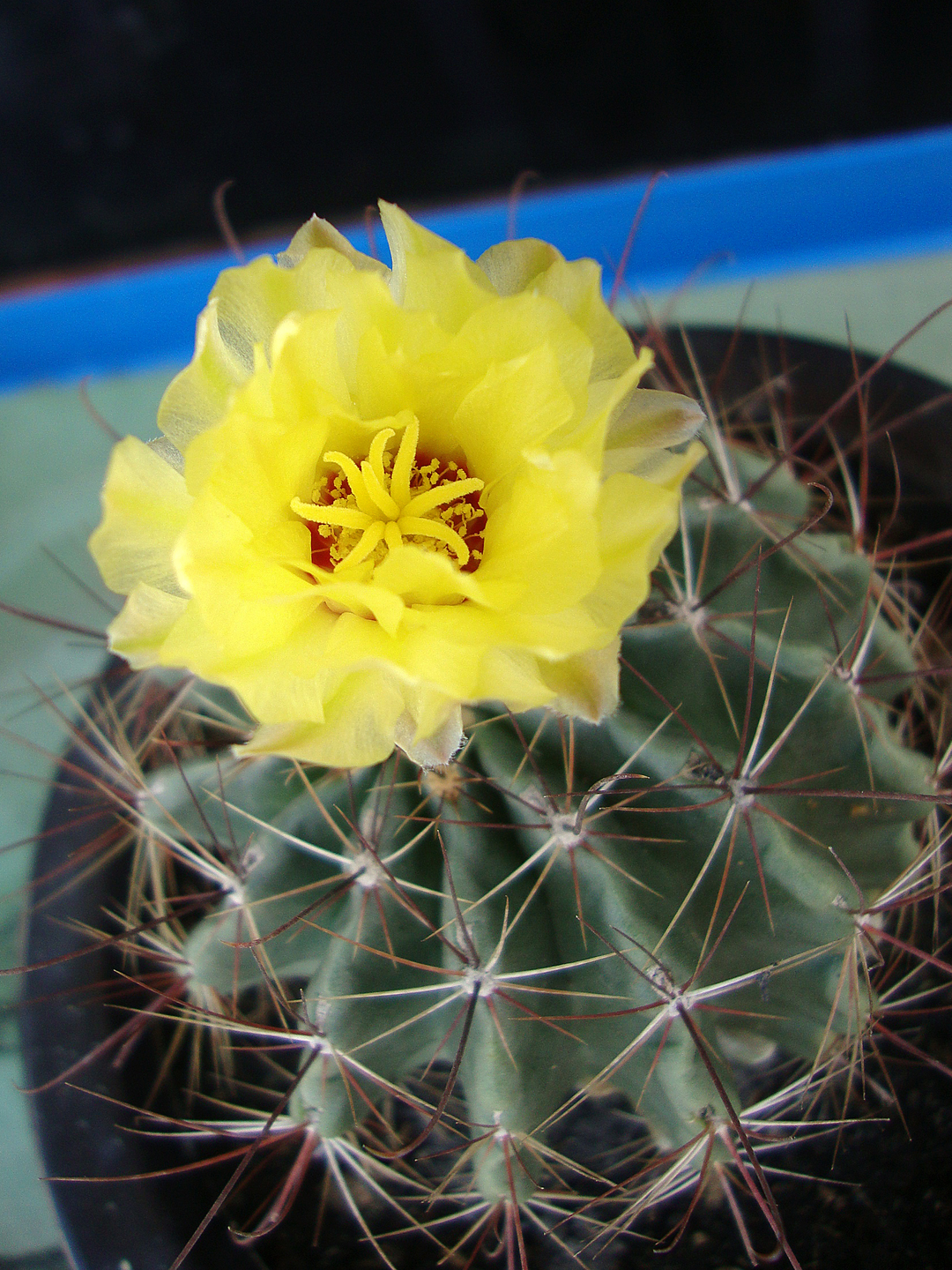
The Pack 0002 stock specimen shows a ribbed green body, long spines, a hooked central spine, and a yellow flower with a red throat. These visible traits support the stock identity; they do not guarantee that the dispatched plant will be flowering.
Cultivation summary
Provide a very bright, sunny position and introduce stronger direct sun gradually. Use a fast-draining, gritty cactus mix. During active growth, water thoroughly after the mix has dried, then allow all excess water to drain. Reduce water substantially during the autumn and winter resting period, and never leave the pot standing in water.2
The spines are not evidence of chemical toxicity, but they can cause mechanical injury. Keep the plant away from children, pets, and busy walkways, and use thick gloves or protective handling tools.2
Image attribution
Representative image: Prenn, Wikimedia Commons, CC BY-SA 3.0. A total of 9 horizontal pixels was removed from the source before resizing it to the 3:4 product format.3
References
- Plants of the World Online. “Thelocactus setispinus (Engelm.) E.F.Anderson.” Royal Botanic Gardens, Kew. Accessed: 2026-08-04. https://powo.science.kew.org/taxon/urn:lsid:ipni.org:names:285992-2 ↩
- Royal Horticultural Society. “How to grow cacti and succulents.” Accessed: 2026-08-04. https://www.rhs.org.uk/plants/types/cacti-succulents/houseplants/growing-guide ↩
- Prenn. “Thelocactus setispinus (4).JPG.” Wikimedia Commons, CC BY-SA 3.0. Accessed: 2026-08-04. https://commons.wikimedia.org/wiki/File:Thelocactus_setispinus_(4).JPG ↩