Species

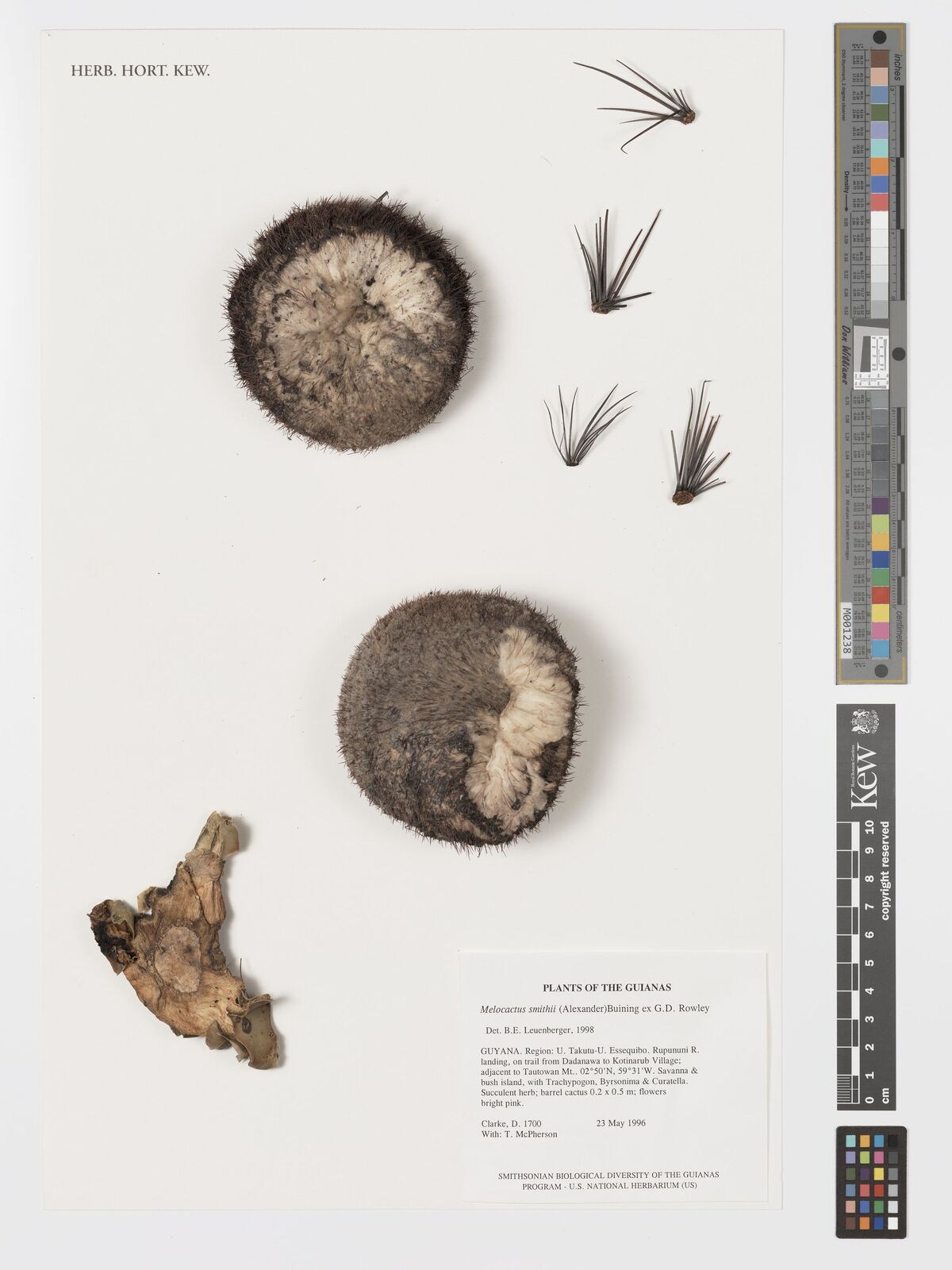
Melocactus smithii

Melocactus smithii

Article summary

Editorial SEO summary

Source-backed classification draft for Melocactus smithii.

Scientific taxonomy article

Melocactus smithii

Melocactus smithii (Alexander) Buining ex G.D.Rowley is treated as an accepted taxon in Plants of the World Online.1

The current source-backed classification places it in Cactaceae within Melocactus.12

Its recorded native range/source remark is BZNAP, BZNAM, GUYOO, BZNAC, NORTHERNSOUTHAMERICA, SOUTHERNAMERICA, BZNRM, BZNRO, BZNTO, GUY, BRAZIL, BZN; Brazil.1

POWO records the plant context as succulent subshrub, seasonally dry tropical.1

This is a source-populated draft intended for later Kaktus Doktoru editorial rewriting; care advice and morphology should be reviewed before publication.

References

  1. Plants of the World Online. "Melocactus smithii (Alexander) Buining ex G.D.Rowley". Royal Botanic Gardens, Kew. Accessed: 2026-06-10. https://powo.science.kew.org/taxon/urn:lsid:ipni.org:names:135604-1
  2. GBIF Secretariat. "Melocactus smithii". GBIF Backbone Taxonomy. Accessed: 2026-06-10. https://www.gbif.org/species/5620245

Plants In This Group

Melocactus smithii

Melocactus smithii

Melocactus smithii

Overview\n Melocactus smithii is a unique, globose to cylindrical cactus species belonging to the Cactaceae family, renowned for producing a striking woolly cephalium at maturity . Unlike desert cacti, it thrives in seasonally dry tropical environments.\n\n Taxonomy and Naming\nBelonging to the iconic genus Melocactus , its generic name originates from the Latin word 'melo' (melon) due to its ribbed, rounded shape. Once the mature cephalium forms, the main green stem ceases to grow, diverting all physiological energy to flower and seed production .\n\n Distribution and Habitat\nThis species is native to northern South America, specifically found in Guyana and northern Brazil (Roraima and Amazonas states) . It predominantly grows on rocky granite outcrops (inselbergs) and within dry savanna biomes.\n\n Appearance\nIt grows as a solitary, ribbed stem with heavy, rigid radials and central spines. Upon reaching adulthood, it develops a cap like cephalium consisting of dense reddish pink bristles and white wool. Tiny, self fertile pink flowers emerge from this cephalium, followed by club shaped red fruits.\n\n Cultivation and Care\n Melocactus smithii requires warm temperatures year round, ideally not dropping below 12°C even in winter . It prefers bright, filtered sunlight and higher ambient humidity than arid land cacti. Watering should be regular during summer but carefully reduced in winter.\n\n Common Mistakes\nOverwatering during cold periods and exposing the plant to drafts are the primary causes of root rot. Repotting a specimen that has already established a cephalium is highly risky due to fragile root systems .\n\n References\n Plants of the World Online (POWO), Royal Botanic Gardens, Kew.\n Hunt, D. (2006). The New Cactus Lexicon. DH Books.