
Light
Bright Indirect Light
Requires at least 6 hours of bright indirect light or filtered sun daily.
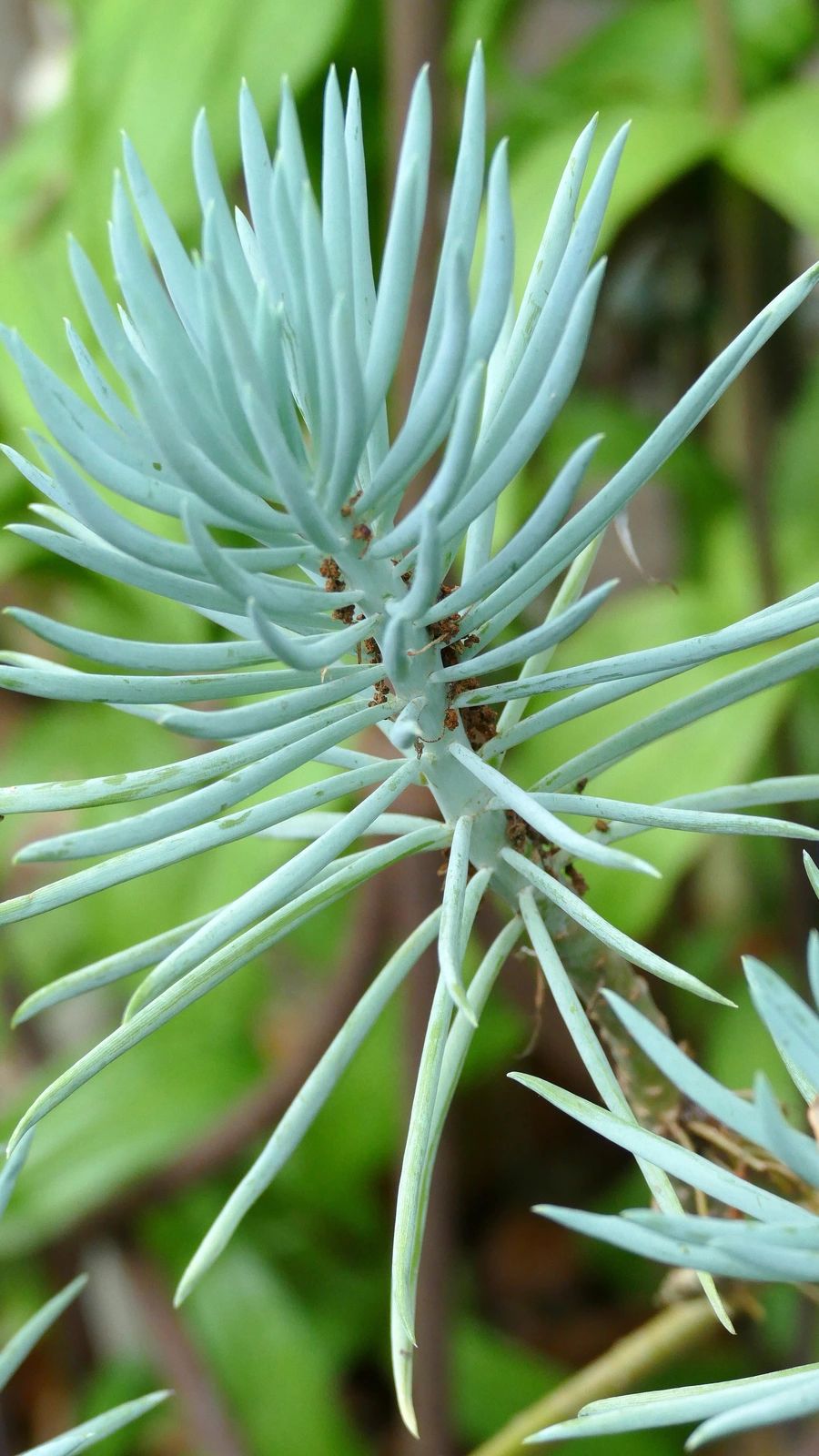 Reference image
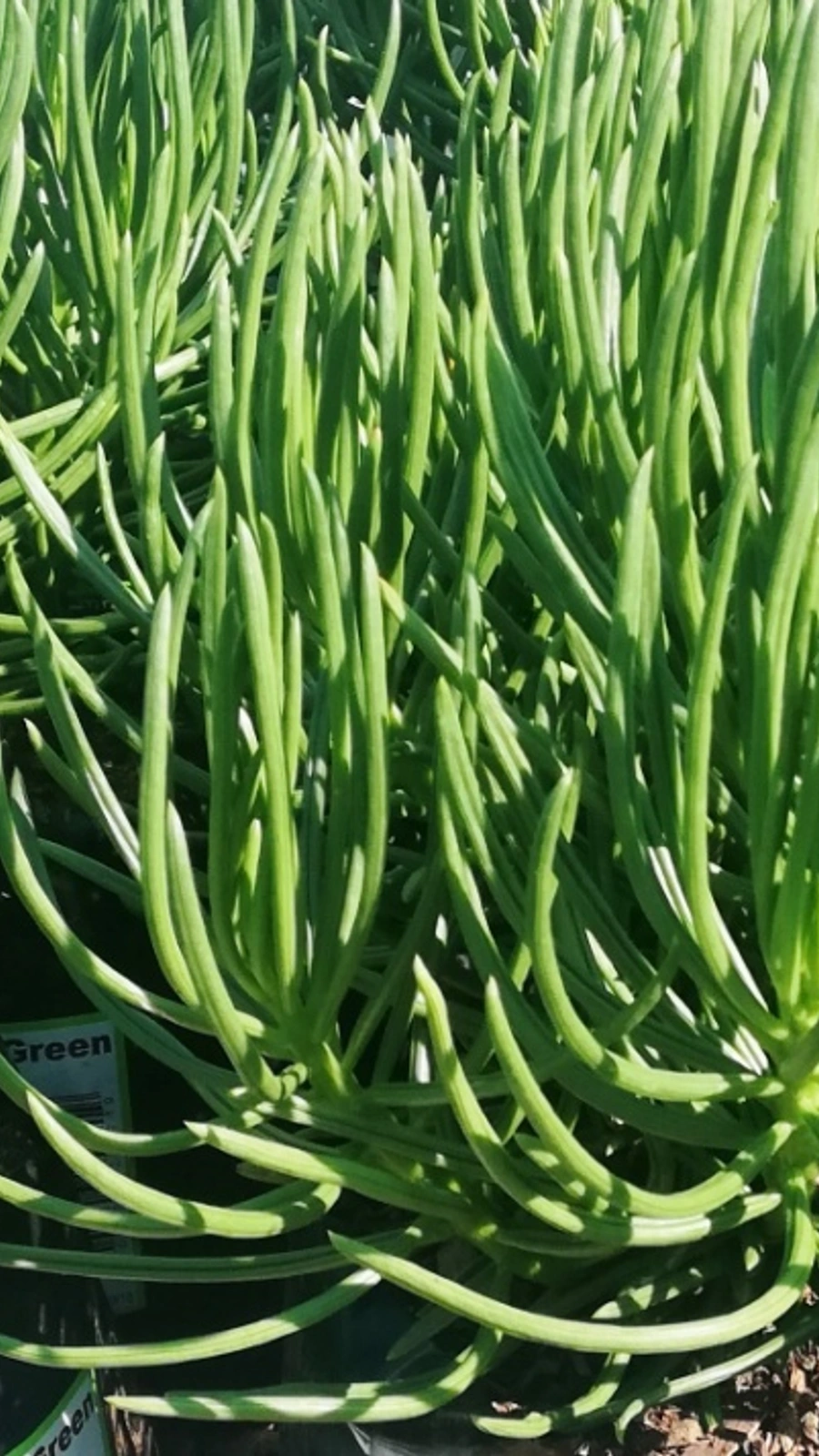 Reference image
Narrow-Leaf Chalksticks
Senecio vitalis (commonly known as Narrow-Leaf Chalksticks or Blue Pencil Senecio) is an attractive, semi-trailing succulent shrub belonging to the Asteraceae family 1. Highly valued for its architectural silhouette and chalky blue-green foliage, it is popular in xeriscaping and container gardening.
Recent botanical reclassifications have moved this species to the genus Curio, placing it under Curio talinoides 2. Despite this, it remains widely traded and recognized under its horticultural synonym, Senecio vitalis. It is also sometimes referred to as Senecio cylindricus.
This species is native to the Eastern Cape province of South Africa 1. In its natural habitat, it thrives on dry, rocky slopes and within semi-arid scrublands, showcasing extreme tolerance to high temperatures, intense sunlight, and prolonged periods of drought.
Senecio vitalis forms a low-growing shrub reaching 45 to 60 cm in height with a spread of up to 1 meter. Its leaves are narrow, cylindrical, slightly upward-curving, and covered in a powdery, waxy coating (epicuticular wax) that gives them a chalky blue appearance. It produces small, inconspicuous corymbs of cream-colored flowers in summer 3.
It thrives in bright, indirect sunlight to full sun. A highly porous, sandy, well-draining soil mix is essential to prevent water retention. Water thoroughly only when the soil is completely dry. It is frost-tender and should be overwintered indoors in colder climates.
The most frequent issue is overwatering, which quickly leads to root rot 2. Insufficient light can cause the plant to become leggy (etiolation), lose its compact shape, and fade from blue to green.
Requires at least 6 hours of bright indirect light or filtered sun daily.
Never water before the soil completely dries out; highly prone to root rot.
Use a specialized, highly porous cactus and succulent soil mix with pumice.
Toxic to pets; contains pyrrolizidine alkaloids which can cause digestive issues if ingested.
Extremely low-maintenance, highly drought-tolerant, and exceptionally easy to care for.
Native to the arid, rocky slopes and semi-desert brushlands of the Eastern Cape in South Africa.
