
Light
Full Sun
Requires full sun (at least 6 hours of direct sunlight) to maintain compact growth and vibrant colors.
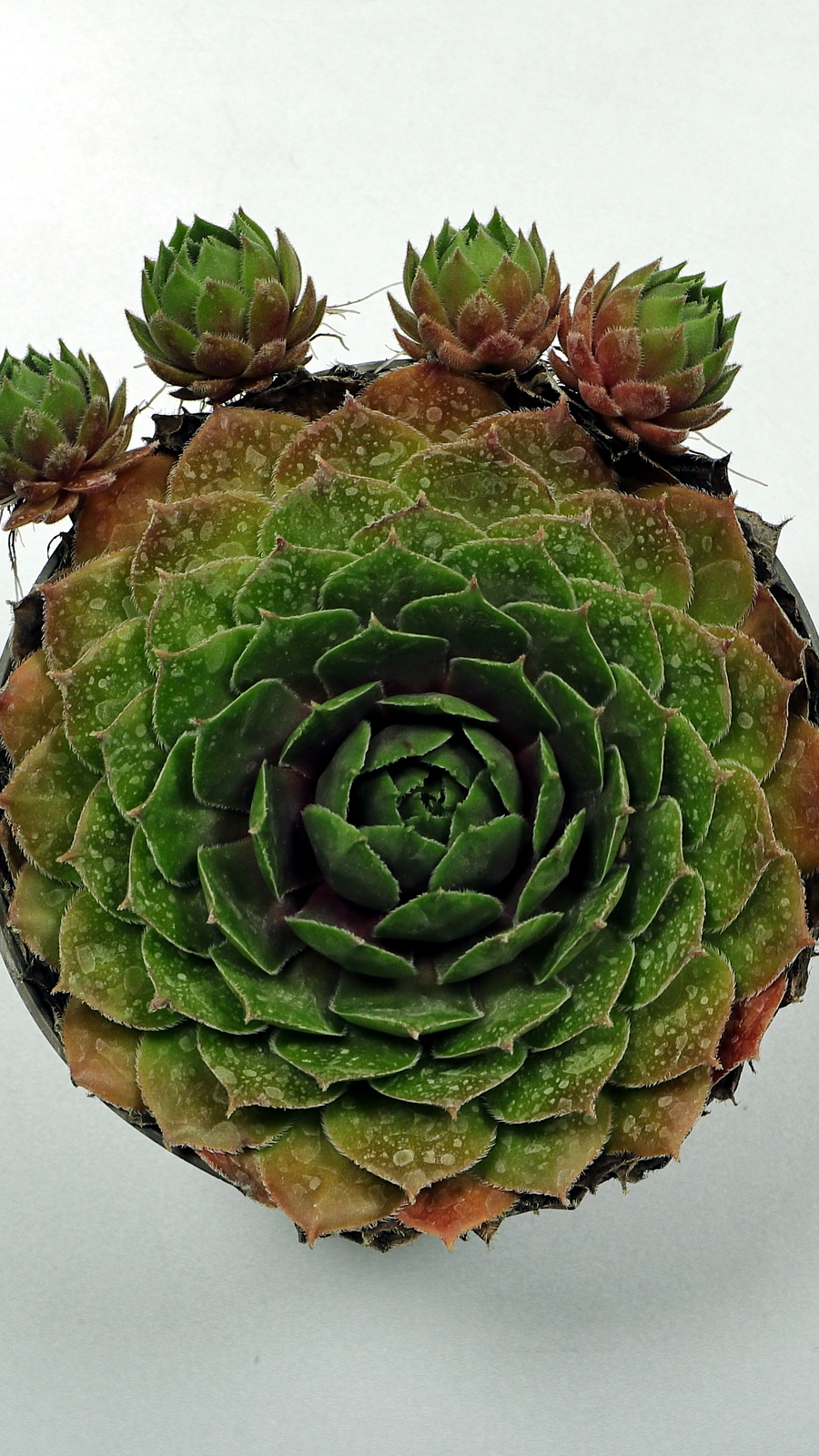 Reference image
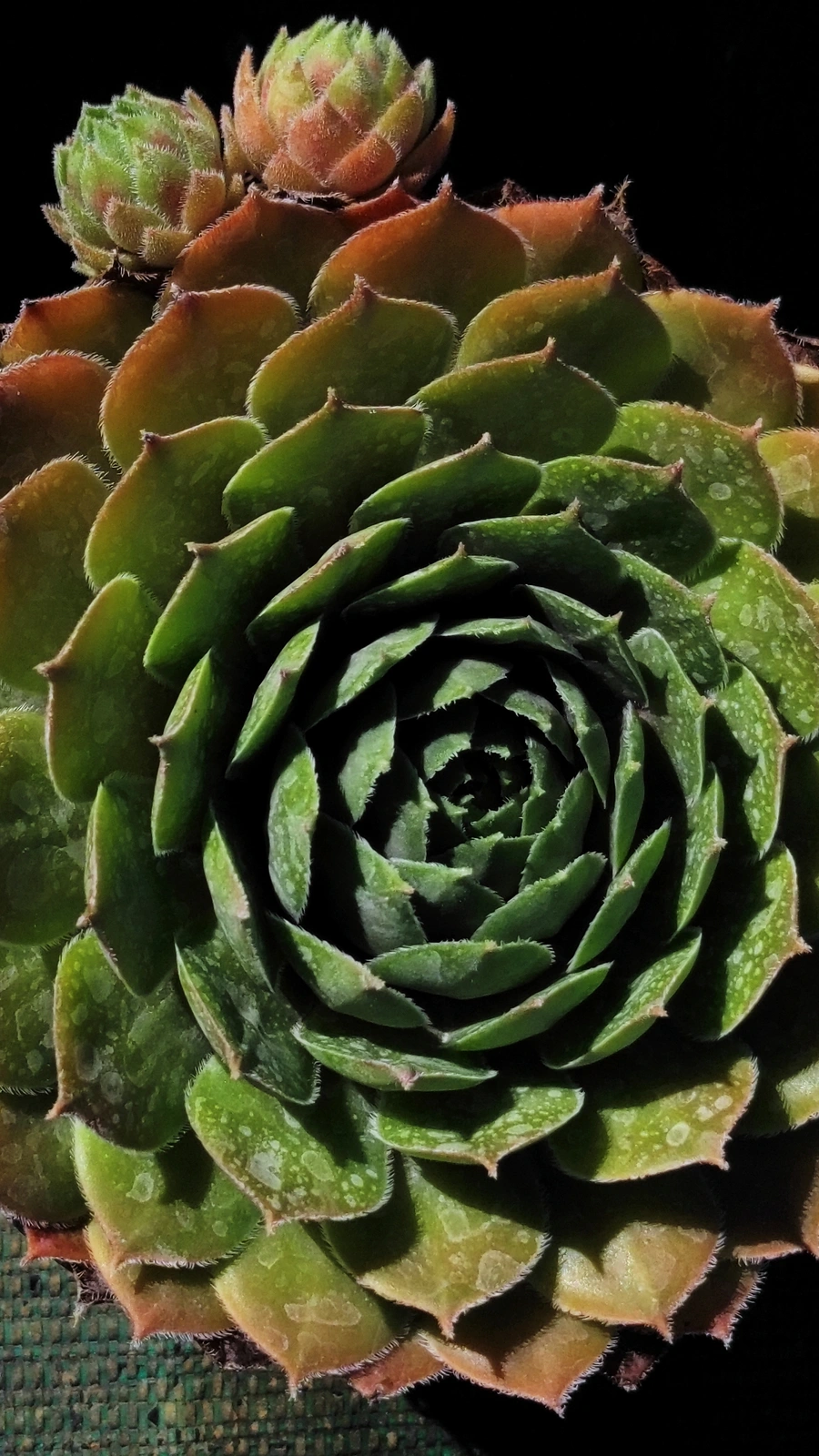 Reference image
Common Houseleek
Sempervivum tectorum, commonly known as the Common Houseleek or Hens and Chicks, is an exceptionally hardy, evergreen, rosette-forming succulent perennial belonging to the family Crassulaceae. For centuries, it has been planted on the roofs of rural European dwellings to protect against lightning and fire, a tradition that gave rise to its specific epithet "tectorum," meaning "of roofs."
The genus name Sempervivum is derived from the Latin "semper" (always) and "vivus" (living), referring to the plant's remarkable persistence. It was formally described by Carl Linnaeus in his landmark work Species Plantarum in 1753 1.
This species is native to the mountainous regions of Southern and Central Europe, particularly the Alps, Pyrenees, and Apennines 2. It thrives at elevations up to 2,800 meters, typically colonizing rocky crevices, gravelly slopes, and nutrient-poor alpine grasslands.
The fleshy, obovate leaves form dense, symmetrical rosettes reaching 10-20 cm in diameter. The leaves are typically blue-green, often tipped with reddish-purple margins. In mid-to-late summer, mature rosettes produce an upright, hairy flower stalk (20-30 cm tall) bearing clusters of star-shaped, rose-pink flowers. It is monocarpic, meaning the flowering rosette dies after blooming, but not before producing numerous offsets around its base.
An ideal candidate for rock gardens, stone walls, and alpine troughs. It requires full sun and highly porous, sandy, or gravelly soil. It is extremely drought-tolerant and frost-hardy down to sub-zero temperatures.
The most prevalent issue is waterlogging due to heavy, clay-rich soil, which leads to root rot. Insufficient light causes the plant to become etiolated, resulting in loose, pale rosettes.
Requires full sun (at least 6 hours of direct sunlight) to maintain compact growth and vibrant colors.
Allow soil to dry out completely between waterings. Highly sensitive to overwatering.
Thrives in nutrient-poor, sandy, or gritty succulent mix with excellent drainage.
Non-toxic and perfectly safe for cats, dogs, and children.
Very easy; virtually indestructible as long as it is not overwatered or kept in deep shade.
Native to the high-altitude rocky crevices and mountain slopes of Central and Southern Europe, adapted to survive extreme cold and intense solar radiation.
