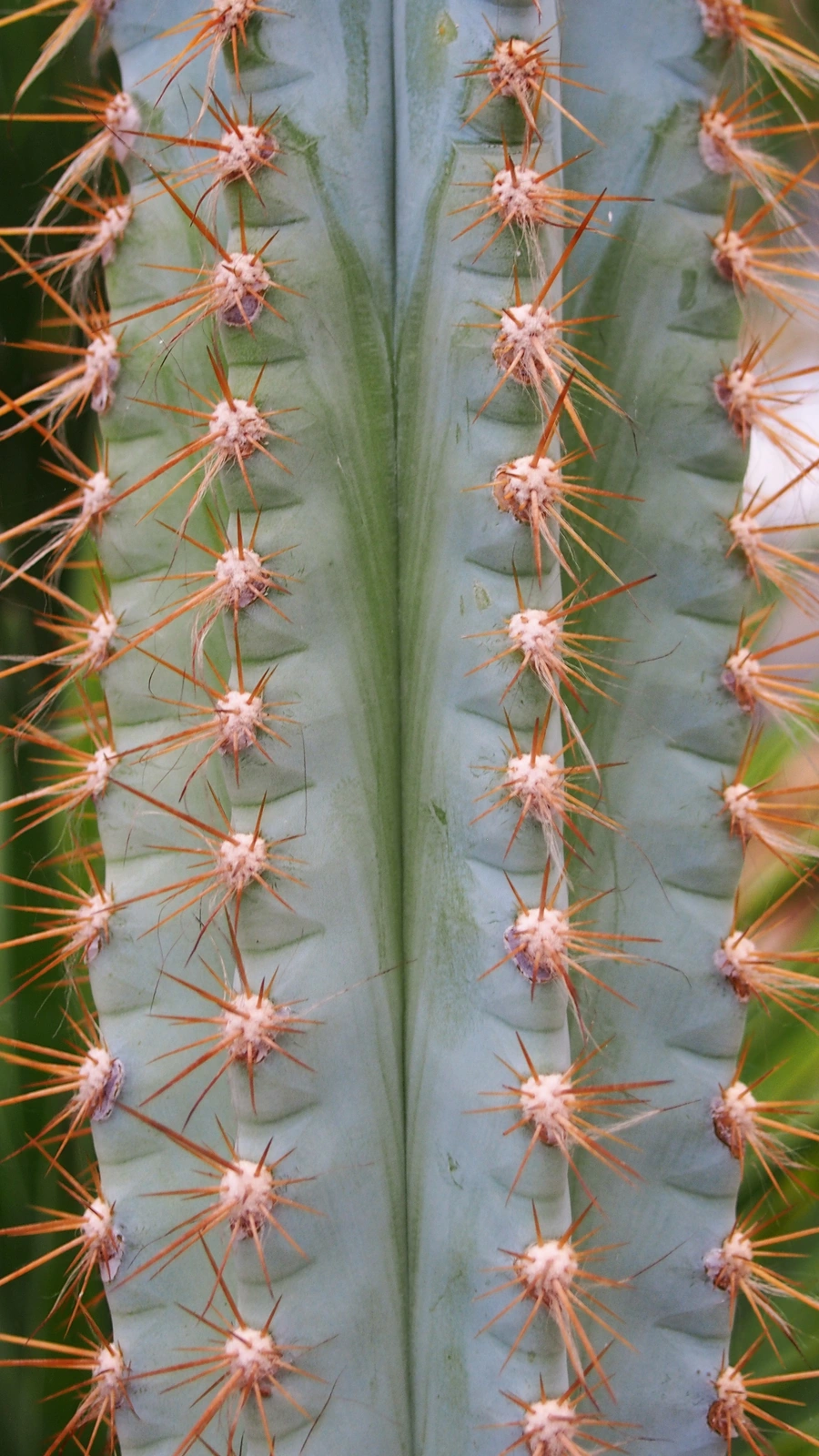
Pilosocereus pachycladus

Blue Columnar Cactus

Overview

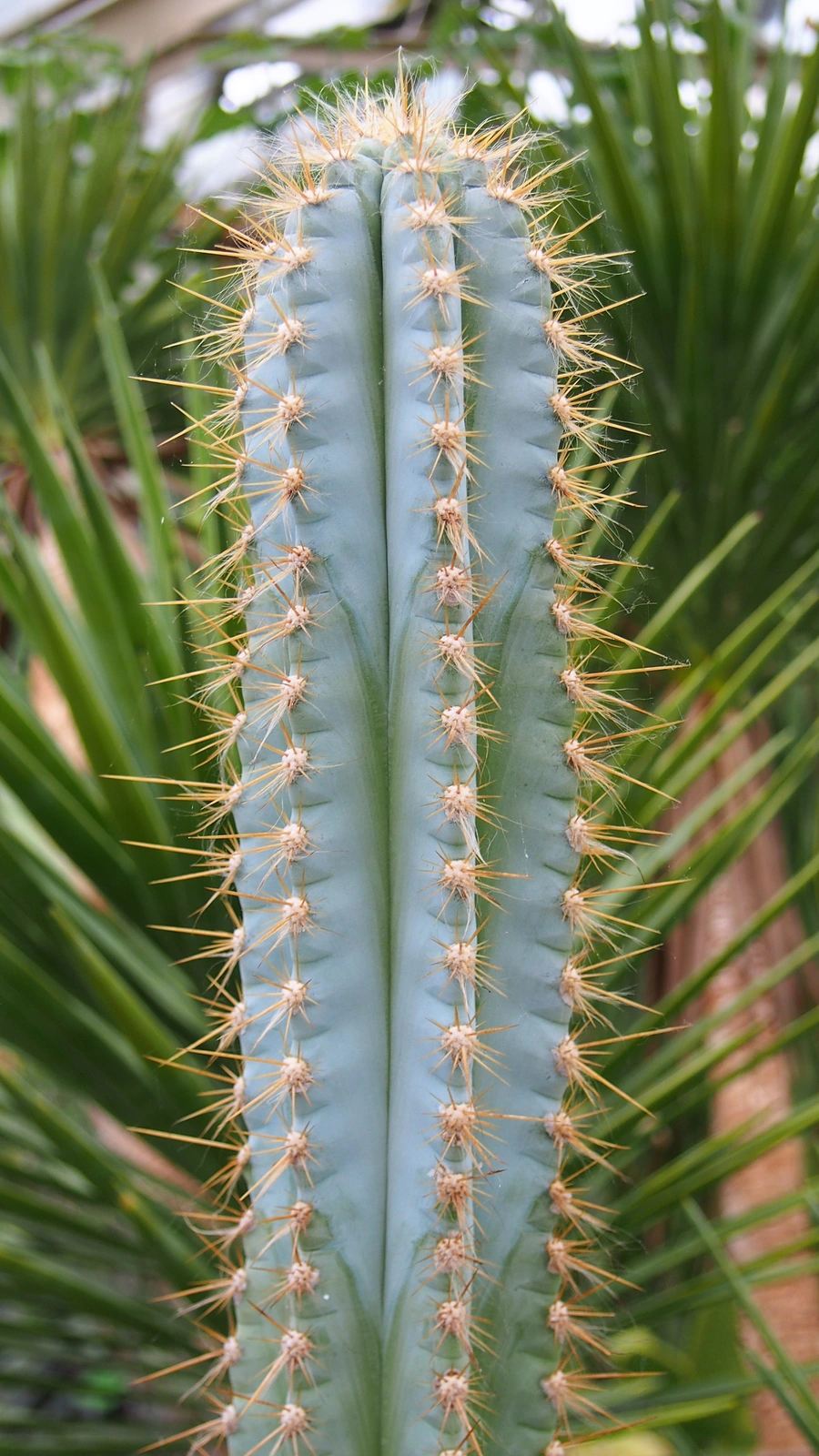
Pilosocereus pachycladus is an iconic columnar cactus renowned for its striking metallic blue stems and dense golden spines. It is widely cultivated for its unique architectural form and vibrant coloration 1.

Taxonomy and Naming

Belonging to the Cactaceae family, this species is frequently encountered in the horticultural trade under its synonym, Pilosocereus azureus. The specific epithet 'pachycladus' derives from Greek, meaning 'thick branched' 2.

Distribution and Habitat

This species is native to Northeastern Brazil, specifically thriving in the states of Bahia and Minas Gerais 1. It inhabits the dry, rocky, and sandy soils of the caatinga shrublands and deciduous forests.

Appearance

The stems are deeply ribbed (typically 5 to 12 ribs) and display a brilliant silvery-blue glaze caused by a waxy coating that protects the plant from intense sunlight. Areoles are closely set, bearing bright yellow to brownish needle-like spines. Mature specimens develop a hairy, woolly pseudocephalium at the top, bearing nocturnal, bell-shaped white or cream-colored flowers 1.

Cultivation

It requires full sun exposure to retain its intense blue hue and thrives in highly porous, mineral-based soils. Water deeply but infrequently, allowing the potting medium to dry out completely between watering sessions. It is frost-sensitive and must be kept dry and warm during the winter.

Common Cultivation Mistakes

Overwatering and poor soil drainage are the primary causes of root rot and plant loss. Insufficient light leads to etiolation (pale, thin growth) and a significant loss of the characteristic blue coloration 2.

Bibliography

References

  1. Kew POWO: Plants of the World Online. 'Pilosocereus pachycladus Ritter'.
  2. GBIF: Global Biodiversity Information Facility. 'Pilosocereus pachycladus database profile'.
Light

Full Sun

Requires full sun to maintain its stunning silvery-blue waxy coating.
Watering

10-30 Days

Allow soil to dry out completely before watering. Avoid waterlogging at all costs.

Soil

Well-draining, pumice and sand-mixed cactus compost

Highly porous, fast-draining cactus soil rich in pumice, perlite, and coarse sand.

Safety

Contact/Ingestion Risk

Features sharp spines. Keep away from pets and children, and handle with care.

Difficulty

Easy

Very easy to maintain, making it perfect for beginners who tend to underwater.

Native Habitat

Eastern Brazil

Endemic to the semi-arid caatinga biome of northeastern Brazil, where it grows on rocky outcrops and sandy plains.

Frequently Asked Questions

Why is my blue cactus losing its blue color and turning green?
The blue hue is a protective waxy coating produced to shield the cactus from intense sun. If the plant does not receive enough direct sunlight, it will stop producing this wax and revert to green.
How often should I water my cactus in winter?
In winter, the cactus goes dormant. Unless kept in a very warm room, it is safest to water it only once every 4 to 6 weeks, or withhold water entirely.
Is it toxic to pets?
While not chemically toxic, its sharp and rigid spines can cause serious mechanical injuries to your pet's mouth and paws if they get too close.
Will it bloom indoors?
It is quite rare for it to bloom indoors. To flower, it needs to reach maturity, receive abundant summer sun, and experience a cool, dry winter dormancy.
How fast does Pilosocereus pachycladus grow?
It is a moderate grower compared to other columnar cacti. With optimal sunlight and proper watering, it can grow about 10-15 cm per year in a pot.
What type of pot should I choose?
Always choose a pot with drainage holes at the bottom. Terracotta pots are ideal because they are porous and allow excess moisture to evaporate quickly.
When should I repot my cactus?
Repot your cactus every 2 to 3 years in early spring, or when you notice roots starting to grow out of the drainage holes.
What do brown spots and mushiness on the stem mean?
This is usually a sign of root or stem rot caused by overwatering. Stop watering immediately, cut away rotten parts, or take a cutting from the healthy top to propagate.
Can I propagate this cactus?
Yes, it propagates easily from stem cuttings. Let the cut end dry in the shade for a few days to callus over, then plant it in dry cactus soil.
Should I fertilize my cactus?
You can feed it once a month during the spring and summer active growth season using a half-strength diluted cactus fertilizer. Do not fertilize in autumn or winter.