
Light
Full Sun
Requires full sun to filtered bright light, minimum 6 hours of direct sunlight.
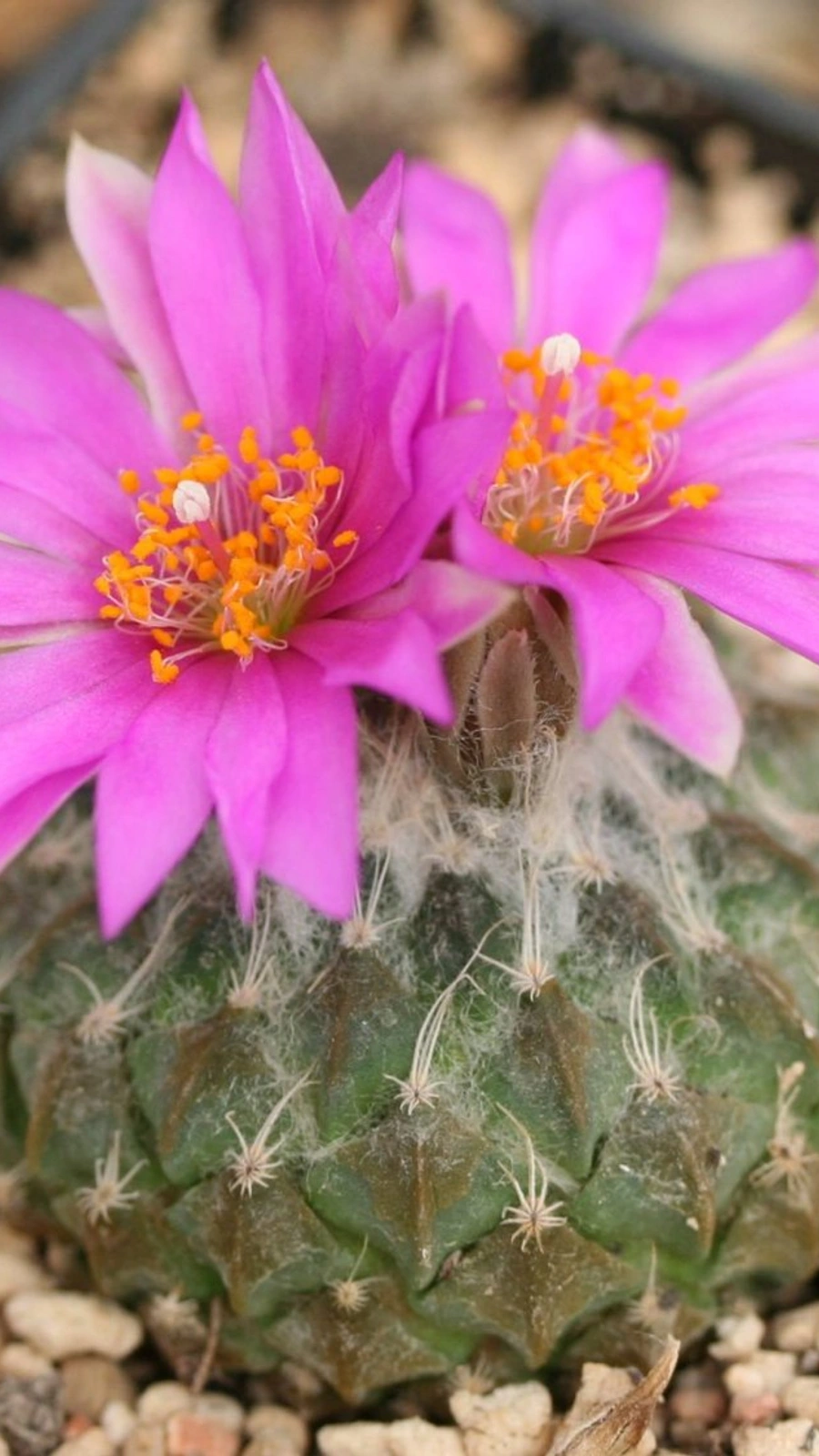 Reference image
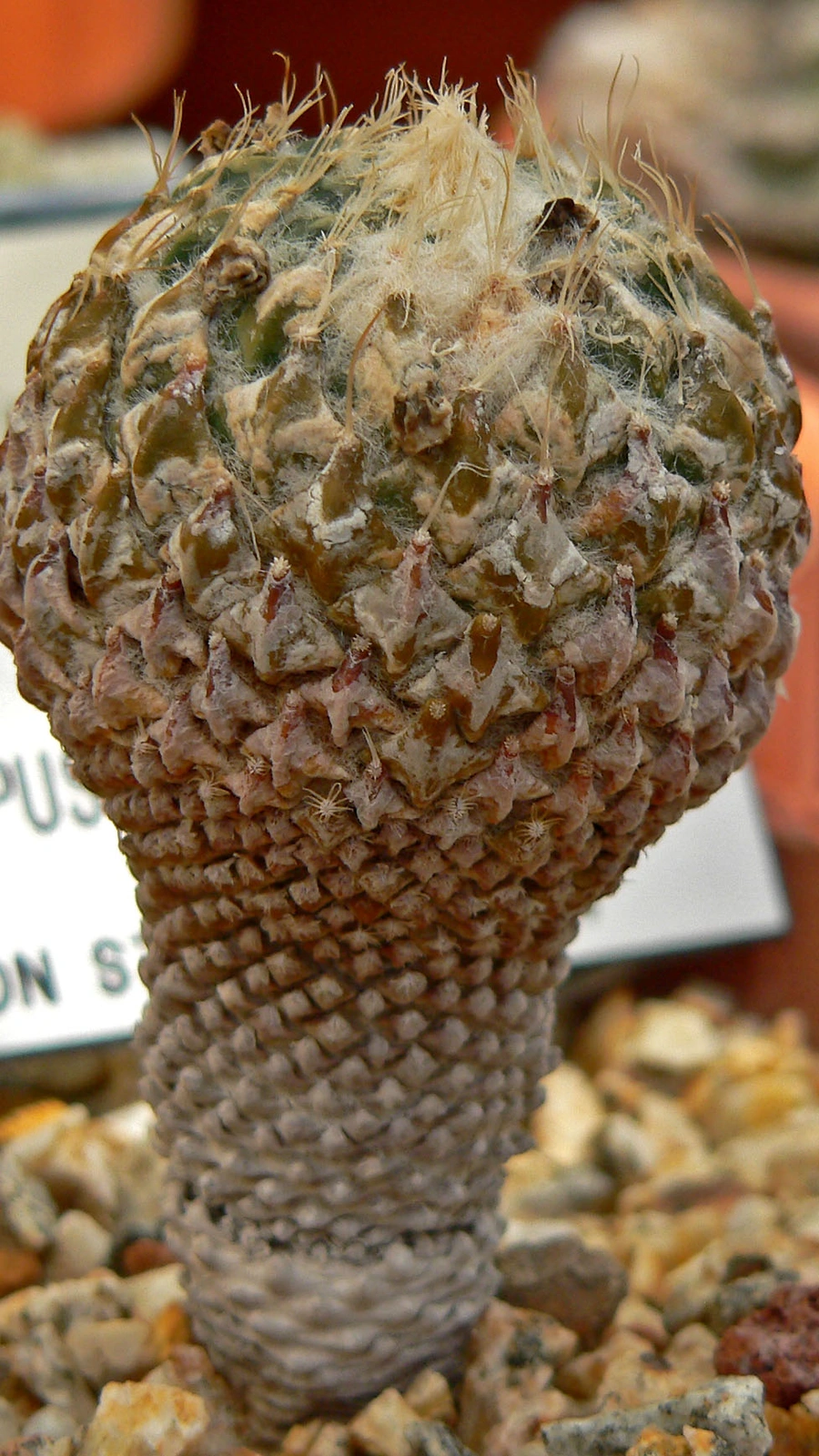 Reference image
Pinecone Cactus
Pelecyphora strobiliformis is an extraordinary and extremely slow-growing cactus species renowned for its geometrically arranged tubercles that closely resemble a pinecone 1. It is highly prized by succulent collectors for its unique form.
Originally described as Ariocarpus strobiliformis by Werdermann, it was later placed in the genus Pelecyphora 2. The specific epithet strobiliformis translates from Latin as "pinecone-shaped", referring to the overlapping scale-like tubercles.
Endemic to northern Mexico, specifically within the states of San Luis Potosí, Nuevo León, Tamaulipas, and Coahuila 3. It thrives at elevations between 1000 and 2300 meters, typically growing on limestone hills, rocky outcrops, and gravelly desert slopes, often blending into the stony ground.
The stem is globose or slightly flattened, grey-green, and covered with flat, triangular, overlapping tubercles. The flowers emerge from the woolly apex, displaying a beautiful pinkish-purple color. It possesses a massive taproot system designed to store water during prolonged droughts.
In culture, this species requires a highly specialized mineral substrate with little to no organic matter to prevent root rot 4. It demands maximum direct sunlight and very careful watering. Soil must dry out completely between waterings in summer, and water should be withheld entirely during the winter dormancy.
The most common cause of failure is using organic, peat-heavy potting soils that retain moisture, which quickly rots the taproot. Lack of intense light leads to etiolation and a loss of its distinct compact shape.
Requires full sun to filtered bright light, minimum 6 hours of direct sunlight.
Water only when the substrate is bone dry during summer; keep entirely dry in winter.
Strictly mineral soil containing pumice, gravel, and limestone chips.
Non-toxic to pets, but handles should be minimal to avoid disturbing the slow growth.
Extremely slow growing and highly susceptible to overwatering; suitable for advanced growers.
Naturally distributed throughout the arid limestone slopes and gravel plains of Nuevo León, San Luis Potosí, Tamaulipas, and Coahuila in northern Mexico.
