
Light
Full Sun
A very bright position with gradually introduced sun is suitable. The stem may become more yellowish in strong light, but that physiological colour shift is not identical to a selected “Yellow” cultivar.
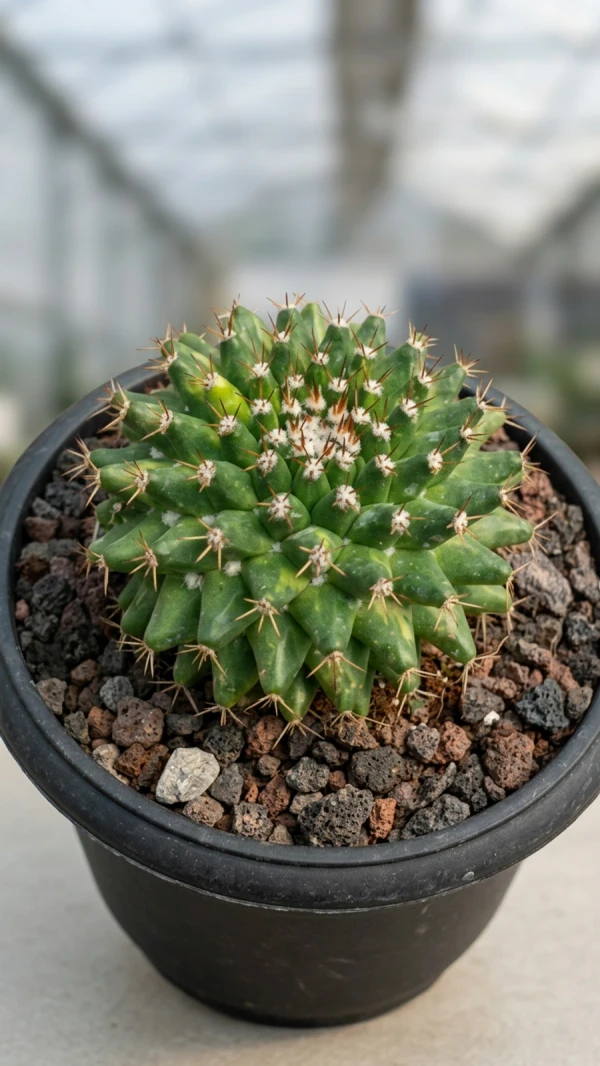
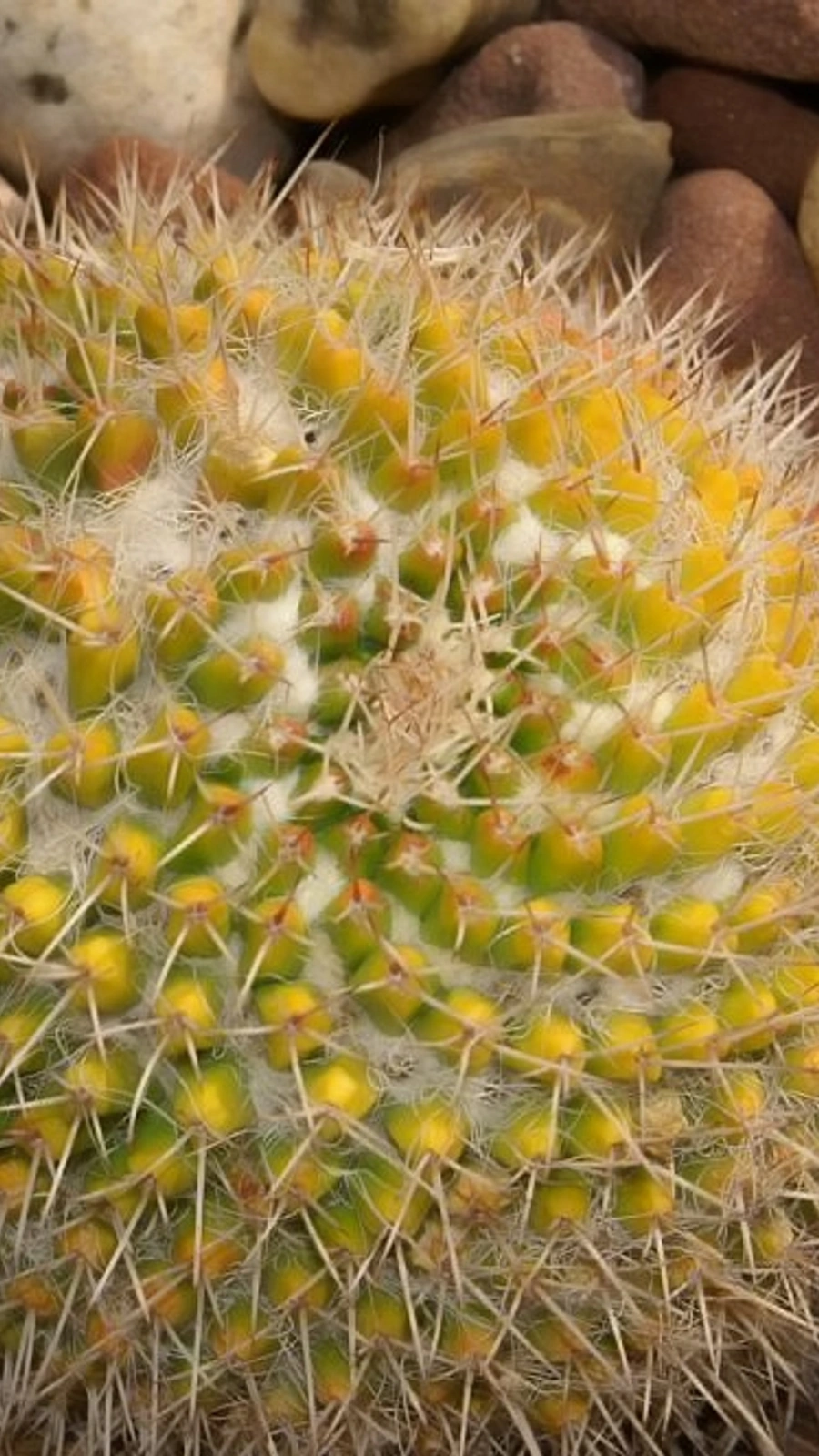 Reference image
Mammillaria marksiana is a northern-Mexican species ranging from Sonora to Zacatecas, known for its green stem, white axillary wool, sparse yellow spines, and yellowish flowers. A depressed-globose fresh-green stem, pronounced pyramidal tubercles, white wool in the tubercle axils, sparse fine yellow-to-brown spines, and yellowish-green flowers together form the diagnostic appearance.1 Yellow colour alone does not prove species identity. Unlike the taxonomy article, the botanical-dictionary layer explains the living plant's morphology, habitat context, and cultivation requirements.
The verified native range is north-western and north-eastern Mexico from Sonora to Zacatecas.2 POWO records the species as a succulent subshrub of desert and dry-shrubland biomes. Local habitat pressure can occur across its broad but discontinuous northern-Mexican range, while the current global assessment retains Least Concern. Cultivation should provide fast oxygen return to the root zone, a controlled wet-dry cycle, and sufficient light rather than copying a landscape as decoration.
A very bright position with gradually introduced sun is suitable. The stem may become more yellowish in strong light, but that physiological colour shift is not identical to a selected “Yellow” cultivar. A plant raised under lower light should not be moved abruptly into harsh sun; increase exposure over several weeks. Wet roots during cool weather are generally more dangerous than controlled dry coolness.
Do not use a fixed-day calendar. During active growth, water thoroughly only after the mix has dried throughout and let every excess drain away. Drying slows during cool or low-light periods, so watering naturally becomes less frequent. Use an airy, coarse, mineral-forward, fast-draining mix and prevent water from remaining in the woolly tubercle axils or around the root neck.
The natural species may show a green to yellowish-green stem and a yellow flower-spine palette; intensely yellow selected cultivars or variegated specimens are product-level horticultural forms. Stem colour, spine density, offsetting, and flowering time vary among living specimens; a product photograph alone is neither a scientific diagnosis nor a record of a wild population.
The best-supported household concern is mechanical injury from the spines rather than a claim of chemical toxicity. Restrict access for children and pets. The IUCN assessment assigns Least Concern. LC does not mean “without threats” or available for wild collection; commercial inventory only documents nursery stock.
A very bright position with gradually introduced sun is suitable. The stem may become more yellowish in strong light, but that physiological colour shift is not identical to a selected “Yellow” cultivar.
Do not use a fixed calendar. Water deeply after complete drying and reduce frequency during cool or low-light periods.
A coarse, mineral-forward, airy, fast-draining cactus mix.
Spines present a mechanical injury risk. The IUCN assessment assigns Least Concern. LC does not mean “without threats” or available for wild collection; commercial inventory only documents nursery stock.
It is manageable with fast drainage and careful light acclimation; yellowing, scorch, and selected colour forms should not be confused with one another.
north-western and north-eastern Mexico from Sonora to Zacatecas.[^1] [^1]: Plants of the World Online. “Mammillaria marksiana.” Accessed: 2026-08-04. https://powo.science.kew.org/taxon/urn:lsid:ipni.org:names:151233-2
