
Light
Bright Indirect Light
Requires bright, indirect light; protect from scorching midday sun.
 Reference image
 Reference image
Domino Cactus
Echinopsis subdenudata, commonly known as the 'Domino Cactus' or 'Easter Lily Cactus', is a globose, nearly spineless cactus species famous for its stunning nocturnal white flowers. Belonging to the Cactaceae family, this plant is highly favored by indoor gardeners due to its compact size and straightforward care requirements 1.
Classified within the genus Echinopsis, this species was formally described by Martin Cárdenas. The specific epithet 'subdenudata' translates from Latin as 'almost naked', highlighting the plant's distinctive characteristic of being largely devoid of prominent spines 2.
This species is native to Bolivia, specifically found in the regions of Tarija and Chuquisaca. It typically grows on dry, rocky slopes and in semi-arid valleys at elevations between 600 and 1,800 meters above sea level, often sheltered under shrubs 1.
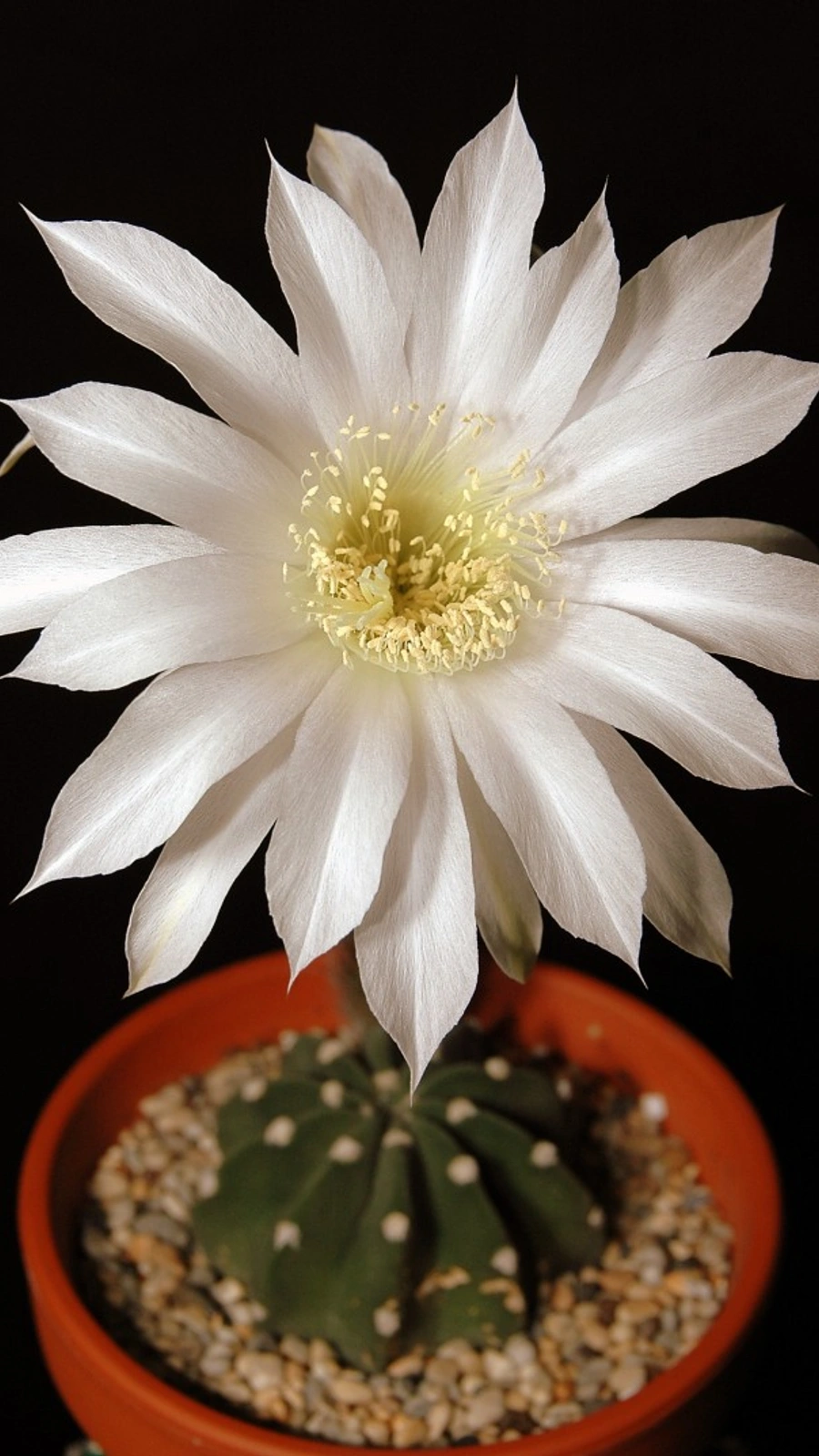
The stem is solitary, globose, and slightly flattened at the top, featuring 8 to 12 deep ribs. The areoles are prominent, covered in dense, white woolly tufts resembling domino dots. It is mostly spineless, though tiny cream-colored spines may occasionally appear on young areoles. In summer, it produces long, tube-shaped, highly fragrant white flowers that open at night and last for only a single day 2.
It thrives in bright, indirect light. Water thoroughly during the growing season only when the soil has completely dried out. In winter, entering a dormant phase, watering should be suspended. A well-aerated, gritty, and mineral-rich cactus soil is essential 1.
Overwatering is the primary cause of root rot. Lack of light leads to etiolation, where the spherical stem becomes abnormally elongated. Keeping the plant too warm in winter can suppress spring flowering.
Requires bright, indirect light; protect from scorching midday sun.
Water only when the substrate is fully dry; keep virtually dry in winter.
Use a porous cactus mix heavily amended with pumice or perlite.
Almost entirely spineless and non-toxic; highly safe for households with pets.
Extremely easy to care for and highly recommended for beginners.
Native to the rocky slopes of Tarija and Chuquisaca in Bolivia, where it thrives in semi-arid conditions sheltered under surrounding desert vegetation.
