
Light
Full Sun
The live `full_sun` operational enum is preserved; acclimate over several weeks and monitor body temperature, airflow and colour change together, especially behind hot glass.
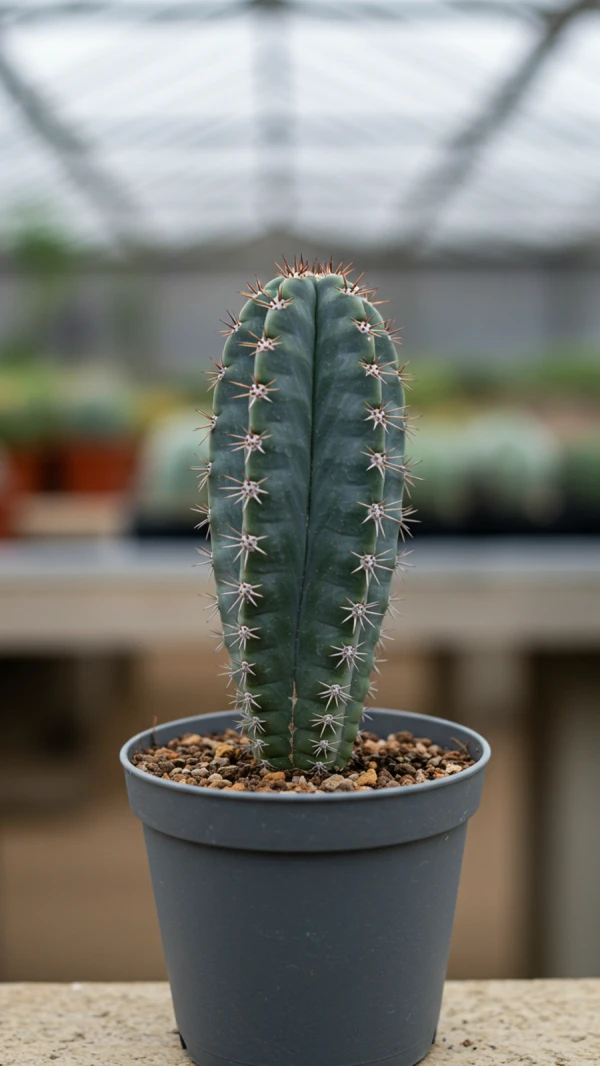
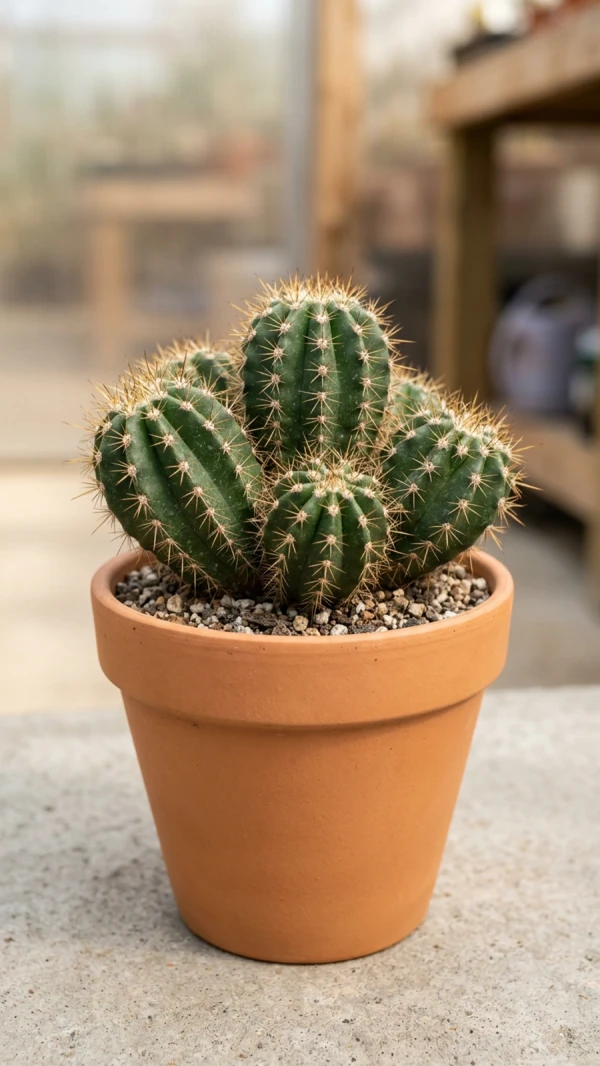
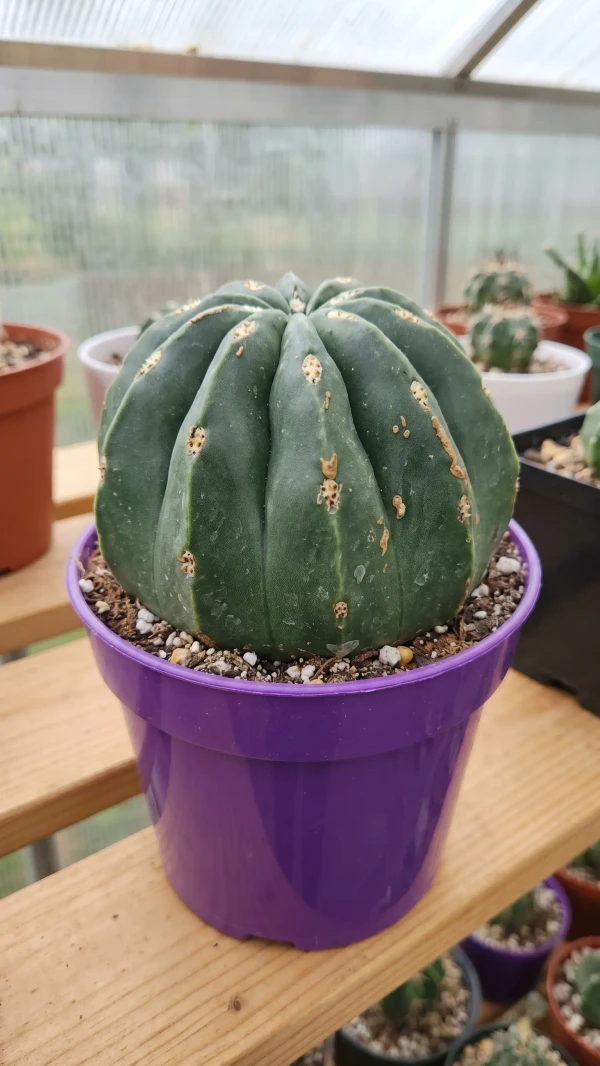
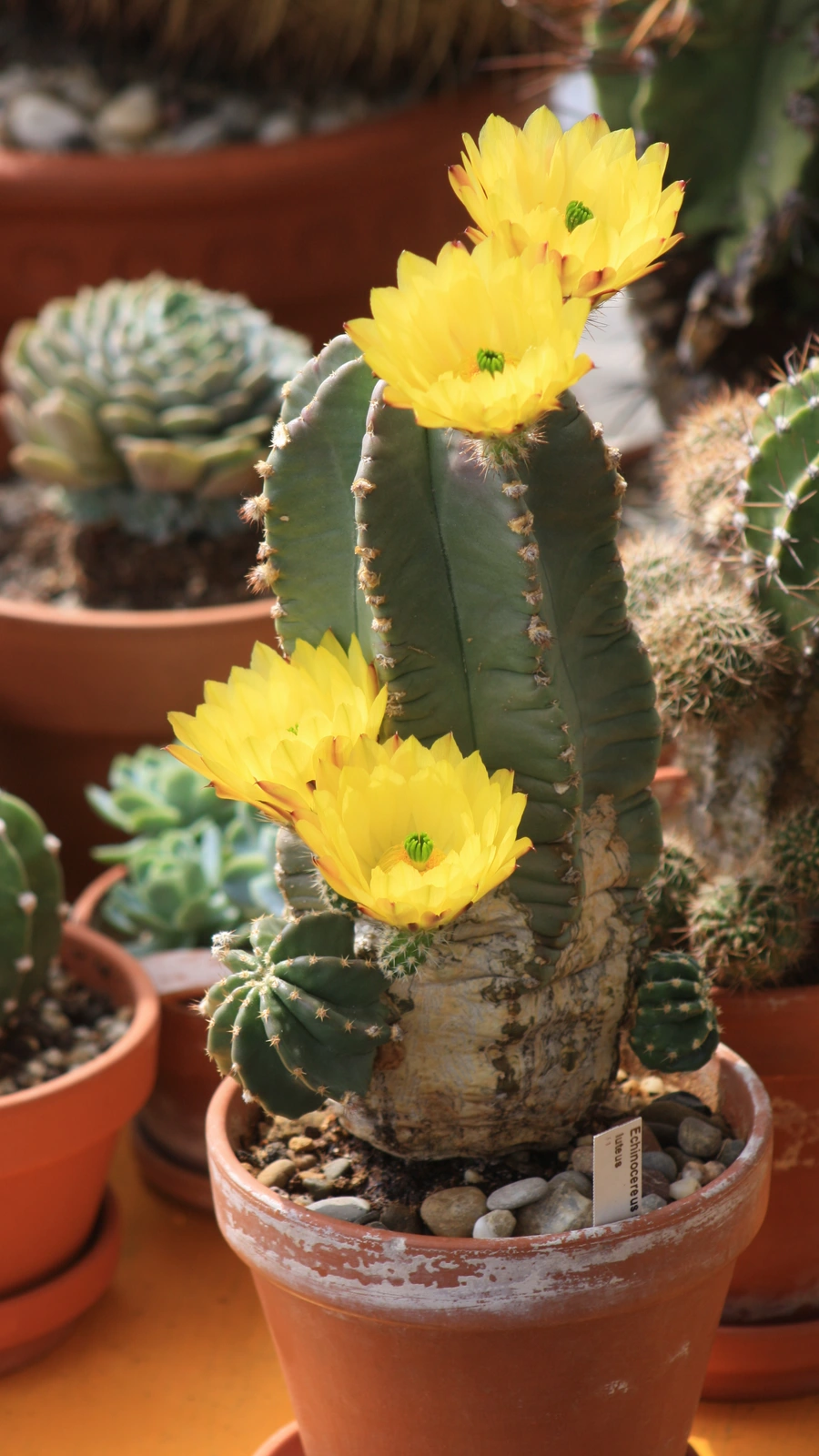 Reference image
Golden Hedgehog Cactus
Echinocereus subinermis is an Echinocereus in Cactaceae. Species identity should be assessed from the young globose to later short-columnar body, ribs, areoles and variable armature, large yellow-orange flowers, fruit, seed and documented provenance together. A sales label or single photograph cannot settle identity; body, ribs, areoles, spines, roots, flowers, fruit, seed and documented provenance should be examined together.1
The native distribution is restricted to Sonora, Sinaloa, southwestern Chihuahua and Durango in Mexico. The native distribution is restricted to dry areas of northwestern and north-central Mexico; nursery production in Adana, nine retail plants or one product label is not evidence about wild populations. A nursery-grown plant can change form with light, water, root volume and temperature history; that variation does not replace the nomenclatural boundary.
Use a very fast-draining mix dominated by pumice, coarse sand, lava grit or comparable mineral particles that does not retain prolonged moisture at the root crown. Do not use a fixed-day calendar; water in a controlled cycle only after the mineral mix and root zone have dried throughout, and extend the interval substantially during the cool rest. A dry-looking surface is insufficient; inspect the lower pot and root zone as well. Leave no standing water after irrigation. After repotting, allow injured roots time to dry and callus.
Do not test low temperature with wet roots during a cool rest. Evaluate wrinkling, soft tissue, colour change and root odour together; attempts to force rapid growth in a continuously wet organic medium increase rot risk. Live watering, temperature and soil metrics are not rewritten by this editorial source.
The live full_sun operational enum is preserved; acclimate over several weeks and monitor body temperature, airflow and colour change together, especially behind hot glass. The operational enum is not a laboratory light threshold; airflow, heat behind glass, season and previous cultivation conditions alter the outcome. Increase light over several weeks, rotate the plant to reduce abrupt one-sided scorching, and do not test cold tolerance with a hot or wet root zone.
The species surface has no direct Kew synonym. Kew maintains two accepted subspecies; they are not flattened into species synonymy and are not created by this package. E. subinermis subsp. subinermis and subsp. ochoterenae are accepted infraspecific taxa. Historical var. aculeatus is maintained by Kew under E. davisii; none enters this species synonym set.
The live safe field is preserved as an operational carry-forward; do not ingest the plant and use basic physical precautions for its variable armature. Prefer seed or documented legal nursery propagation and do not encourage wild collection. The global conservation field is DD.2 The unsupported live LC value is corrected to the official global DD. Data Deficient does not mean absence of risk; it means evidence is insufficient for a reliable global assessment.
The live `full_sun` operational enum is preserved; acclimate over several weeks and monitor body temperature, airflow and colour change together, especially behind hot glass.
Do not use a fixed-day calendar; water in a controlled cycle only after the mineral mix and root zone have dried throughout, and extend the interval substantially during the cool rest.
Use a very fast-draining mix dominated by pumice, coarse sand, lava grit or comparable mineral particles that does not retain prolonged moisture at the root crown.
The live `safe` field is preserved as an operational carry-forward; do not ingest the plant and use basic physical precautions for its variable armature.
Live operational care class: easy.
Sonora, Sinaloa, southwestern Chihuahua and Durango in Mexico.[^1] [^1]: Plants of the World Online, Royal Botanic Gardens, Kew. “Echinocereus subinermis Salm-Dyck ex Scheer.” Accessed: 2026-08-07. https://powo.science.kew.org/taxon/urn:lsid:ipni.org:names:132466-1 [^2]: International Plant Names Index. “Echinocereus subinermis nomenclatural record.” Accessed: 2026-08-07. https://www.ipni.org/n/132466-1 [^3]: IUCN Red List of Threatened Species. “Echinocereus subinermis global conservation assessment.” Accessed: 2026-08-07. https://www.iucnredlist.org/species/152794/121488734 [^4]: Plants of the World Online, Royal Botanic Gardens, Kew. “Echinocereus subinermis subsp. subinermis accepted boundary.” Accessed: 2026-08-07. https://powo.science.kew.org/taxon/urn:lsid:ipni.org:names:77228933-1 [^5]: Plants of the World Online, Royal Botanic Gardens, Kew. “Echinocereus subinermis subsp. ochoterenae accepted boundary.” Accessed: 2026-08-07. https://powo.science.kew.org/taxon/urn:lsid:ipni.org:names:1001179-1 [^6]: Plants of the World Online, Royal Botanic Gardens, Kew. “Echinocereus subinermis var. aculeatus exclusion.” Accessed: 2026-08-07. https://powo.science.kew.org/taxon/urn:lsid:ipni.org:names:88026-2
