
Light
Direct Sun
The live `direct_sun` operational enum is preserved; transition gradually and observe scorching, wrinkling and etiolation together on the slender shoots.
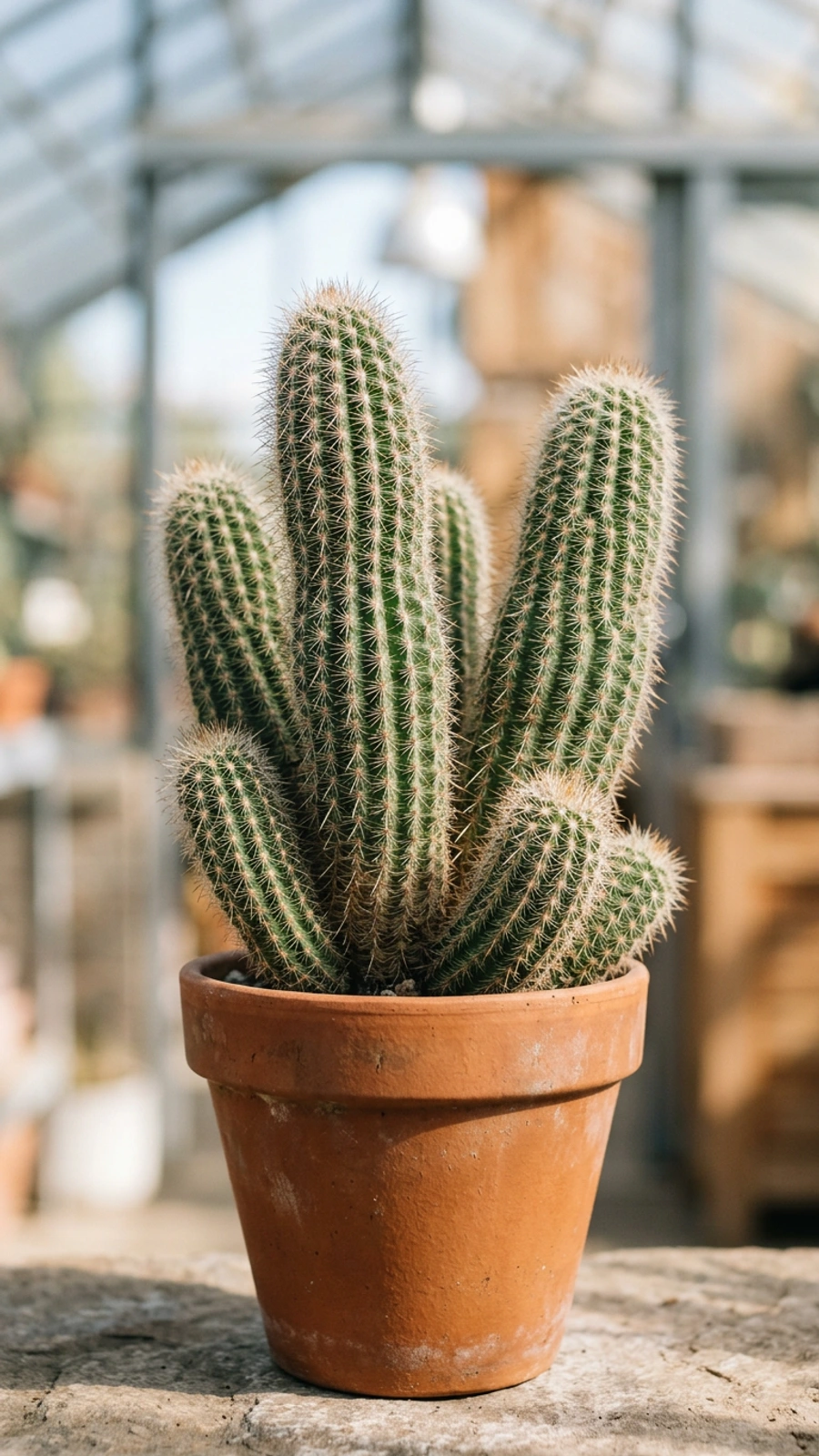
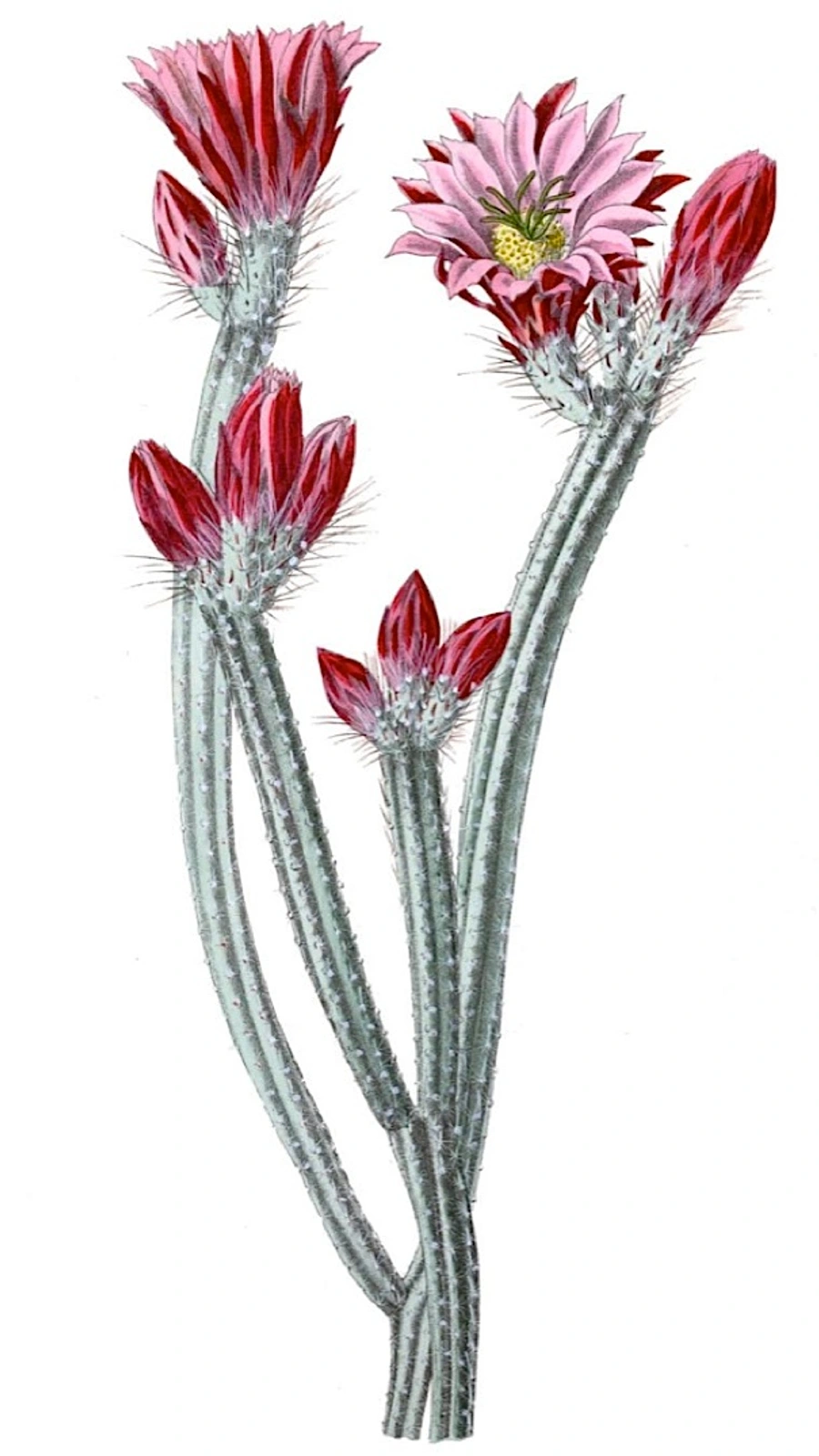 Reference image
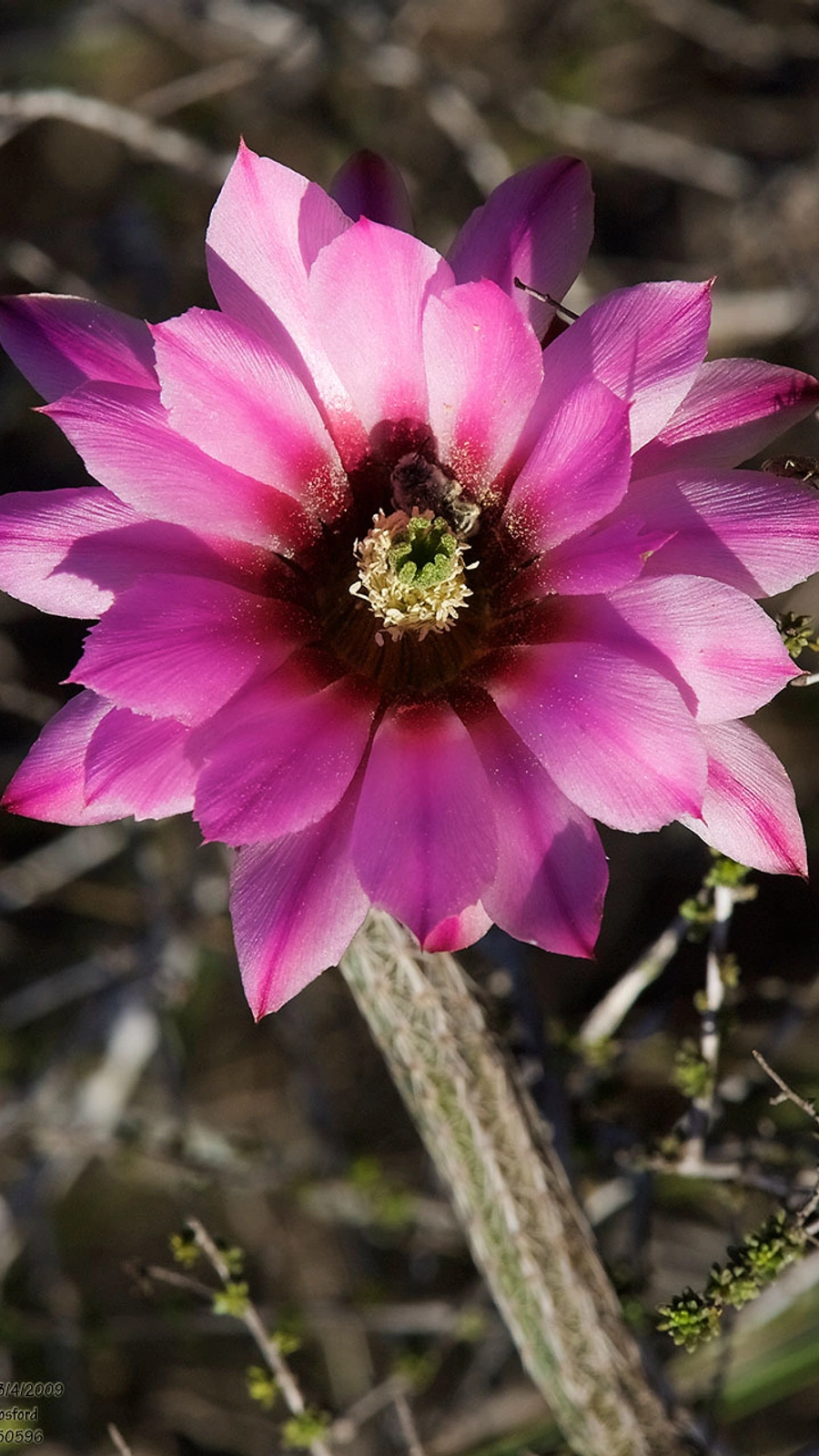 Reference image
Rosebud Cactus
Echinocereus poselgeri is an Echinocereus in Cactaceae. Slender cylindrical shoots, areole and spine pattern, the fleshy tuberous underground root, flowers, fruit, seed and documented provenance should be evaluated together. A sales label or single photograph cannot settle identity; body, ribs, areoles, spines, roots, flowers, fruit, seed and documented provenance should be examined together.1
The native distribution is restricted to South Texas to northeastern Mexico. The native range is associated with dry shrubland and desert habitats of South Texas and northeastern Mexico; retail inventory, price or nursery production is not a measure of wild populations. A nursery-grown plant can change form with light, water, root volume and temperature history; that variation does not replace the nomenclatural boundary.
Use an airy, very fast-draining mix with a high coarse-mineral fraction that does not remain wet around the tuberous root; prefer a sufficiently deep but freely draining pot. Do not use a fixed-day calendar; water in a controlled cycle only after the mineral mix and root zone have dried throughout, and extend the interval substantially during the cool rest. A dry-looking surface is insufficient; inspect the lower pot and root zone as well. Leave no standing water after irrigation. After repotting, allow injured roots time to dry and callus.
Do not test low temperature with wet roots during a cool rest. Evaluate wrinkling, soft tissue, colour change and root odour together; attempts to force rapid growth in a continuously wet organic medium increase rot risk. Live watering, temperature and soil metrics are not rewritten by this editorial source.
The live direct_sun operational enum is preserved; transition gradually and observe scorching, wrinkling and etiolation together on the slender shoots. The operational enum is not a laboratory light threshold; airflow, heat behind glass, season and previous cultivation conditions alter the outcome. Increase light over several weeks, rotate the plant to reduce abrupt one-sided scorching, and do not test cold tolerance with a hot or wet root zone.
Kew maintains eight synonyms: three homotypic combinations and five heterotypic names. Historical Wilcoxia and Cereus combinations are not separate accepted-species routes. E. poselgeri subsp. kroenleinii is maintained by Kew under accepted E. kroenleinii, while Cereus poselgerianus belongs under E. berlandieri; neither enters this synonym set.
The live safe field is preserved as an operational carry-forward; do not ingest the plant and use gloves or tongs for spine contact. Prefer seed or documented legal nursery propagation and do not encourage wild collection. The global conservation field is LC.2 Global LC is retained. Least Concern derives from the wild-range assessment, not from one plant in commercial inventory.
The live `direct_sun` operational enum is preserved; transition gradually and observe scorching, wrinkling and etiolation together on the slender shoots.
Do not use a fixed-day calendar; water in a controlled cycle only after the mineral mix and root zone have dried throughout, and extend the interval substantially during the cool rest.
Use an airy, very fast-draining mix with a high coarse-mineral fraction that does not remain wet around the tuberous root; prefer a sufficiently deep but freely draining pot.
The live `safe` field is preserved as an operational carry-forward; do not ingest the plant and use gloves or tongs for spine contact.
Live operational care class: easy.
South Texas to northeastern Mexico.[^1] [^1]: Plants of the World Online, Royal Botanic Gardens, Kew. “Echinocereus poselgeri Lem..” Accessed: 2026-08-07. https://powo.science.kew.org/taxon/urn:lsid:ipni.org:names:87988-2 [^2]: International Plant Names Index. “Echinocereus poselgeri nomenclatural record.” Accessed: 2026-08-07. https://www.ipni.org/n/87988-2 [^3]: IUCN Red List of Threatened Species. “Echinocereus poselgeri global conservation assessment.” Accessed: 2026-08-07. https://www.iucnredlist.org/species/151193/121440514 [^4]: Plants of the World Online, Royal Botanic Gardens, Kew. “Echinocereus poselgeri subsp. kroenleinii exclusion.” Accessed: 2026-08-07. https://powo.science.kew.org/taxon/urn:lsid:ipni.org:names:1216655-2 [^5]: Plants of the World Online, Royal Botanic Gardens, Kew. “Cereus poselgerianus exclusion.” Accessed: 2026-08-07. https://powo.science.kew.org/taxon/53226-2
