
Light
Full Sun
The live `full_sun` operational enum is preserved; acclimate over several weeks and monitor airflow and root-zone heat behind hot glazing.
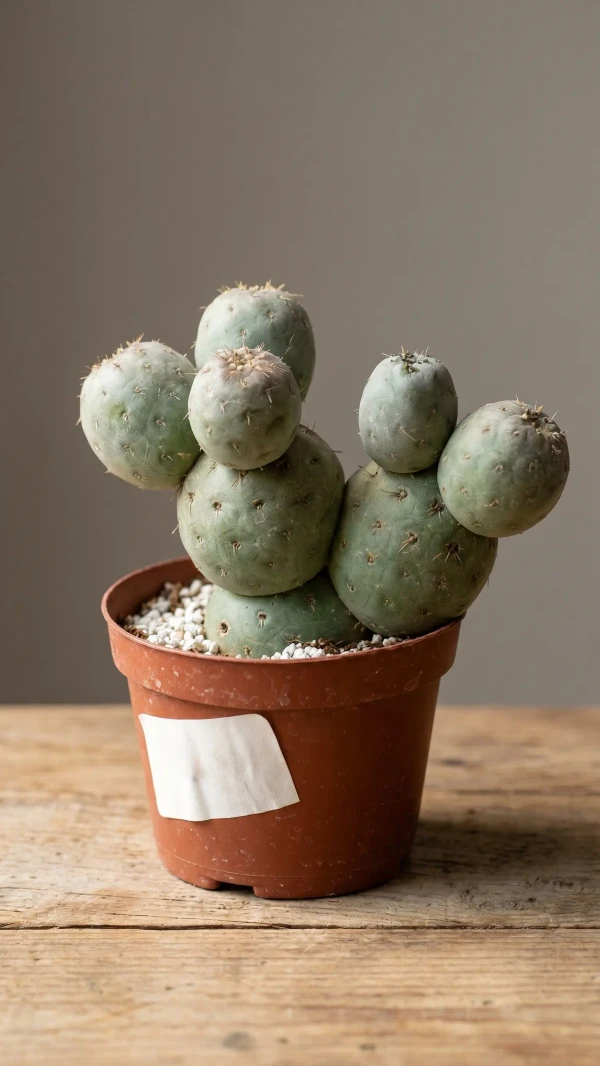
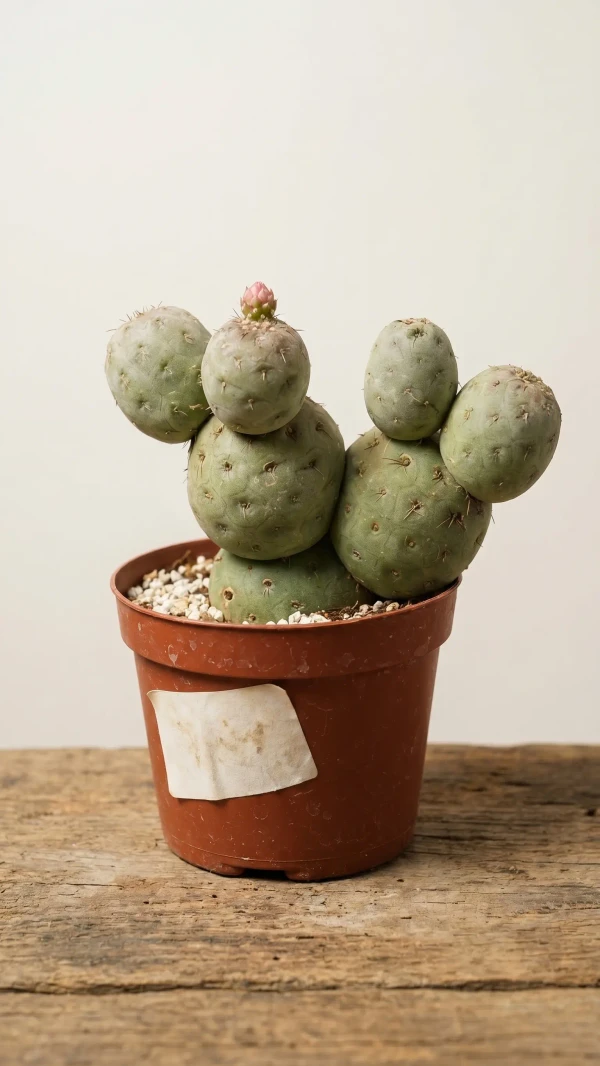
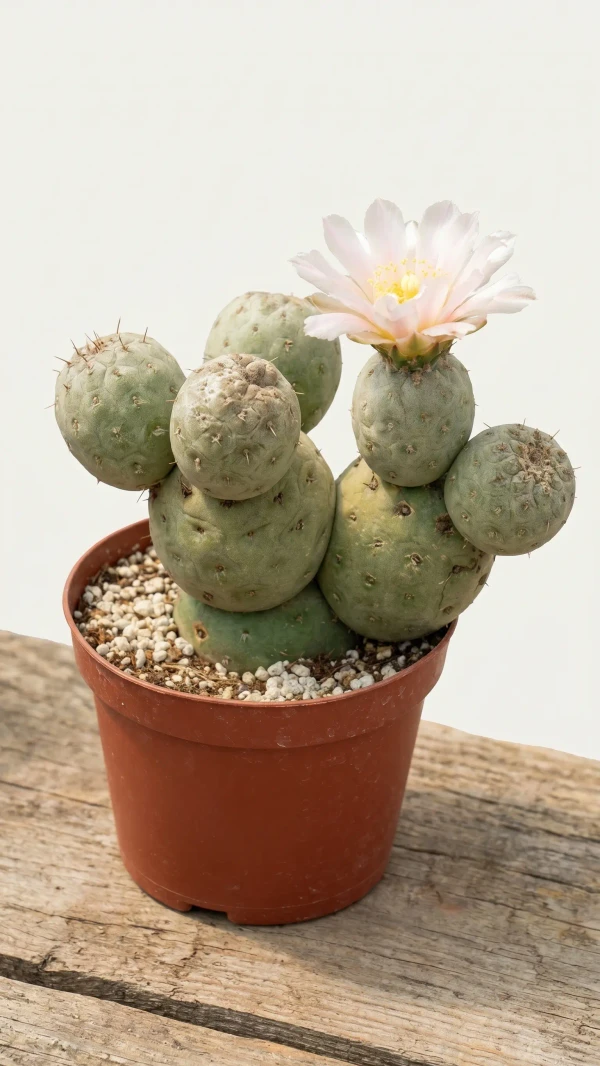
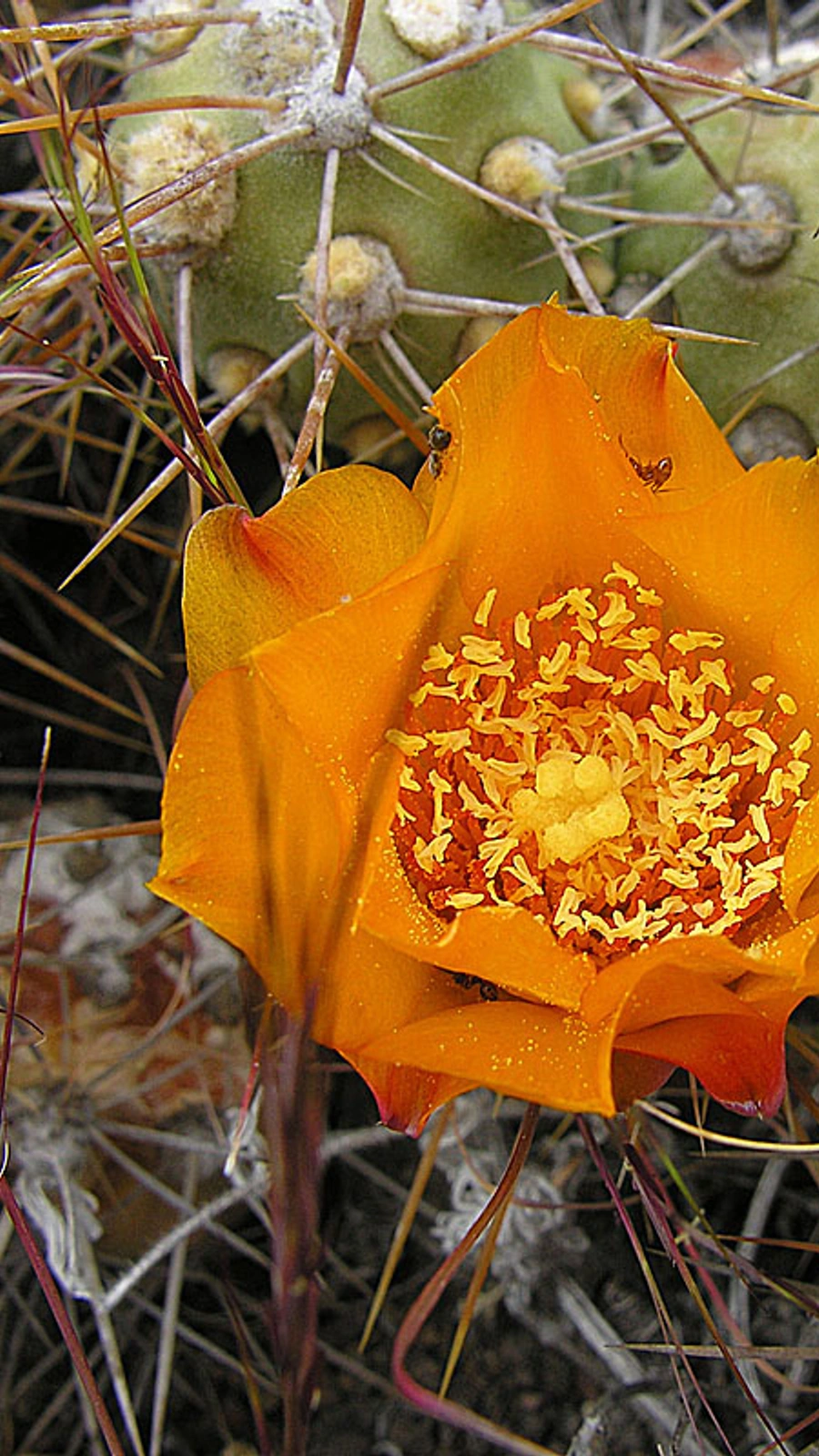 Reference image
Spherical Opuntia
Cumulopuntia sphaerica is a Cumulopuntia with articulated segments. Jointed stem segments, tubercle and areole pattern, spines, flowers, fruit, seeds and documented geographic provenance should be evaluated together; a globose segment alone is not a definitive identification. Identity should not be settled from a sales label or one photograph; segment articulation, tubercles, areoles, spines, flowers, fruit, seeds and documented provenance should be evaluated together.1
The Kew surface maintains 50 synonyms: four homotypic and 46 heterotypic. Historical combinations in Opuntia, Tephrocactus, Sphaeropuntia and Austrocylindropuntia are not separate accepted-species routes. A large synonym set does not mean every similar-looking Andean cactus can be moved into this species; the accepted name, type relationships and sourced range remain linked. Cultivation stress colour, elongation, dehydration wrinkles or a body partly buried in the medium does not alone change the accepted name or prove a subspecies identity.
Use a fast-draining mix with a high proportion of coarse mineral particles that does not retain prolonged moisture around the roots; avoid persistent moisture in a heavy organic medium. Do not use a fixed-day calendar; water in a controlled cycle only after the mineral-rich mix has dried throughout the root zone, and extend the interval substantially in cool or low-light periods. A dry-looking surface is insufficient; inspect the root zone as well. Leave no standing water after irrigation. After repotting, allow injured roots time to dry and callus.
Do not test low temperature with wet roots during a cool rest. Evaluate segment wrinkling, soft tissue, colour change, darkening at the root crown and odour together. Forcing rapid growth in a continuously wet organic medium increases the risk of rot and segment loss.
The live full_sun operational enum is preserved; acclimate over several weeks and monitor airflow and root-zone heat behind hot glazing. The operational enum is not a laboratory light or temperature threshold; airflow, heat behind glass, season, elevation provenance and previous cultivation conditions alter the outcome. Increase light over several weeks and do not test cold tolerance with a hot or wet root zone.
The live safe field is preserved as an operational carry-forward; it is not a new toxicology finding. Do not ingest the plant and use basic physical precautions for spines. The global conservation field is LC.2 The live and official global target are both LC, so the field is unchanged. Least Concern does not mean local habitat pressure or illegal collection is impossible. Prefer documented legal nursery propagation and do not encourage wild collection.
The live `full_sun` operational enum is preserved; acclimate over several weeks and monitor airflow and root-zone heat behind hot glazing.
Do not use a fixed-day calendar; water in a controlled cycle only after the mineral-rich mix has dried throughout the root zone, and extend the interval substantially in cool or low-light periods.
Use a fast-draining mix with a high proportion of coarse mineral particles that does not retain prolonged moisture around the roots; avoid persistent moisture in a heavy organic medium.
The live `safe` field is preserved as an operational carry-forward; it is not a new toxicology finding. Do not ingest the plant and use basic physical precautions for spines.
Live operational care class: easy.
western and southern Peru.[^1] [^1]: Plants of the World Online. “Cumulopuntia sphaerica (C.F.Först.) E.F.Anderson” Royal Botanic Gardens, Kew. Accessed: 2026-08-07. https://powo.science.kew.org/taxon/urn:lsid:ipni.org:names:1012487-1 [^2]: International Plant Names Index. “Cumulopuntia sphaerica.” Accessed: 2026-08-07. https://www.ipni.org/n/1012487-1 [^3]: IUCN Red List. “Cumulopuntia sphaerica global conservation assessment.” Accessed: 2026-08-07. https://www.iucnredlist.org/species/151803/121444033
