
Light
Full Sun
The live `full_sun` operational enum is preserved; acclimate to direct sun over several weeks and monitor stem temperature beneath the white spine cover.
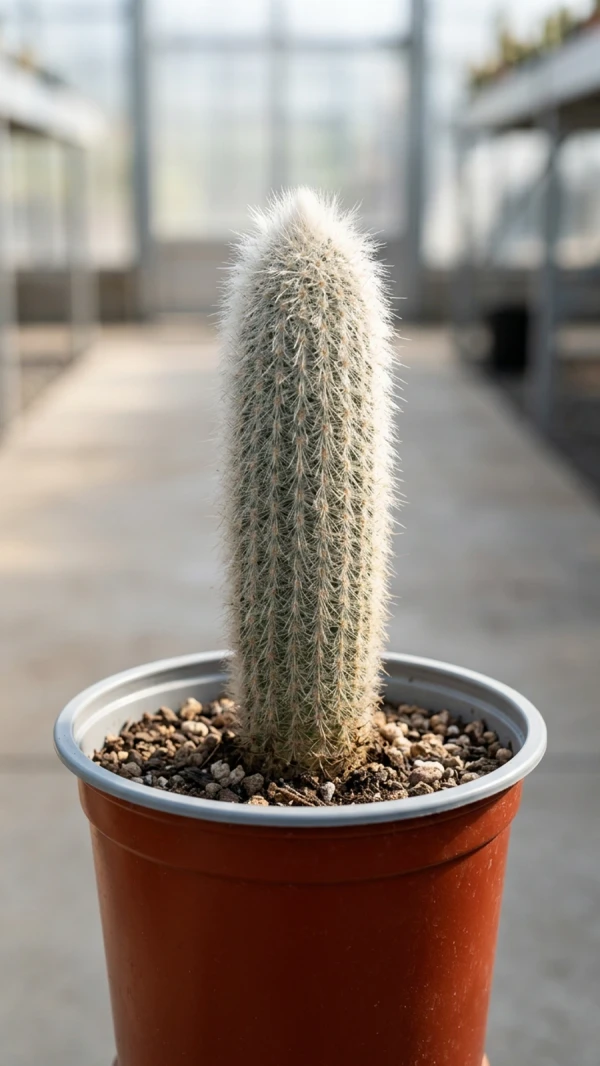
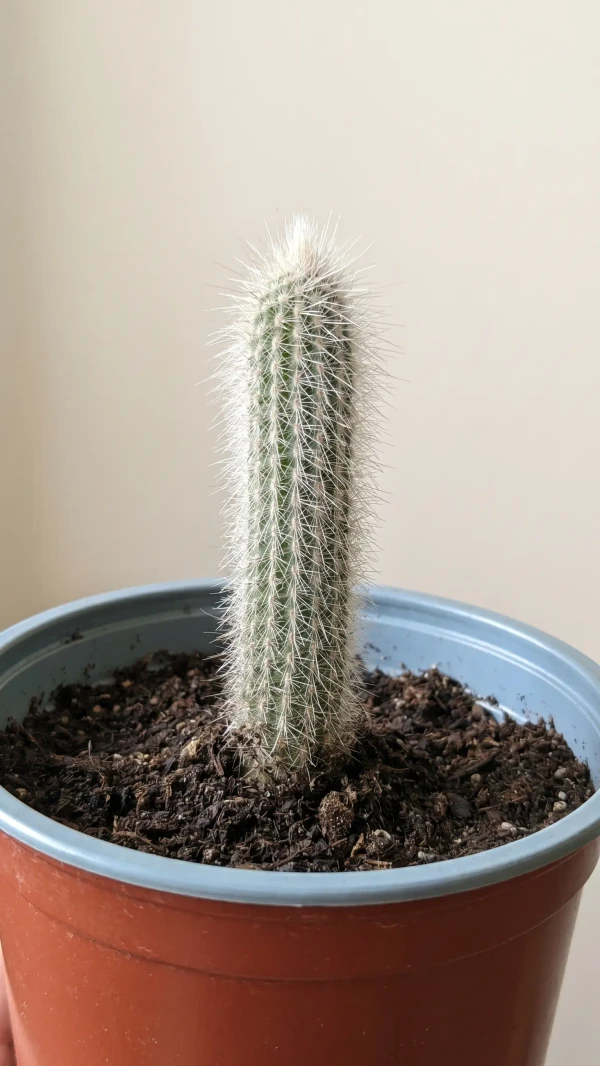
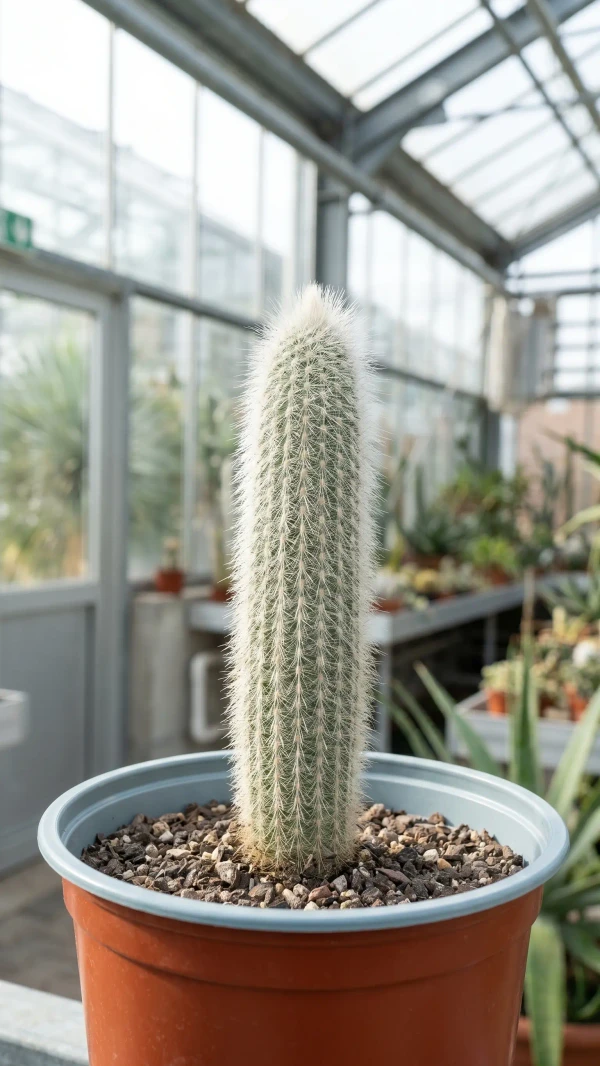
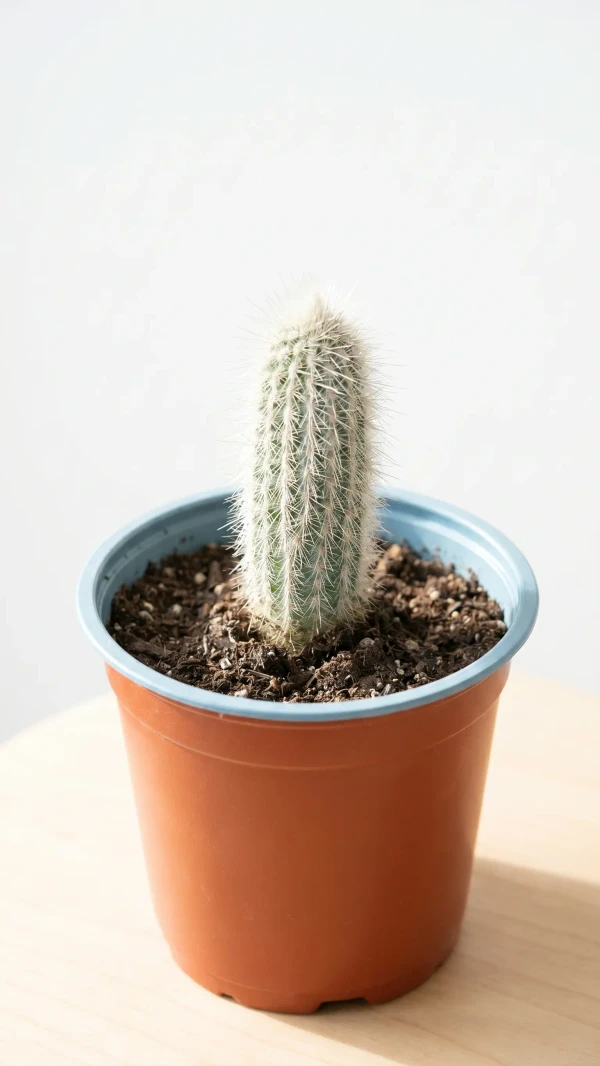
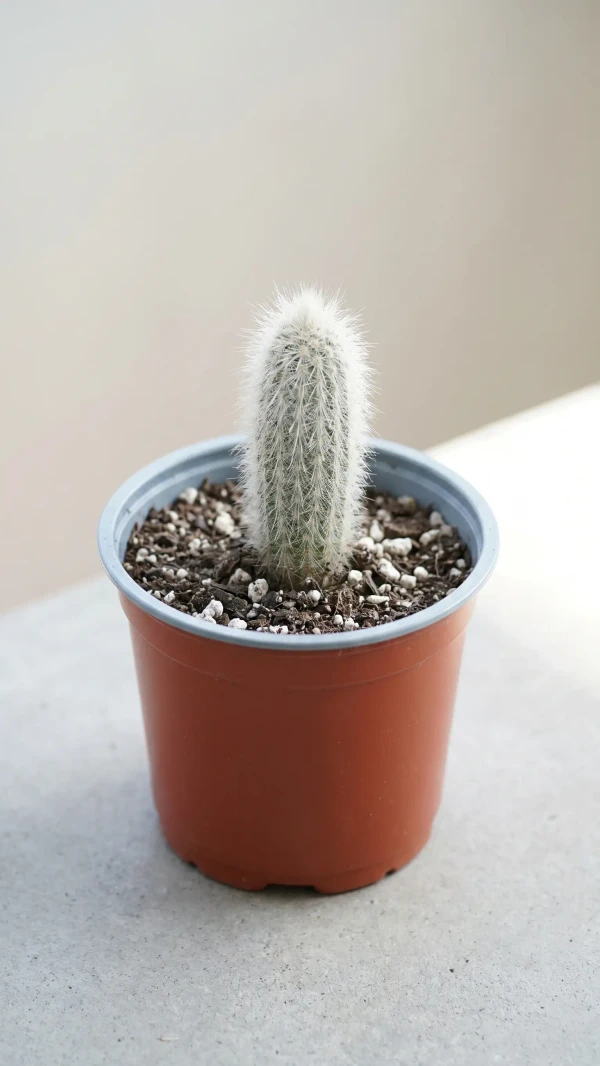
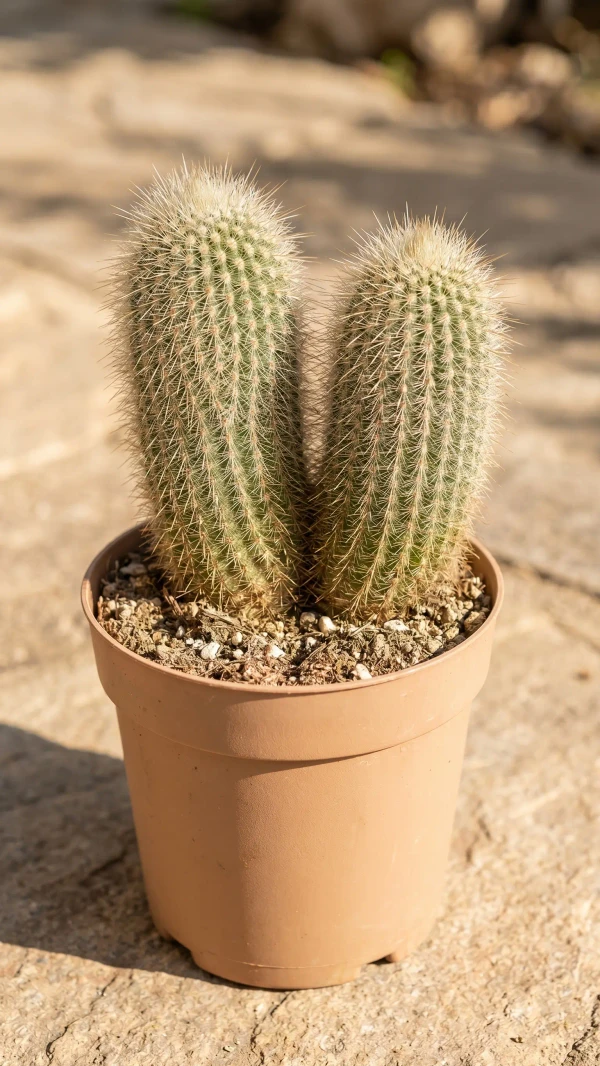
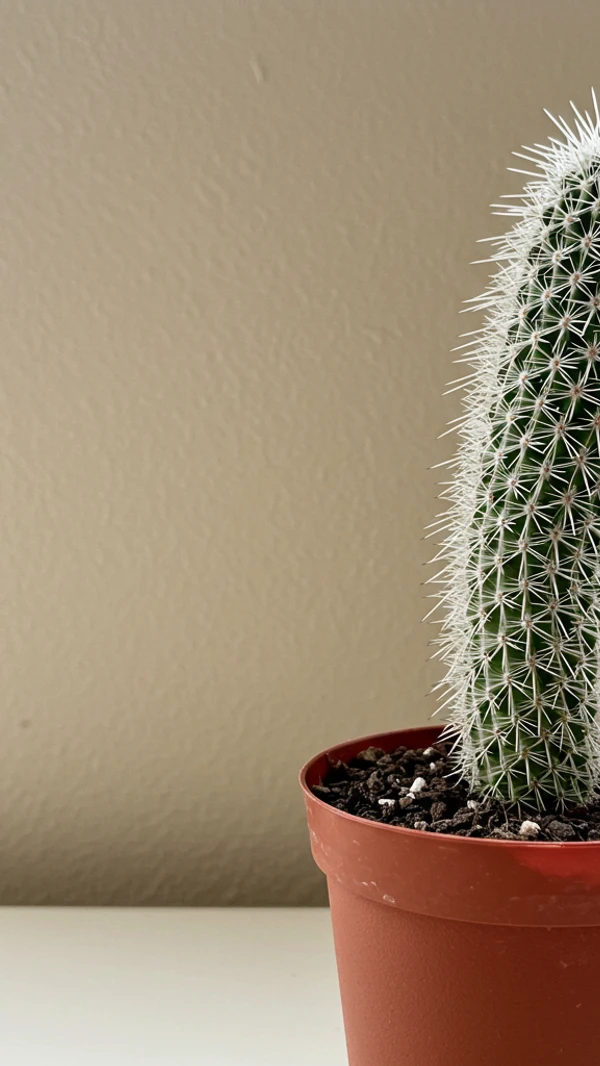
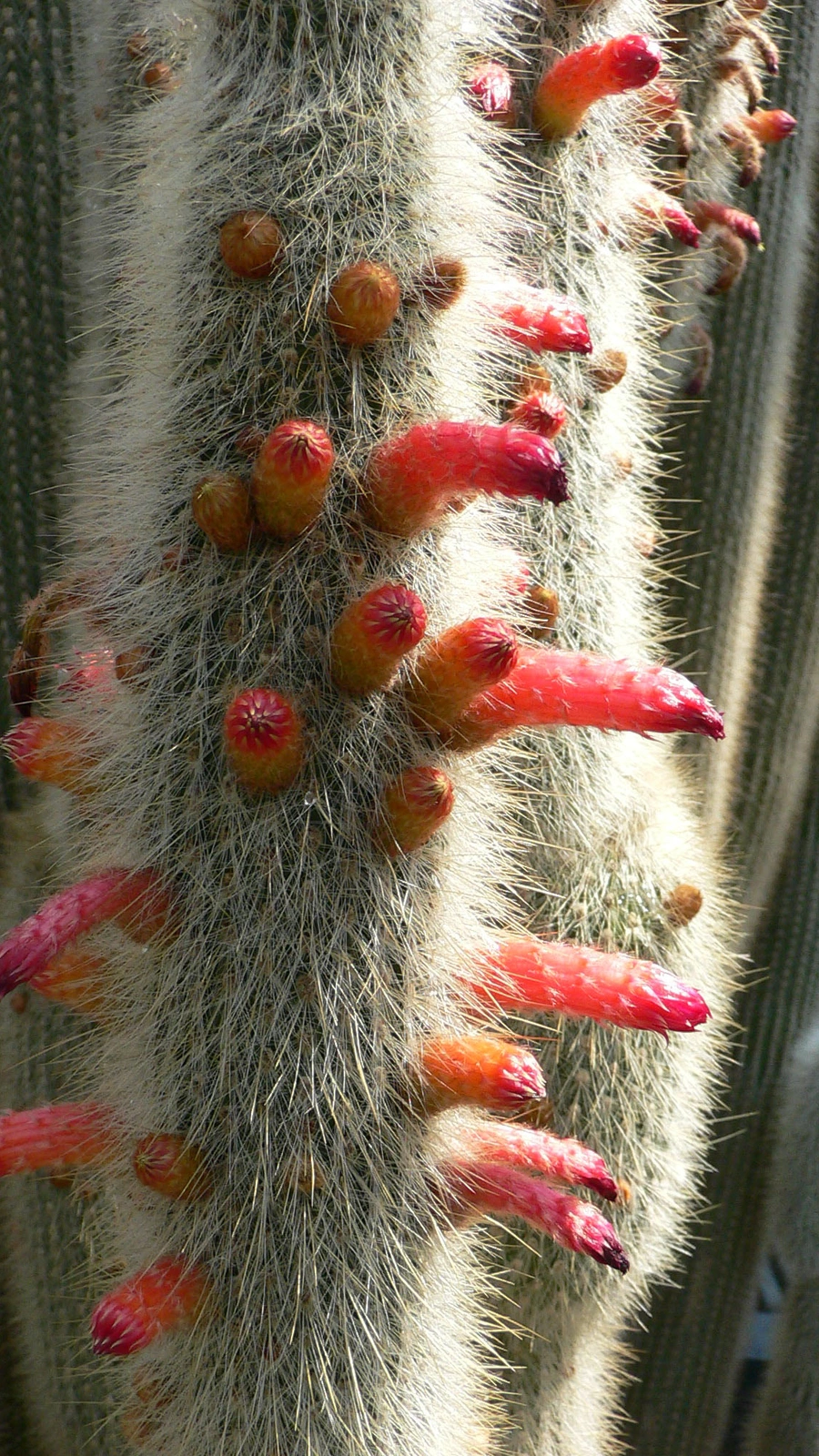 Reference image
Silver Torch Cactus
Cleistocactus strausii is a Cleistocactus recorded as a succulent shrub. An erect columnar body, dense white spine cover, rib and areole pattern, tubular flowers, fruit, seeds and documented provenance should be evaluated together. Identity should not be settled from a sales label or one photograph; stem orientation, ribs, areoles, spines, flowers, fruit, seeds and documented provenance should be evaluated together.12
Use a fast-draining mix with coarse mineral particles such as sand, pumice or perlite, and verify that the lower profile of a deep pot does not remain wet. Do not use a fixed-day calendar; water in a controlled cycle after the pot profile and root zone have dried, and extend the interval substantially in cool or low-light periods. A dry-looking surface is insufficient; inspect the lower and central pot profile as well. Leave no standing water after irrigation. After repotting, allow injured roots time to dry and callus.
Do not test low temperature with wet roots during a cool rest. Evaluate wrinkling, soft tissue, colour change and root odour together; attempts to force rapid growth in a continuously wet organic medium increase rot risk.
The live full_sun operational enum is preserved; acclimate to direct sun over several weeks and monitor stem temperature beneath the white spine cover. The operational enum is not a laboratory light threshold; airflow, heat behind glass, season and previous cultivation conditions alter the outcome. Increase light over several weeks.
The current Kew surface maintains seven homotypic combinations and two heterotypic names. Other white-spined columnar cacti are not automatically strausii. Spine colour, a crested form or one product photograph does not prove accepted identity by itself; other accepted Cleistocactus names are excluded from the canonical synonym set.
The live safe field is preserved as an operational carry-forward; this does not permit ingestion and physical precautions are still needed around spines. The global conservation field is LC.3 The live NE placeholder is replaced with the maintained global IUCN LC. Least Concern is not a rating of care difficulty or commercial abundance. Prefer documented legal nursery propagation and do not encourage wild collection.
The live `full_sun` operational enum is preserved; acclimate to direct sun over several weeks and monitor stem temperature beneath the white spine cover.
Do not use a fixed-day calendar; water in a controlled cycle after the pot profile and root zone have dried, and extend the interval substantially in cool or low-light periods.
Use a fast-draining mix with coarse mineral particles such as sand, pumice or perlite, and verify that the lower profile of a deep pot does not remain wet.
The live `safe` field is preserved as an operational carry-forward; this does not permit ingestion and physical precautions are still needed around spines.
Live operational care class: easy.
Tarija, Bolivia.[^1] [^1]: Plants of the World Online. “Cleistocactus strausii (Heese) Backeb.” Royal Botanic Gardens, Kew. Accessed: 2026-08-07. https://powo.science.kew.org/taxon/urn%3Alsid%3Aipni.org%3Anames%3A60254-2 [^2]: International Plant Names Index. “Cleistocactus strausii.” Accessed: 2026-08-07. https://www.ipni.org/n/60254-2 [^3]: Lowry, M. “A synopsis of the genus Cleistocactus Lemaire (Cactaceae).” Bradleya 34: 148–186. Accessed: 2026-08-07. https://doi.org/10.25223/brad.n34.2016.a6 [^4]: IUCN Red List. “Cleistocactus strausii global conservation assessment.” Accessed: 2026-08-07. https://www.iucnredlist.org/species/152204/121463061
