
Light
Full Sun
A very bright position with gradually introduced direct sun supports strong ribs and balanced branching; do not move a young plant abruptly into harsh midday sun.
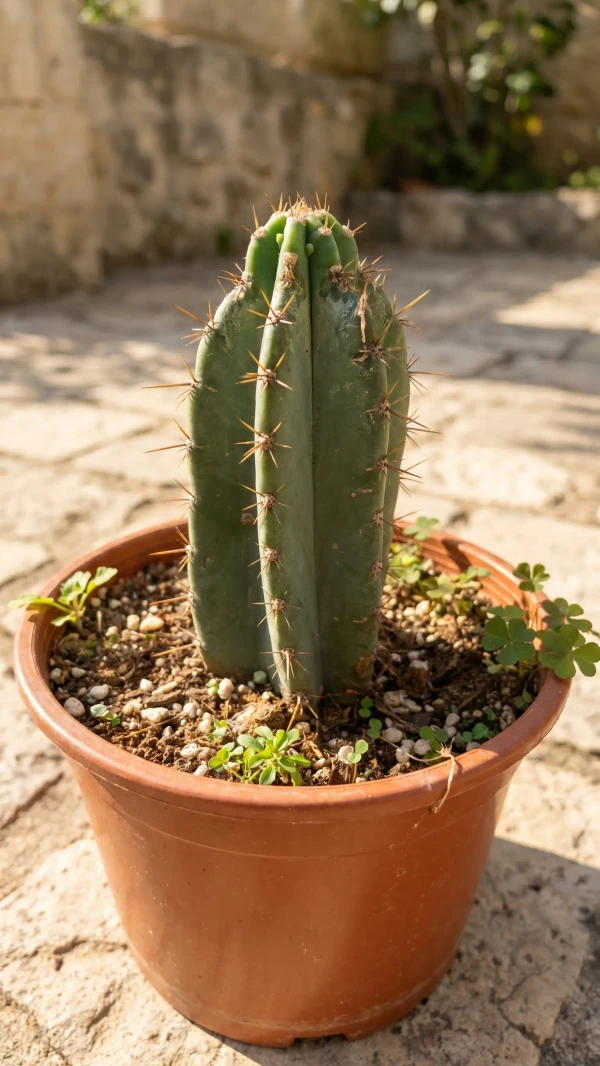
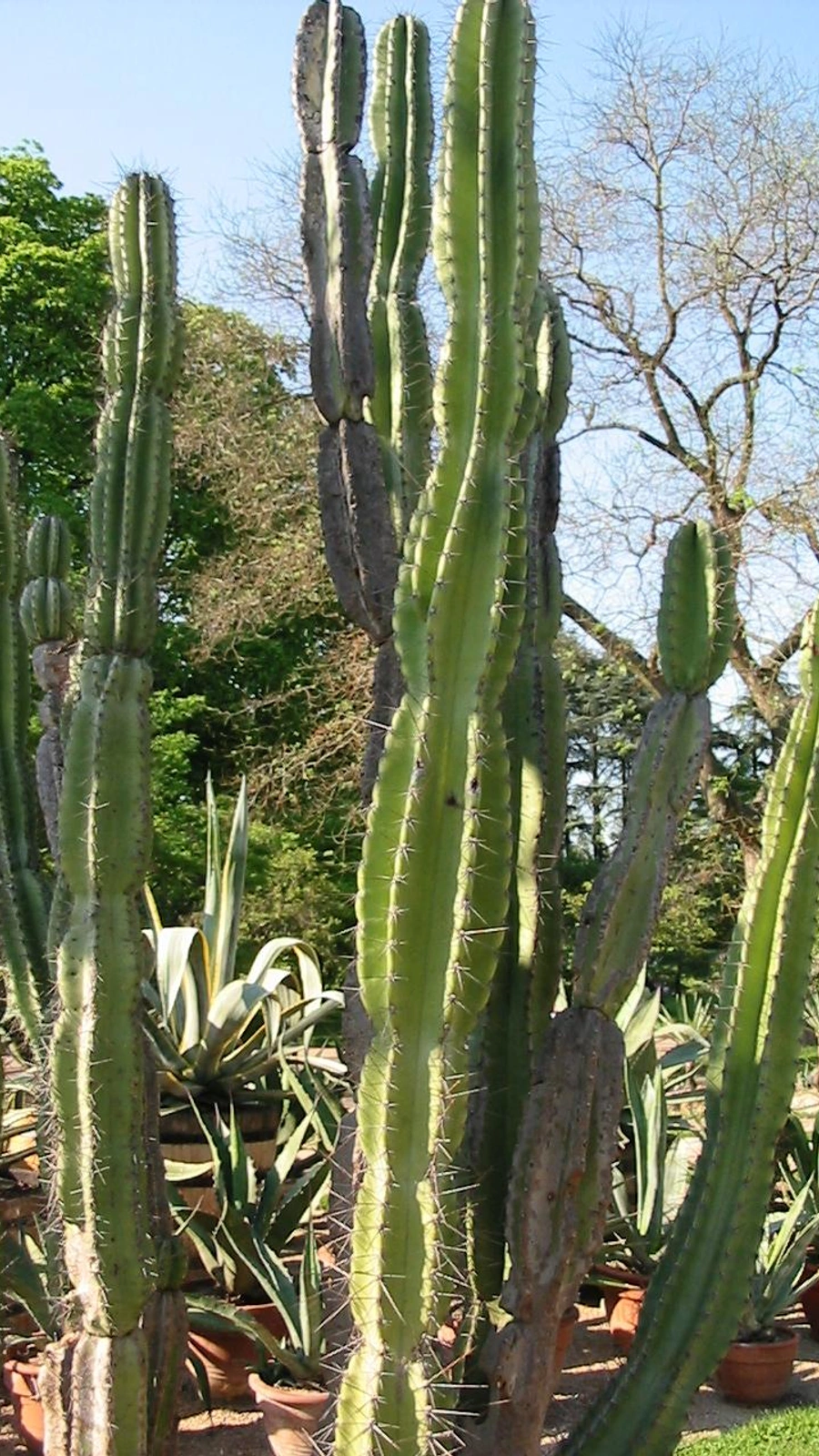 Reference image
Mandacaru
Cereus jamacaru is a large tree-like columnar cactus of seasonally dry central and eastern Brazil, known for nocturnal flowers and red fruit. WFO and Flora do Brasil describe a trunked succulent tree branching above ground, commonly with 5–7 pronounced ribs, long nocturnal white flowers, and red ripe fruit with white pulp. Spine number and length vary widely with age and population. Unlike the taxonomy article, the botanical-dictionary layer explains the living plant's morphology, habitat context, and cultivation requirements.
The verified native range is central and eastern Brazil.1 POWO treats the species as a succulent tree of seasonally dry tropical biomes. WFO also records escape from cultivation and invasive behaviour in South Africa; native and introduced distributions must remain distinct. Cultivation should not imitate a landscape as decoration; it should provide fast oxygen return to the root zone, a controlled wet-dry cycle, and strong light.
A very bright position with gradually introduced direct sun supports strong ribs and balanced branching; do not move a young plant abruptly into harsh midday sun. A tall plant raised under lower light should not be moved abruptly into harsh sun; increase exposure over several weeks. Wet roots during cool weather are generally more dangerous than controlled dry coolness.
Do not use a fixed-day calendar. During active growth, water thoroughly only after the mix has dried throughout and let every excess drain away. Drying slows during cool or low-light periods, so watering naturally becomes less frequent. Use a coarse, mineral-forward, airy, fast-draining mix and check the drying time of lower layers in a large pot or thick root ball.
“Mandacaru” is a strong cultural common name but does not by itself identify a subspecies. The nominotypical subspecies and subsp. calcirupicola are accepted subordinate taxa, not species synonyms. Stem colour, branching, spine density, and flowering time vary among living specimens; a product photograph alone is neither a scientific diagnosis nor a record of a wild population.
The best-supported household concern is mechanical injury from the spines rather than a claim of chemical toxicity. Tall columnar plants also require protection against tipping and weight-related injury. The IUCN assessment is Least Concern. Widespread use and cultural familiarity do not mean local Caatinga or Cerrado habitats are unaffected, nor that the species is ecologically harmless where introduced.
A very bright position with gradually introduced direct sun supports strong ribs and balanced branching; do not move a young plant abruptly into harsh midday sun.
Do not use a fixed calendar. Water deeply after complete drying and reduce frequency during cool or low-light periods.
A coarse, mineral-forward, airy cactus mix that dries rapidly even in a large root ball.
Spines present a mechanical injury risk. The IUCN assessment is Least Concern. Widespread use and cultural familiarity do not mean local Caatinga or Cerrado habitats are unaffected, nor that the species is ecologically harmless where introduced.
It is manageable when young; hidden root moisture, tipping, a heavy spiny stem, and uncontrolled outdoor planting in introduced regions become the main risks at larger size.
central and eastern Brazil.[^1] [^1]: Plants of the World Online. “Cereus jamacaru.” Accessed: 2026-08-04. https://powo.science.kew.org/taxon/urn:lsid:ipni.org:names:53061-2
